The question of how life began has always carried a certain hush. It belongs to tide pools and volcanic shores, to a young planet wrapped in unfamiliar skies. Scientists approach it carefully, as one might approach an ancient manuscript—aware that every fragment matters, and that the smallest clue may illuminate an entire chapter.
Recently, attention has turned to something remarkably small: a tiny RNA molecule capable of copying itself. Just 45 bases long, it is modest in structure, almost minimalist by biological standards. And yet, within that brevity, researchers see an echo of life’s earliest possibilities.
RNA, or ribonucleic acid, plays a central role in modern cells. It helps translate genetic instructions into proteins and, in some cases, can catalyze chemical reactions. For decades, the “RNA world” hypothesis has proposed that before DNA and proteins dominated biology, early life may have relied primarily on RNA molecules that both stored information and performed functional tasks.
The challenge has always been complexity. Many known self-replicating RNA systems are relatively long and intricate, raising doubts about whether such molecules could have formed spontaneously on early Earth. The newly described 45-base RNA shifts that conversation gently. In laboratory experiments, it has demonstrated the ability to catalyze the formation of copies of its own sequence under controlled conditions.
This does not mean scientists have recreated the origin of life. The molecule operates within carefully designed experimental settings. It requires specific components and environmental stability. It does not enclose itself within a membrane, nor does it sustain metabolism. But replication—the capacity to make copies—is one of life’s defining characteristics. In that sense, the molecule sits near a threshold long sought by researchers.
If early Earth chemistry could produce similarly small strands capable of templated copying, the path from chemistry to biology may have required fewer steps than once imagined. Shallow pools, mineral surfaces, cycles of drying and rehydration—these environments have long been proposed as possible incubators. A minimal replicator strengthens the plausibility of such scenarios.
The implications extend beyond Earth’s distant past. In synthetic biology, understanding how small a replicating system can be informs efforts to design minimal life-like systems. In astrobiology, it broadens the criteria by which scientists consider where life might arise. If replication can begin with so little, perhaps the universe’s threshold for biology is not as high as once assumed.
Still, caution accompanies curiosity. Replication alone does not guarantee evolution. Error rates, stability, and environmental resilience all matter. The journey from a self-copying strand to a cell capable of adaptation remains vast and largely uncharted. Each discovery narrows the gap, but it does not erase it.
In straightforward terms, researchers have identified a tiny, 45-base RNA molecule that can replicate itself in laboratory conditions, offering new support for the RNA world hypothesis and refining scientific understanding of how life might have begun.
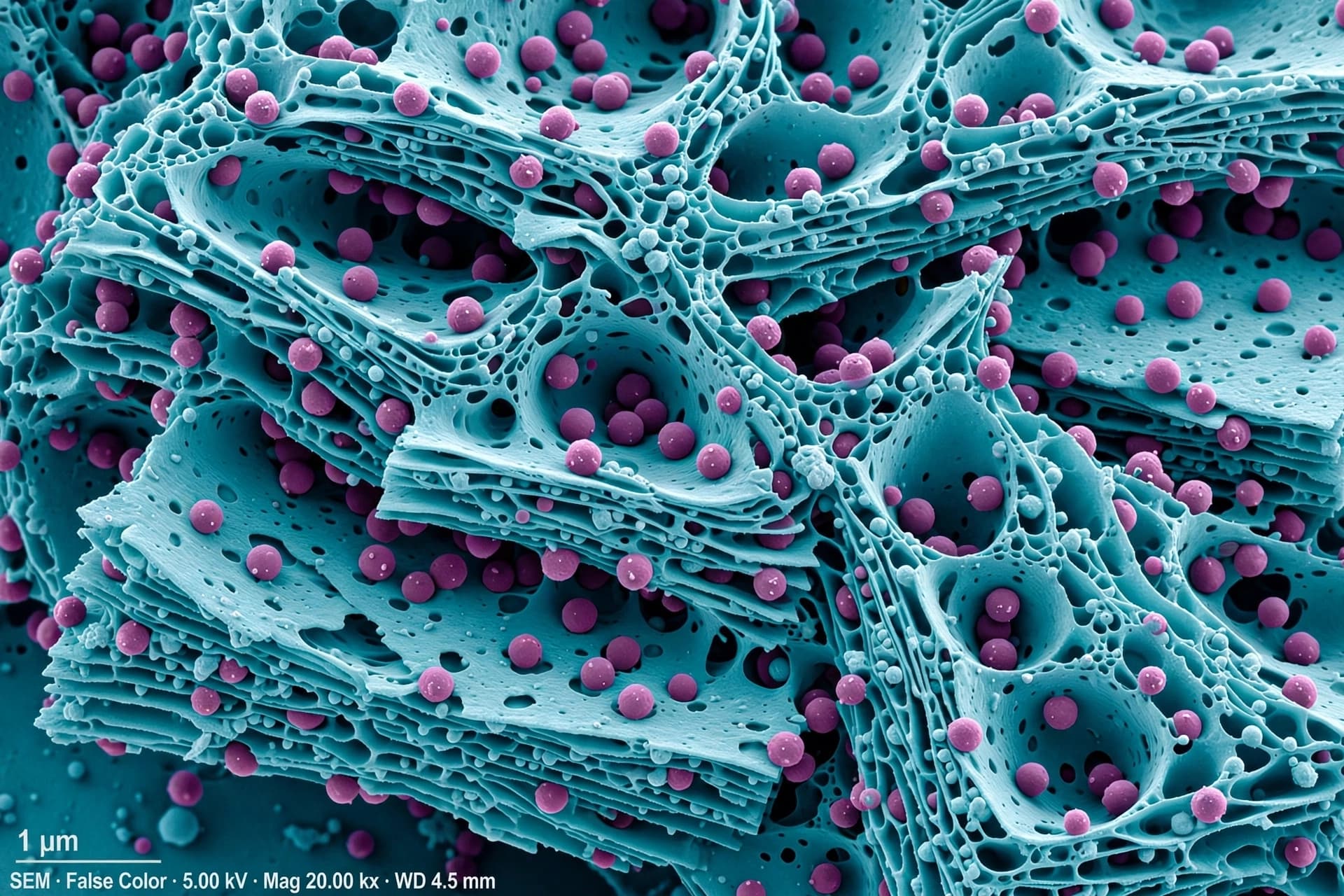
AI Image Disclaimer Images in this article are AI-generated illustrations, meant for concept only.
Source Check
Credible mainstream and niche sources discussing tiny self-replicating RNA and origins-of-life research:
Nature
Science
Reuters
The New York Times
Scientific American
Published by Banx Network. This article is part of the Banx decentralized media programme, powered by the BXE token on the XRP Ledger.