
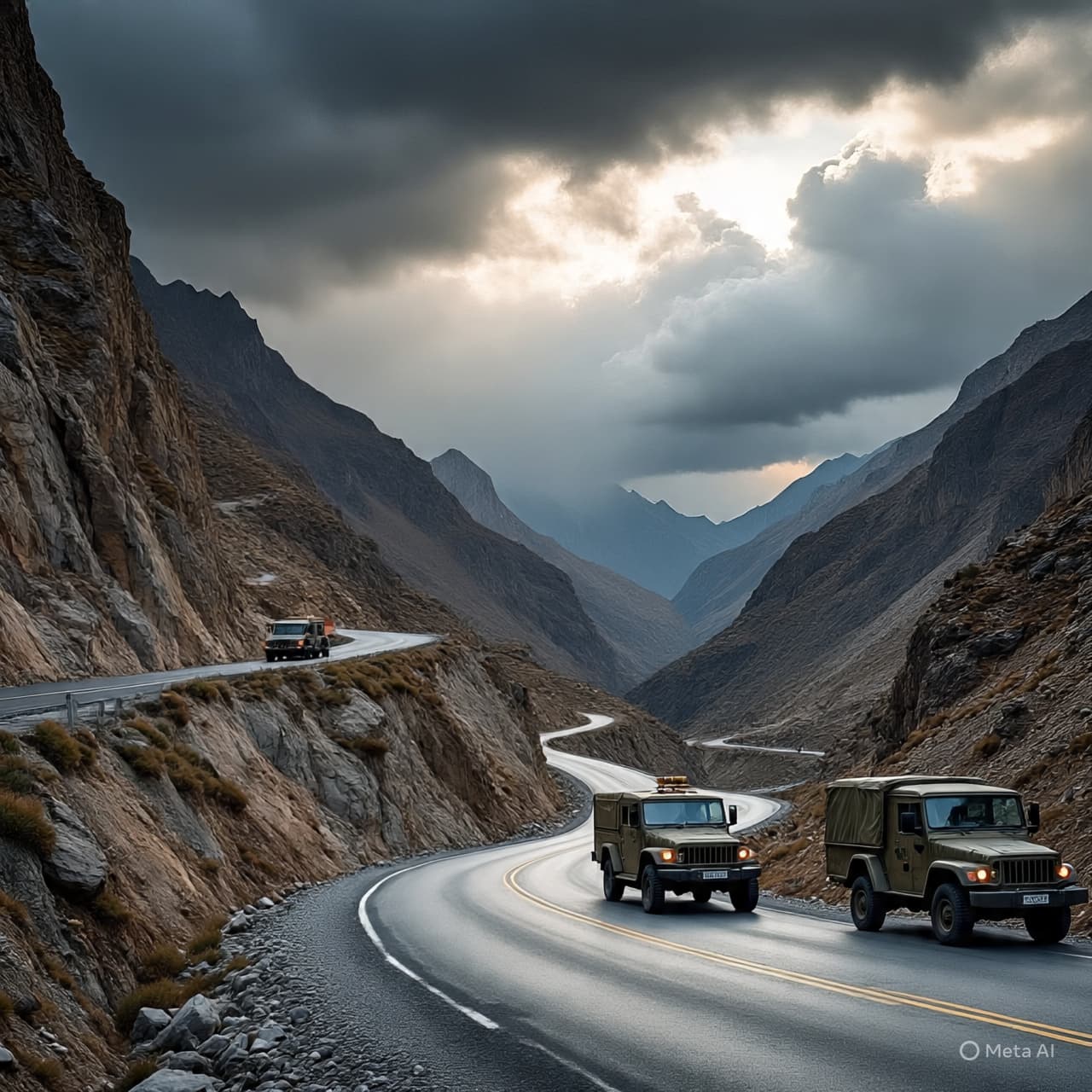
The clash in the Galwan Valley marked more than a tragic rupture along a contested frontier. It became a turning point in how India viewed its northern borders — not as distant peripheries, but as decisive front lines demanding permanent readiness. In the years since, the country has embarked on a sweeping transformation of its border infrastructure, reshaping the physical and strategic landscape of the Himalayas.
What followed the 2020 confrontation was not a sudden militarization, but a methodical recalibration. Roads once deemed impractical or politically sensitive were accelerated. Tunnels carved through unforgiving terrain began linking remote regions to the heartland. Airbases long constrained by altitude and weather were upgraded to support rapid deployment and sustained operations. The objective was clear: to ensure that terrain would no longer dictate vulnerability.
This infrastructure push is not solely about speed or logistics. It reflects a deeper shift in strategic thinking. For decades, India’s border posture relied heavily on the assumption that geographic isolation served as a natural buffer. The events at Galwan shattered that assumption. Mobility, not distance, became the new currency of deterrence.
The upgrades have transformed daily realities for troops stationed in some of the world’s harshest environments. All-weather roads reduce reliance on seasonal supply chains. Expanded airstrips allow heavy transport aircraft and advanced fighters to operate closer to the frontier. Tunnel networks shorten response times and reduce exposure to extreme conditions. Together, these changes compress the time between detection and deployment — a crucial advantage in high-altitude standoffs.
Beyond their military function, these projects carry symbolic weight. They signal political resolve and a willingness to invest long-term in frontier regions historically marked by neglect. For local communities, improved connectivity brings economic opportunity alongside strategic presence, blurring the line between national defense and development.
Yet the transformation also carries risks. Infrastructure that enhances mobility can sharpen competition, inviting mirroring moves across the border. As roads extend and runways lengthen, the margin for miscalculation narrows. Stability increasingly depends not just on strength, but on restraint and communication.
In the shadow of Galwan, India’s approach has become one of preparedness rather than provocation. The message embedded in concrete and steel is unmistakable: deterrence in the modern era is built not only through force, but through the ability to move, sustain, and respond — swiftly and decisively — across some of the world’s most unforgiving terrain.
Published by Banx Network. This article is part of the Banx decentralized media programme, powered by the BXE token on the XRP Ledger.


