Key Highlights
- Incident:A fuel tanker explosion in Colombia resulted in nine fatalities.
- Location:The explosion occurred along a busy freight corridor on Sunday morning.
- Investigation:Authorities are probing the transport company's safety protocols.
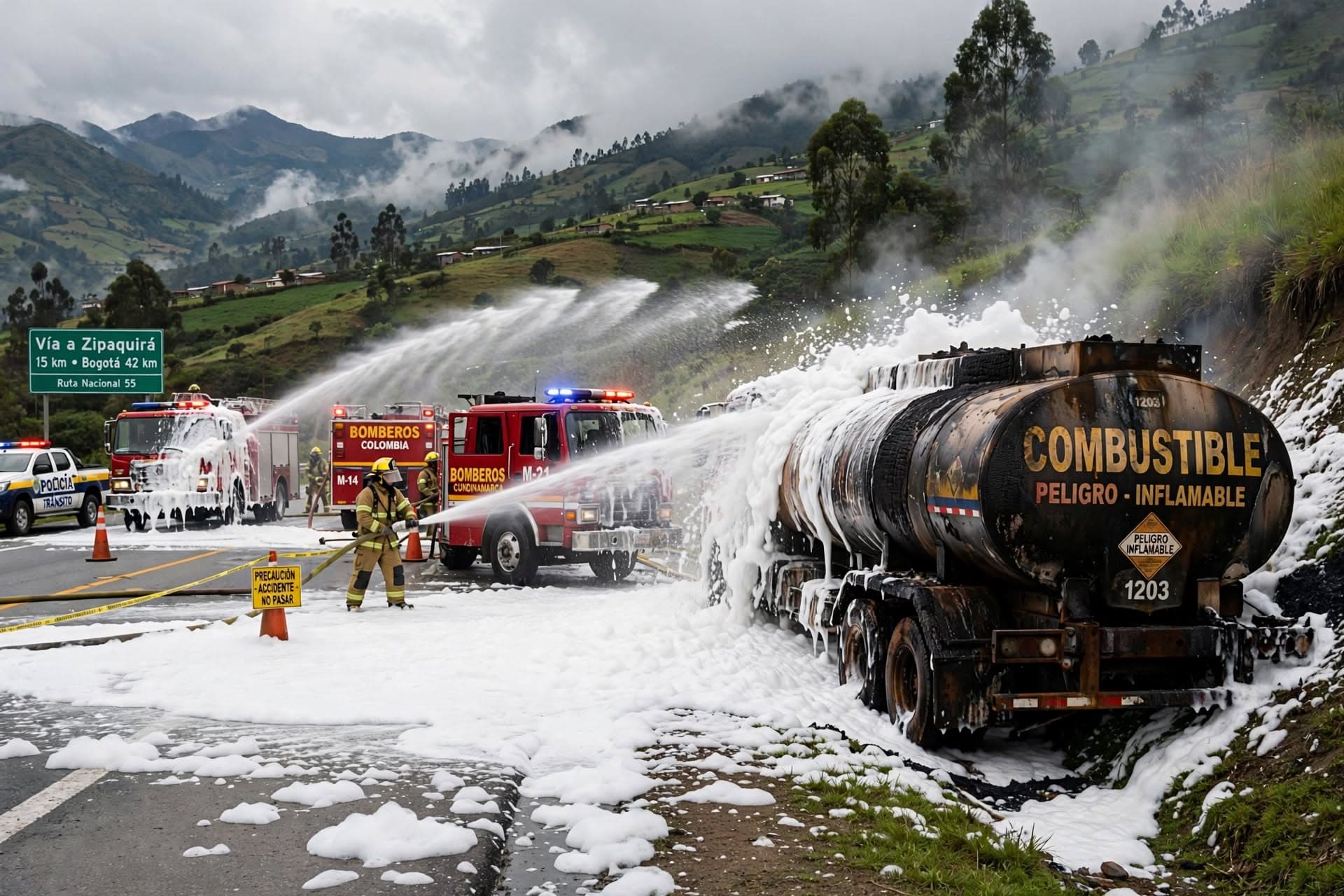
Bogotá, Colombia—A devastating fuel tanker explosion occurred on Sunday morning along a heavily trafficked freight corridor, resulting in the tragic deaths of nine bystanders. The incident unfolded when the tanker overturned and ruptured upon colliding with a concrete drainage culvert, releasing thousands of gallons of high-octane gasoline onto the highway. Moments later, an ignition source triggered a massive fireball that engulfed several vehicles parked nearby.
Witnesses reported that local motorists and bystanders had gathered along the highway shoulder just before the explosion. The blast was so powerful that it incinerated three passenger cars and two roadside vendors, sending a thick plume of black smoke billowing into the sky. Emergency responders, including highway patrol officers and municipal firefighters, arrived within fifteen minutes to combat the flames and prevent further damage.
First responders discovered seven victims along the highway drainage ditch, while two others succumbed to severe burn injuries en route to a regional trauma unit. The local transport director, Gustavo Morales, provided insight into the incident, stating, "The primary tank wall split open immediately upon striking the culvert wall. Vapor clouds spread across forty meters of surrounding terrain before the ignition occurred." This highlights the immediate danger posed by the fuel spill and the rapid escalation of the situation.
Authorities noted that the highway segment was undergoing resurfacing work at the time of the accident, with unpaved shoulders and missing warning signs contributing to the hazardous conditions. Telemetry data from the transport company indicated that the truck was operating within posted speed limits when the rear trailer unit detached from the primary hitch assembly, leading to the catastrophic event.
In the aftermath of the explosion, traffic was halted for six miles in both directions as hazardous materials teams worked to drain the remaining fuel from the secondary tank compartment. The closure of the transit corridor caused significant delays for commercial shipping routes, which were diverted onto unpaved rural roads. This disruption underscores the broader impact of the incident on regional logistics and transportation.
Federal investigators have launched a formal inquiry into the transport firm's equipment maintenance logs and driver shift schedules. Forensic technicians are meticulously collecting scorched steel fragments from the trailer assembly to determine if structural metal fatigue played a role in the hitch failure. Meanwhile, hospital officials confirmed that four additional individuals remain in critical condition with extensive third-degree burns, receiving treatment in specialized burn units across the capital region.
As wreckage clearance crews arrived on site with heavy tow cranes to remove the charred tanker from the highway, technical teams prepared to inspect the damaged asphalt bed. This inspection is crucial for determining the necessary repairs before road crews can begin repaving operations. The incident has raised serious concerns about highway safety and the protocols in place for transporting hazardous materials, prompting calls for stricter regulations to prevent future tragedies.
Published by Banx Network. This article is part of the Banx decentralized media programme, powered by the BXE token on the XRP Ledger.