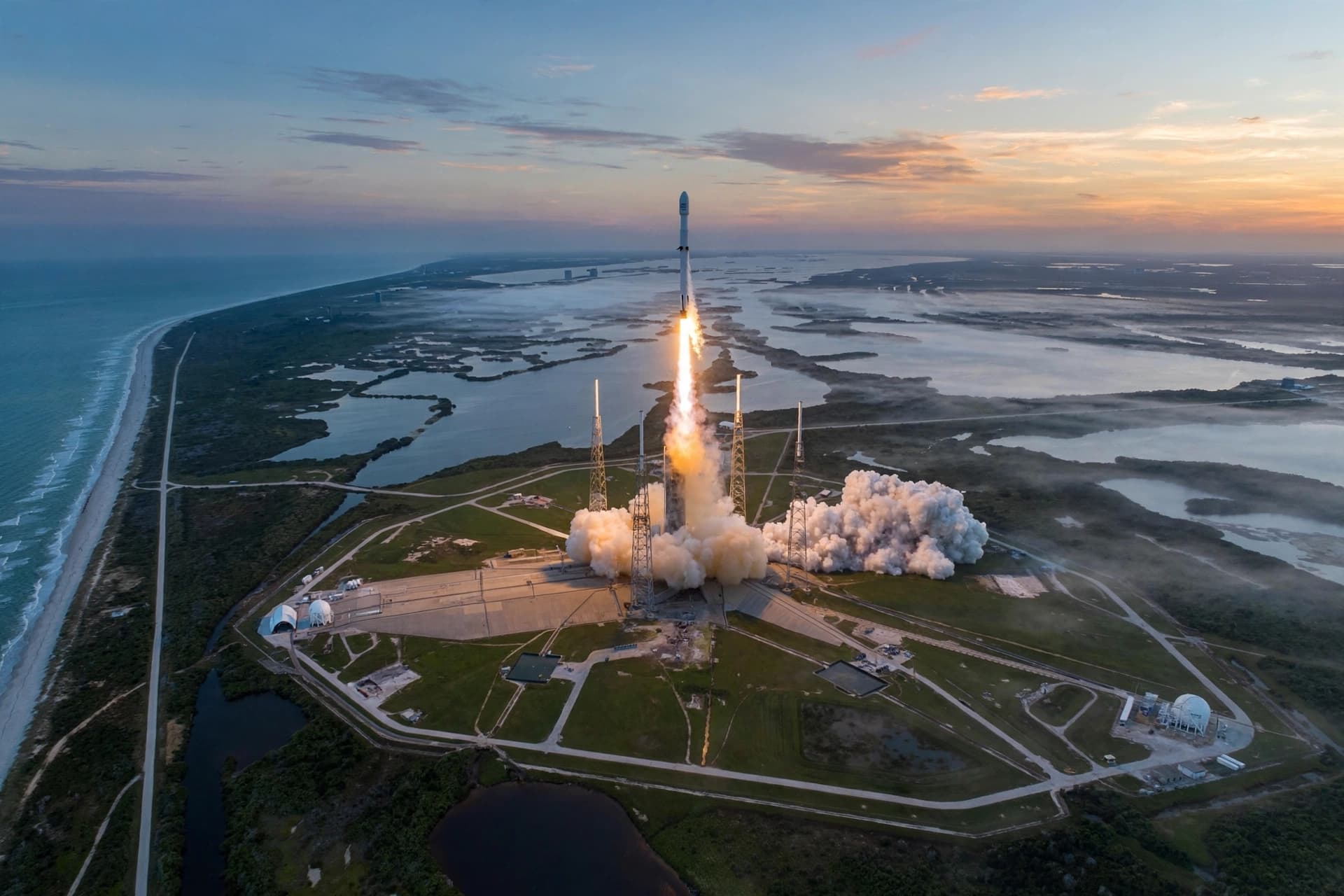
High above the Earth, beyond the calm blue of the atmosphere, a growing cloud of debris circles silently. Fragments of past missions—defunct satellites, spent rocket stages, and small pieces from collisions—have accumulated over decades, forming a layer of space activity that reflects both human achievement and its unintended consequences.
Two companies are now working toward a shared goal: beginning active removal of space debris from orbit by 2027. Their efforts focus on developing technologies capable of capturing and safely deorbiting objects that no longer serve a purpose but continue to pose risks.
Space debris, often referred to as “space junk,” presents a significant challenge for current and future missions. Even small fragments can travel at high velocities, capable of damaging operational satellites or spacecraft. As orbital traffic increases, the need for mitigation becomes more pressing.
The companies involved are exploring different approaches, including robotic arms, nets, and controlled re-entry systems. These technologies aim to capture debris and guide it toward Earth’s atmosphere, where it can burn up safely, reducing the risk of further collisions.
International agencies have long recognized the importance of addressing orbital debris. Guidelines and best practices have been established to minimize the creation of new debris, but removing existing objects remains a complex and resource-intensive task.
The proposed timeline of 2027 reflects both ambition and caution. Developing reliable systems for debris removal requires extensive testing and coordination with regulatory bodies. Each operation must ensure that it does not inadvertently create additional hazards.
Beyond technical challenges, the initiative also raises questions about responsibility and collaboration. Space is a shared environment, and addressing its sustainability involves cooperation among governments, private companies, and international organizations.
The effort to clean up orbit can be seen as part of a broader shift toward responsible space activity. As reliance on satellites grows—for communication, navigation, and observation—the importance of maintaining a safe orbital environment becomes increasingly clear.
In simple terms, two companies are developing technologies to begin removing space debris by 2027, aiming to reduce risks and support the long-term sustainability of space operations.
AI Image Disclaimer: Some images used may be AI-generated to depict concepts related to orbital debris removal.
Sources: Reuters BBC Space.com The Guardian
Published by Banx Network. This article is part of the Banx decentralized media programme, powered by the BXE token on the XRP Ledger.