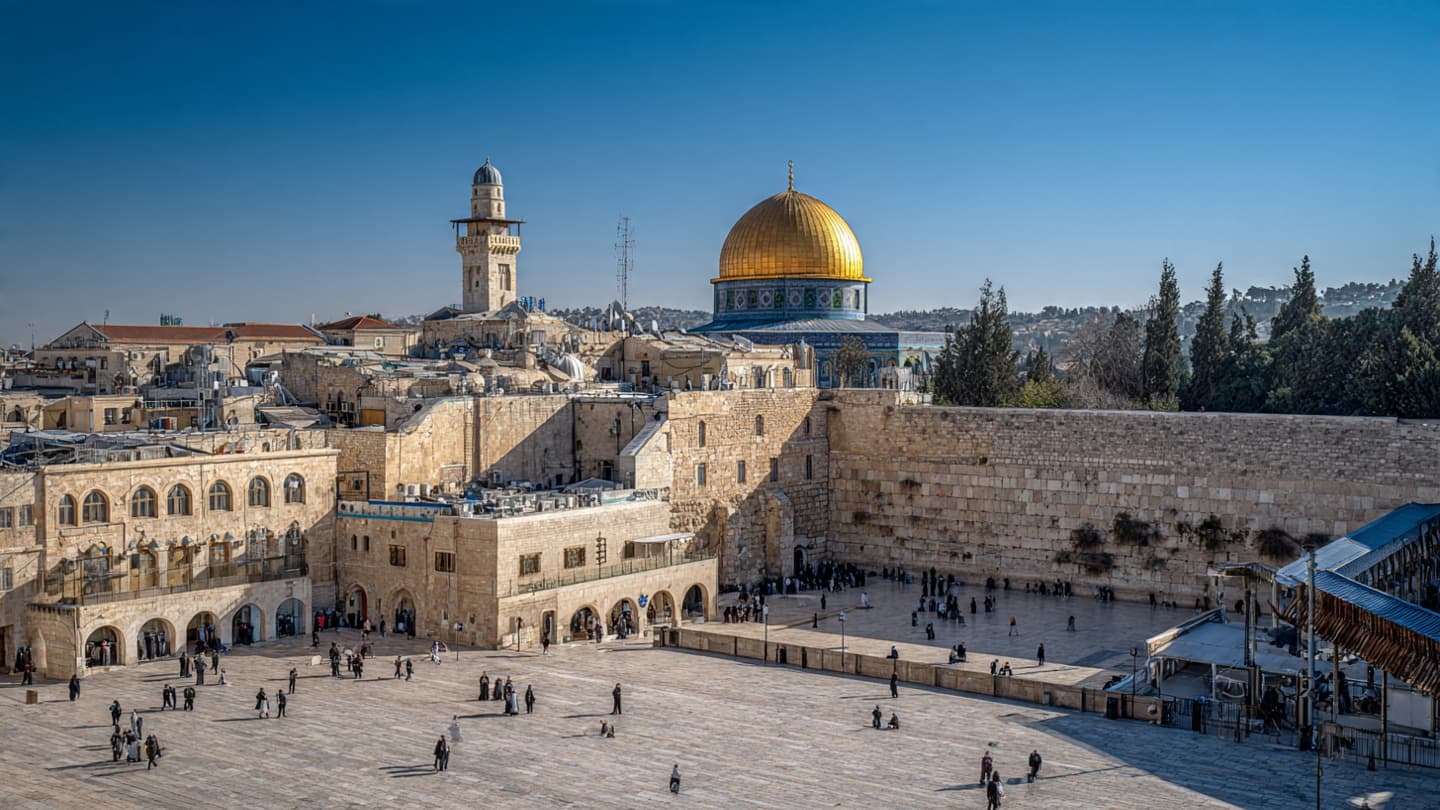
Sacred places often carry meanings that extend beyond stone walls and ancient courtyards. They become symbols of memory, identity, and continuity for generations who see history reflected within them. In Jerusalem, discussions surrounding the future of the Al-Aqsa Mosque compound once again stirred international attention amid claims regarding political and religious control.
Reports circulating in regional media suggested allegations that the United States and Israel sought greater influence over the Al-Aqsa compound and the Islamic waqf administration responsible for managing the site. The issue quickly drew reactions due to the sensitive religious and geopolitical significance of the location.
The Al-Aqsa Mosque compound is regarded as one of Islam’s holiest sites and remains deeply connected to the broader Israeli-Palestinian conflict. Administrative authority over Islamic affairs at the site has historically involved the Jordanian-backed Islamic waqf institution.
Israeli authorities have repeatedly stated that the existing status quo arrangement at the compound remains in place, although tensions frequently emerge surrounding access, security measures, and political symbolism. International observers often describe the site as one of the most delicate religious flashpoints in the region.
Religious sites in Jerusalem carry importance not only for Muslims, but also for Jewish and Christian communities. Because of this layered significance, developments involving Al-Aqsa often generate international diplomatic concern and widespread public reaction.
Analysts note that narratives surrounding holy sites can quickly intensify political tensions, particularly during periods of regional instability. Claims related to sovereignty and religious administration are therefore closely watched by governments and religious institutions alike.
For many believers around the world, Al-Aqsa represents more than a geopolitical issue. It remains a place tied to spiritual heritage, collective memory, and historical continuity that transcends borders and political divisions.
Officials connected to regional diplomacy and religious administration continue monitoring developments surrounding the Al-Aqsa compound amid ongoing tensions in Jerusalem.
The images attached to this article are AI-generated illustrations intended solely for editorial visualization.
Sources: Reuters, regional media reports, Middle East analysts
Published by Banx Network. This article is part of the Banx decentralized media programme, powered by the BXE token on the XRP Ledger.