Key Highlights
- Global battery storage capacity additions reached 108 gigawatts in 2025.
- China dominates the battery manufacturing sector, impacting global supply chains.
- Battery storage technology is crucial for integrating renewable energy into electricity systems.
The global energy landscape is undergoing a significant transformation, with battery storage emerging as a critical component in balancing supply and demand. As renewable energy sources like solar and wind become more prevalent, the need for effective energy storage solutions has never been more urgent. The International Energy Agency (IEA) reported that global battery storage capacity additions surged to 108 gigawatts in 2025, marking a 40% increase from the previous year. This growth underscores the importance of battery storage in modern electricity systems, as it allows for the absorption of surplus energy generated during peak production times and its release during periods of high demand.
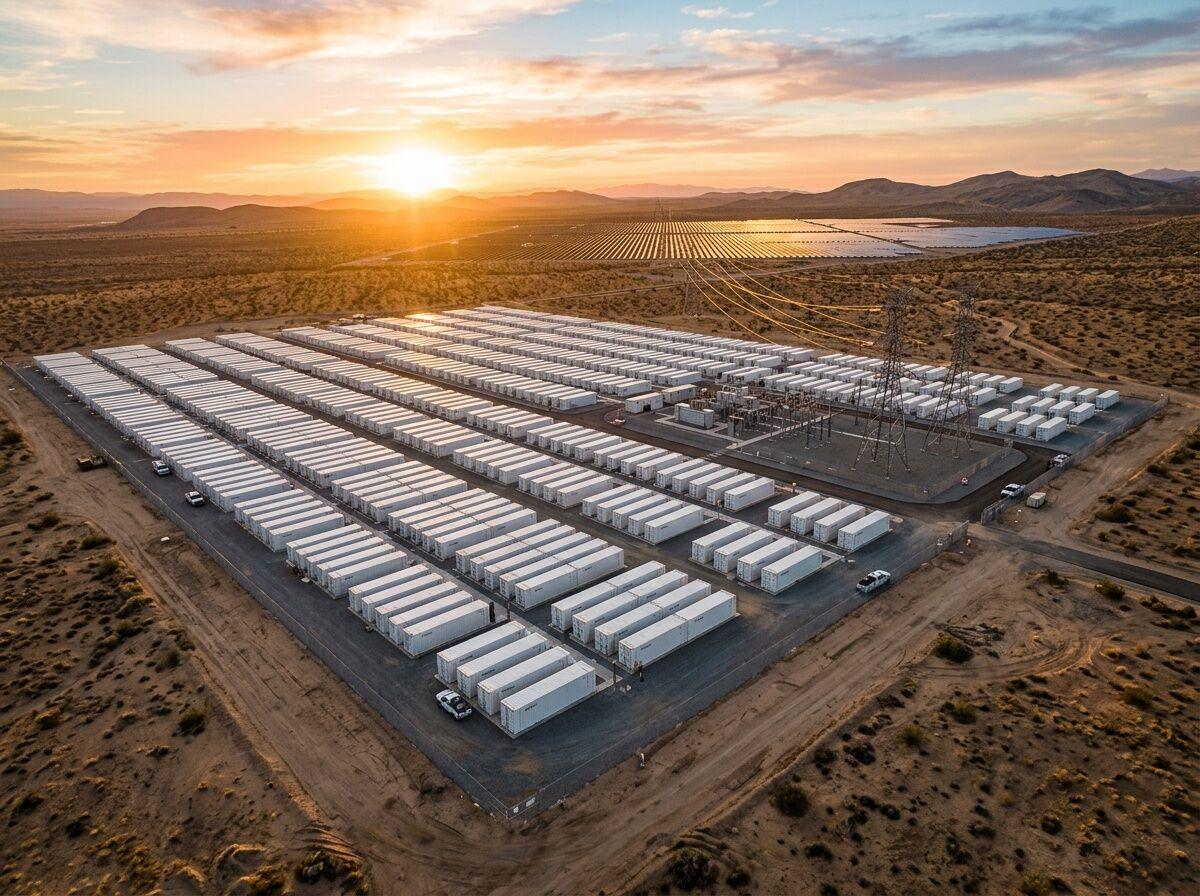
Battery storage facilities operate by charging during low-demand periods when electricity is abundant and discharging during high-demand periods. These grid-scale installations consist of multiple battery units, inverters, cooling systems, and monitoring equipment. They provide essential services such as energy shifting, frequency regulation, and peak demand support. The IEA notes that the average duration of newly commissioned battery projects increased to approximately three hours in 2025, indicating a shift towards longer-duration storage solutions that can effectively manage daily energy fluctuations.
China has emerged as a leader in the global battery storage race, leveraging its extensive investments in battery manufacturing, mineral processing, and electric vehicle development. This integrated industrial ecosystem provides Chinese manufacturers with significant advantages in production capacity and cost efficiency. As a result, China has established a dominant position in the global battery market, influencing supply chains and technological advancements worldwide.
The implications of China's leadership in battery storage extend beyond its borders. As countries strive to meet their renewable energy targets, the demand for battery storage solutions is expected to rise. This presents both opportunities and challenges for other nations looking to compete in the battery market. Countries such as the United States and members of the European Union are ramping up their efforts to develop domestic battery manufacturing capabilities and reduce reliance on Chinese imports.
The race for battery dominance is not just about technology; it also involves geopolitics and economic strategy. As nations recognize the strategic importance of energy storage in achieving energy independence and sustainability goals, investments in battery technology are likely to increase. The competition will shape the future of energy systems globally, influencing everything from energy prices to technological innovation.
In conclusion, the global battery storage race is a pivotal aspect of the transition to renewable energy. With China at the forefront, the dynamics of this market will continue to evolve, impacting energy policies and economic strategies worldwide. As countries navigate this landscape, the development of robust battery storage solutions will be essential for a sustainable energy future.
Published by Banx Network. This article is part of the Banx decentralized media programme, powered by the BXE token on the XRP Ledger.