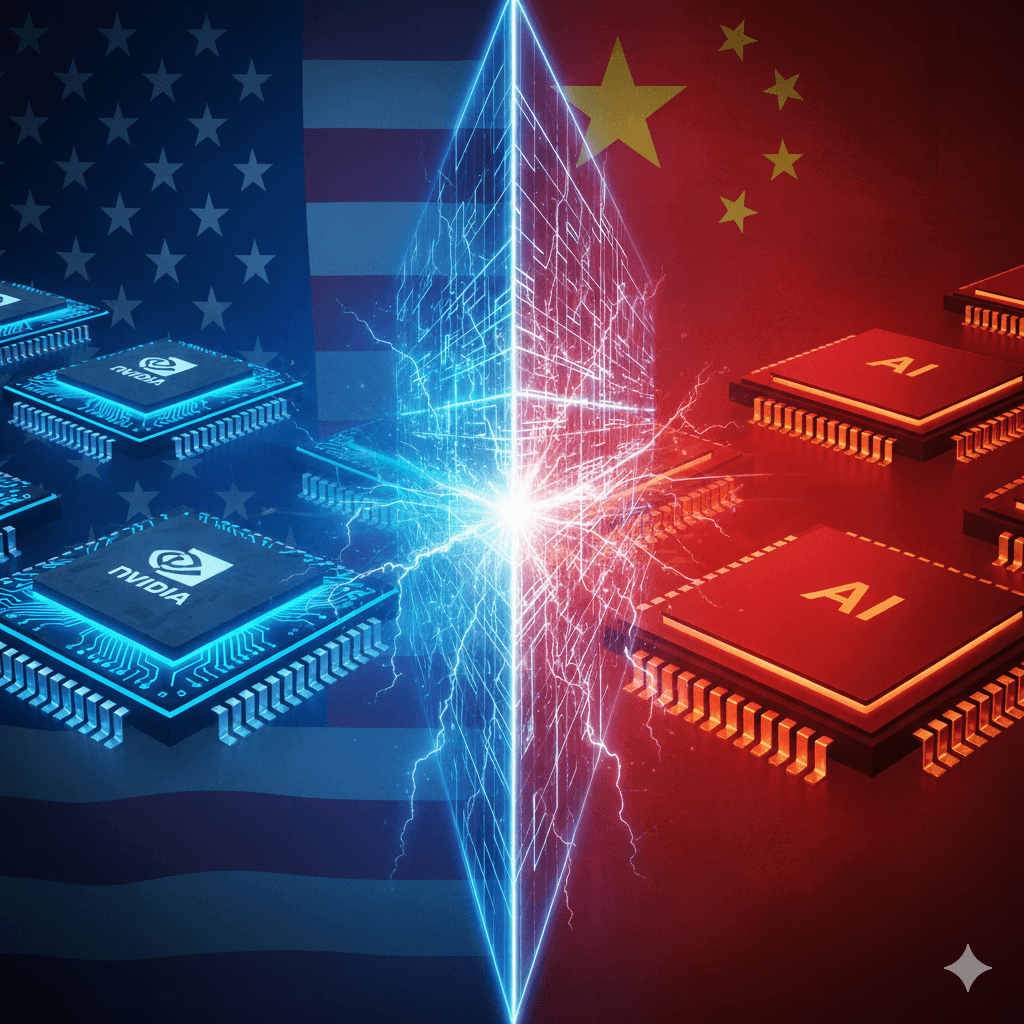
Beijing has officially moved to restrict companies from purchasing Nvidia’s high-end AI chips. It’s not just a market story — this is geopolitics wrapped in silicon.
What’s Happening
• China banned local firms from buying certain Nvidia semiconductors, seen as too advanced.
• The move comes after U.S. export restrictions blocked Nvidia from freely selling AI chips to China.
• This ban signals a push to force domestic adoption of Chinese alternatives in AI and data centers.
• Nvidia remains the global leader in GPUs, but access to China — one of the biggest AI markets — just got tighter.
Why This Matters
*Tech sovereignty: China wants to accelerate independence from U.S. chip giants.
• The AI race: GPUs are the “oil” of the AI boom. Cutting Nvidia out pushes China to bet big on Huawei, SMIC, and homegrown designs.
• Global markets : Investors worry about Nvidia’s China revenue share (around 20–25%). Wall Street jitters are likely.
• Geopolitical layer: This isn’t just trade. It’s a strategic front in the U.S.–China rivalry.
Possible Downsides & Risks
• For China: switching to domestic chips may hit performance, slowing AI progress.
• For Nvidia: losing Chinese demand risks denting growth — unless other regions offset it.
• For the world: supply chains and innovation could fragment, raising costs and slowing cross-border collaboration.
What Might Come Next
• Expect Beijing to pour subsidies into domestic chipmakers, fast-tracking “Made in China” GPUs.
• Watch Nvidia’s pivot — more focus on U.S., Europe, and cloud providers outside China.
• The U.S. may tighten export rules even further if it sees China gaining ground.
• Global AI development could split into two parallel ecosystems: U.S.-led vs China-led.
Published by Banx Network. This article is part of the Banx decentralized media programme, powered by the BXE token on the XRP Ledger.