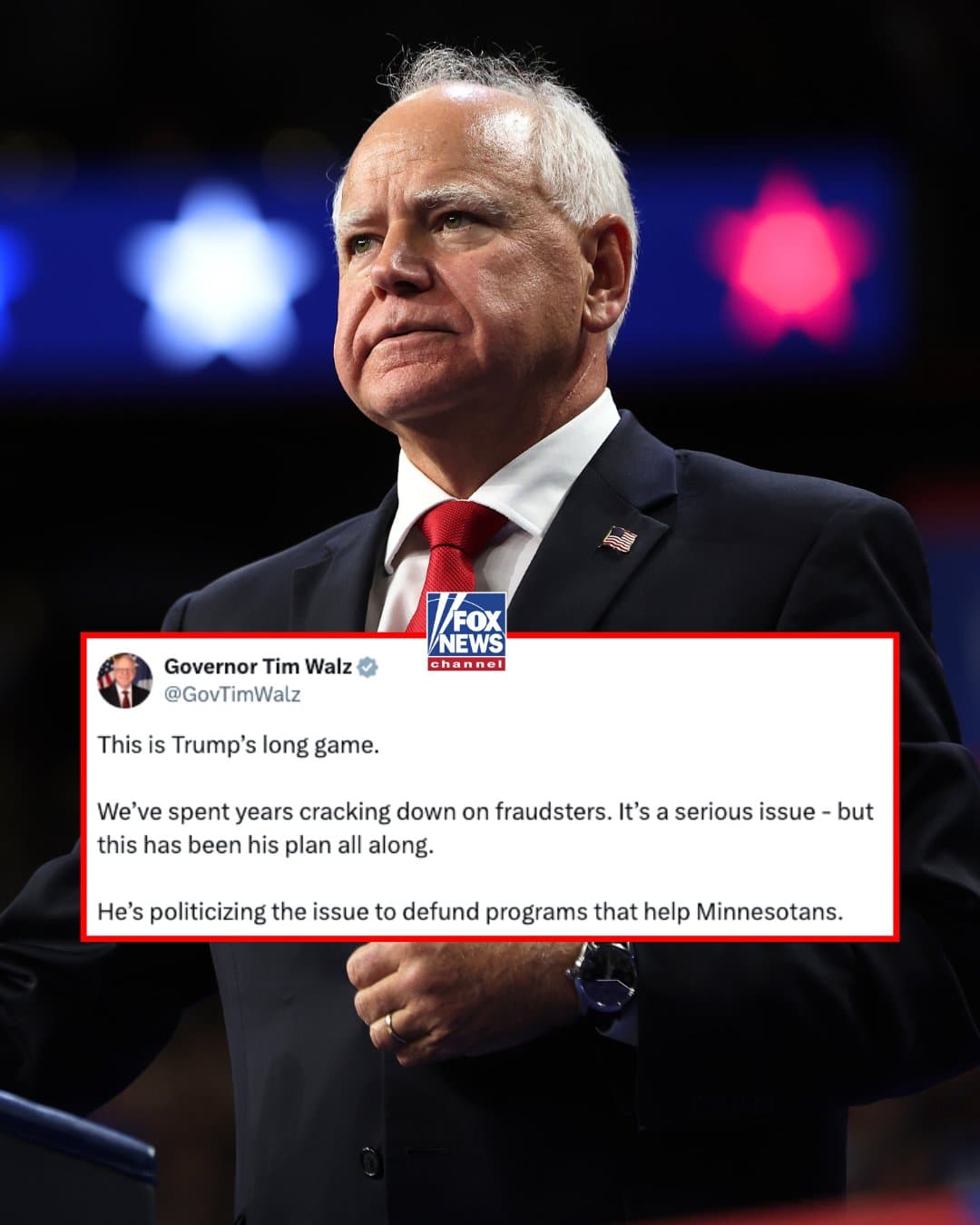
A new clash between federal authority and state leadership has put childcare funding under the spotlight. The Trump administration has suspended childcare payments to Minnesota amid allegations of widespread daycare fraud, triggering sharp political responses and concern among families who rely on subsidized care. Federal officials argue the suspension is a protective measure. Investigators claim millions of dollars were misused through fraudulent daycare billing schemes, prompting the administration to halt payments while audits and enforcement actions continue. From this perspective, pausing funds is framed as fiscal responsibility ensuring taxpayer money is protected before further disbursement. Minnesota Governor Tim Walz strongly disputes the move. He maintains that the state has spent years strengthening oversight, increasing compliance checks, and cracking down on bad actors. According to Walz, the funding freeze punishes working families and childcare providers who have followed the rules, while turning a law-enforcement issue into a political weapon. At the center of the dispute are thousands of parents. Childcare subsidies are essential for low- and middle-income households, allowing parents to work while ensuring safe early childhood education. Even a temporary disruption can force parents to reduce work hours, miss shifts, or leave jobs altogether creating economic ripple effects beyond childcare itself. The case also highlights a broader national issue: balancing fraud prevention with service continuity. While fraud must be addressed decisively, blanket suspensions risk harming legitimate providers and beneficiaries. Experts argue that targeted enforcement freezing suspect accounts rather than statewide funding may offer a more precise solution. Politically, the standoff reflects deeper tensions over federal power, social program funding, and election-year narratives. Supporters of the suspension view it as accountability in action. Critics see it as defunding essential services under the guise of enforcement. As investigations continue, the outcome will likely shape how future federal-state disputes over welfare and childcare programs are handled setting a precedent for how governments protect public funds without destabilizing the lives of families who depend on them.
Published by Banx Network. This article is part of the Banx decentralized media programme, powered by the BXE token on the XRP Ledger.