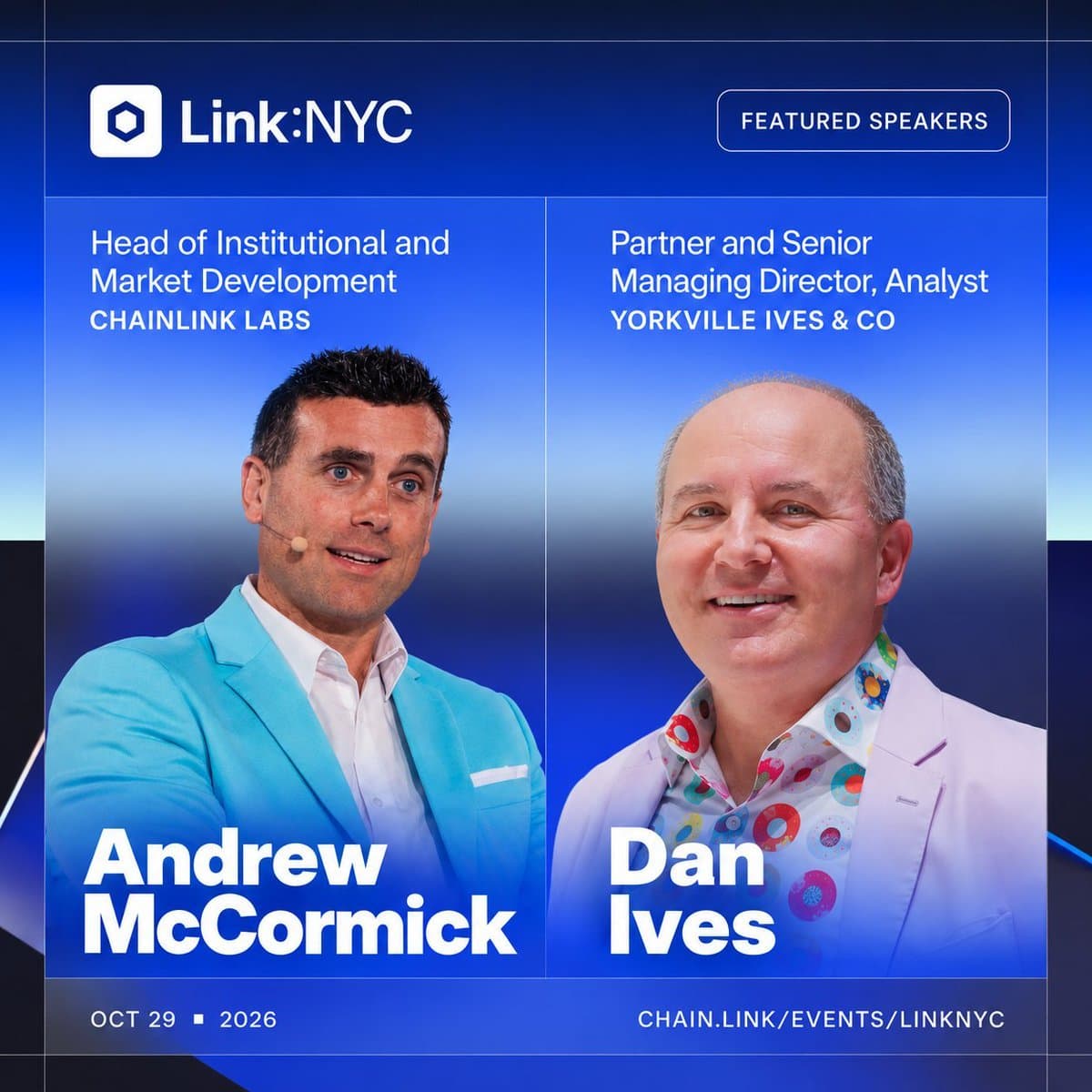
The growing convergence between traditional finance, blockchain infrastructure and artificial intelligence will take centre stage at Chainlink’s Link:NYC event on October 29, 2026, as industry executives gather in New York to examine the future of institutional financial markets. The event highlights an important shift in the digital asset industry. Rather than concentrating exclusively on cryptocurrency trading, blockchain companies are increasingly seeking partnerships with established financial institutions, asset managers and market infrastructure providers. Among the featured speakers are Andrew McCormick of Chainlink Labs and Dan Ives of investment firm Wedbush Securities, according to the event announcement. Their participation reflects the intersection of blockchain technology, financial markets and emerging technologies that is attracting growing attention from institutional investors. The event comes as financial institutions explore ways to modernise settlement systems, improve operational efficiency and introduce tokenised versions of traditional assets. These initiatives could eventually change how securities are issued, transferred and managed across financial markets. Traditional finance moves towards blockchain infrastructure Tokenization involves representing ownership rights to assets through digital tokens recorded on a blockchain. Depending on the legal structure and technology involved, tokenised assets can include financial securities, investment funds and other forms of ownership. Supporters argue that blockchain-based systems could enable more efficient transfers, improve transparency and reduce friction between institutions operating on separate technological platforms. However, successful adoption requires more than creating digital representations of existing assets. Financial institutions must also address regulatory compliance, cybersecurity, liquidity, custody arrangements and the integration of blockchain systems with established infrastructure. This is where Chainlink's technology becomes relevant. Chainlink provides blockchain infrastructure designed to connect smart contracts with external data and systems. Its services include decentralised data feeds and cross-chain interoperability technology, which can help applications access information and communicate across different blockchain networks. These capabilities are particularly relevant to institutions exploring tokenised financial products. Smart contracts may need reliable market information, verification of asset backing and secure communication between networks before they can support complex financial transactions. Artificial intelligence adds another dimension The relationship between artificial intelligence and blockchain infrastructure is also attracting interest. AI systems can help financial firms analyse large datasets, automate selected operational tasks and identify patterns in market activity. Blockchain infrastructure, meanwhile, can provide programmable transaction mechanisms and records that can be independently verified. Combining these technologies could support automated financial workflows, although the reliability of the underlying data, the authority to execute transactions and the ability to supervise automated systems remain important considerations. Institutional investors will therefore be interested not only in the technological possibilities but also in the controls required to deploy these systems responsibly. What the event means for Chainlink For Chainlink, Link:NYC represents an opportunity to position its infrastructure within the broader transformation of capital markets. The company has pursued integrations and partnerships involving blockchain networks and established financial organisations. Its long-term opportunity depends partly on whether tokenisation and cross-chain financial activity develop into substantial commercial markets. Nevertheless, an industry event does not guarantee future contracts, revenue growth or increased demand for the LINK token. Investors should distinguish between the adoption of Chainlink's infrastructure, the commercial value of its services and the potential effect of those developments on the token's market price. The October 29 gathering will provide a forum for discussing these questions as financial institutions continue evaluating blockchain-based systems. Ultimately, the central issue is whether emerging technologies can meet the reliability, compliance and performance requirements of established financial markets. If they can, infrastructure connecting traditional institutions with blockchain networks could become increasingly important.
Published by Banx Network. This article is part of the Banx decentralized media programme, powered by the BXE token on the XRP Ledger.