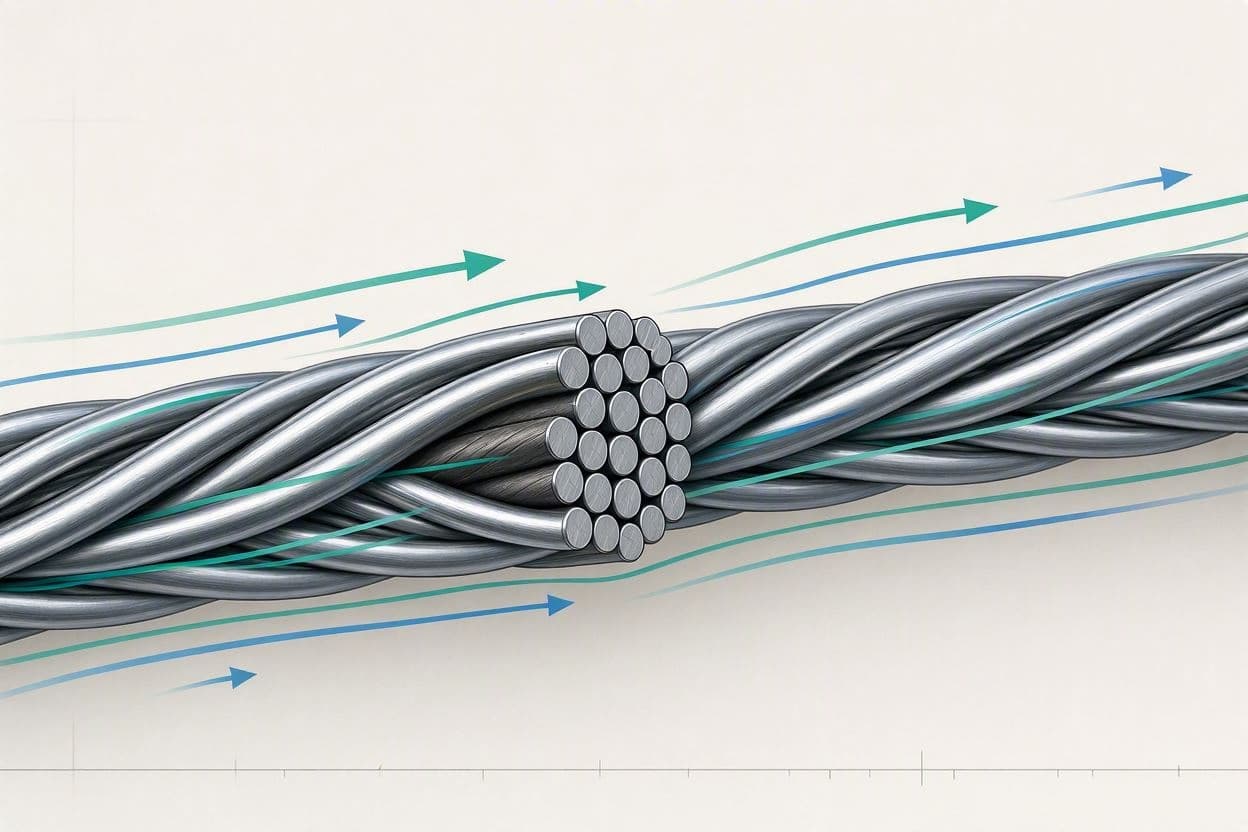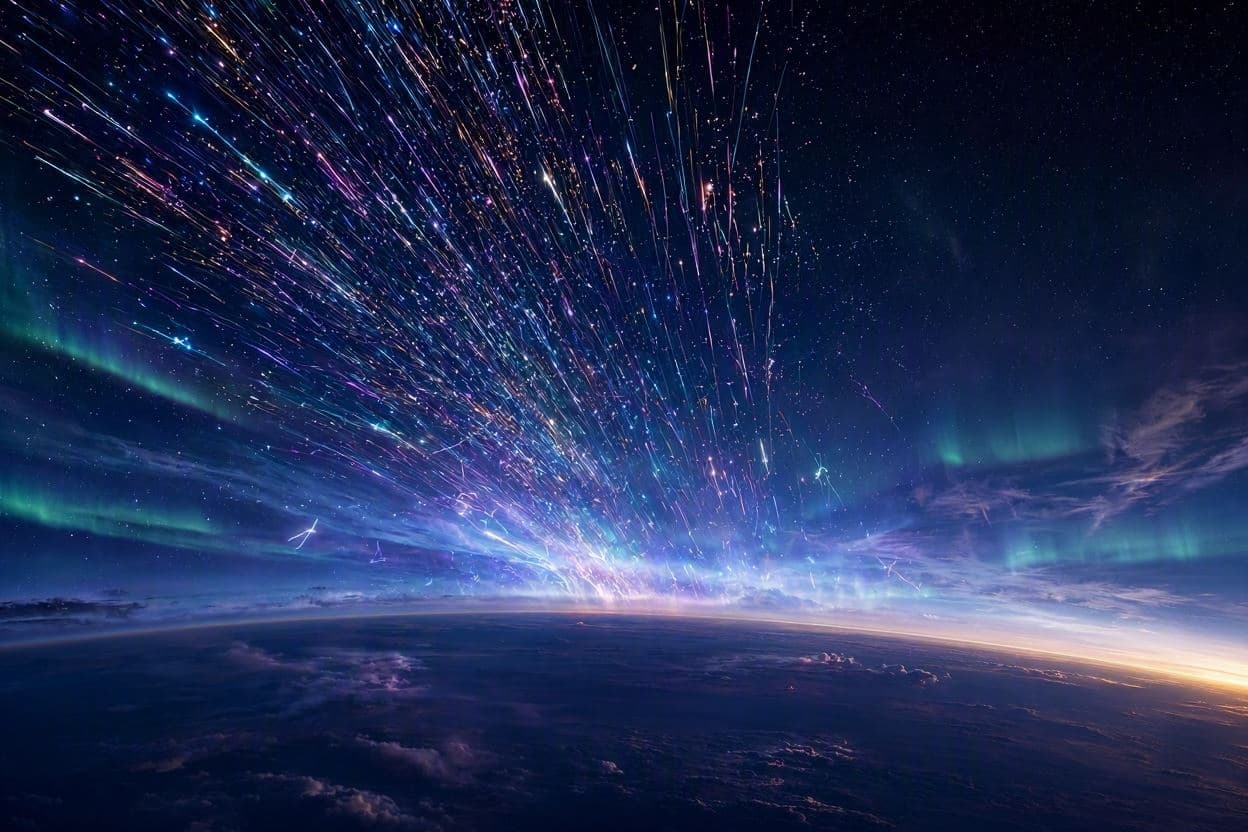
High within the atmosphere, invisible showers of particles rain down upon Earth, born from the collision of cosmic rays with air molecules. Now, physicists at CERN have taken a closer look at the genesis of these "cosmic rainstorms," using advanced detectors to simulate and study the initial moments of these high-energy events. This research sheds light on fundamental particle interactions and helps scientists better understand the origins of the universe’s most energetic phenomena.
Cosmic rays are high-energy protons and atomic nuclei that travel through space at nearly the speed of light. When they strike the Earth’s atmosphere, they create cascades of secondary particles, known as air showers. These showers are difficult to study directly because they occur randomly and at high altitudes. By recreating similar conditions in the controlled environment of CERN’s laboratories, researchers can observe the process in detail, capturing data that is impossible to get from natural observations alone.
The study focuses on the production of muons and other particles in the early stages of the shower. Using the Large Hadron Collider’s fixed-target experiments, scientists fired high-energy beams at stationary targets to mimic cosmic ray collisions. The resulting data provides precise measurements of particle cross-sections and interaction rates, refining the models used to interpret data from cosmic ray observatories around the world.
Understanding these processes is crucial for astrophysics. Cosmic rays carry information about distant supernovae, black holes, and other violent events in the cosmos. By decoding the signatures they leave in the atmosphere, scientists can trace their origins and learn more about the mechanisms that accelerate them to such extreme energies. It is a way of reading the history of the universe written in particle tracks.
The research also has implications for understanding background noise in other particle physics experiments. Cosmic ray showers can interfere with sensitive detectors, so knowing exactly how they develop helps scientists filter out this noise and isolate signals of interest. This practical application improves the accuracy of experiments searching for dark matter or other elusive particles.
For the physicists involved, the work is a blend of theoretical prediction and experimental verification. It tests the limits of the Standard Model of particle physics, checking whether current theories accurately describe high-energy interactions. Any deviations could point to new physics, opening doors to discoveries beyond our current understanding of matter and energy.
The collaboration at CERN brings together experts from around the globe, pooling resources and expertise to tackle complex questions. This international effort exemplifies the spirit of scientific inquiry, where curiosity drives cooperation across borders. The findings contribute to a global body of knowledge, enhancing our collective understanding of the natural world.
In the end, the study of cosmic rainstorms is a journey into the heart of matter. By zooming in on the birth of these particle cascades, physicists gain a deeper appreciation for the dynamic and energetic universe we inhabit. It is a reminder that even the empty space above us is filled with activity, waiting to be understood.
AI Image Disclaimer: The visual content in this article is AI-generated to depict the themes of particle physics and cosmic phenomena respectfully.
Sources: CERN Courier, Physical Review Letters, Symmetry Magazine, Nature Physics
Published by Banx Network. This article is part of the Banx decentralized media programme, powered by the BXE token on the XRP Ledger.