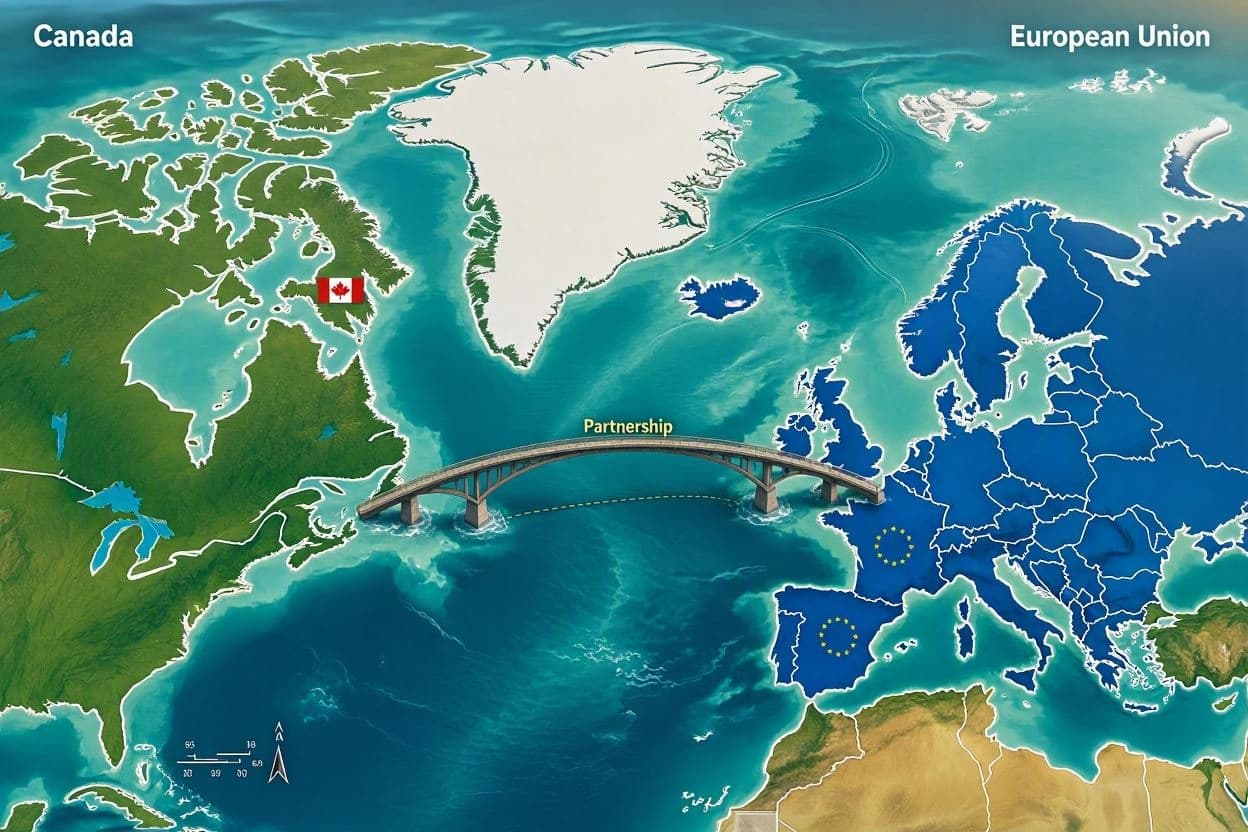
In the shifting tides of global diplomacy, Canada finds itself at a crossroads, looking eastward across the Atlantic as traditional ties with its southern neighbor face new strains. Prime Minister Mark Carney has signaled openness to a groundbreaking proposal from the European Union: associate membership. This potential arrangement, which would deepen economic and political integration without full accession, comes amid rising trade tensions with the United States under President Donald Trump. It is a strategic pivot that reflects a changing world order and Canada’s desire for diversified partnerships.
The concept of "associate membership" is novel, offering Canada a seat at the table in key EU decision-making bodies while maintaining its sovereignty. For Brussels, it represents an opportunity to strengthen alliances with like-minded democracies in the face of geopolitical uncertainty. For Ottawa, it offers a buffer against the volatility of U.S. trade policy, which has recently seen the imposition of tariffs and rhetorical threats. The proposal is not just about economics; it is about security, values, and shared vision.
President Trump’s reaction to the news has been characteristically blunt, labeling the idea "laughable" and threatening further trade restrictions if Canada moves forward. His administration views the move as a betrayal of North American solidarity, arguing that Canada should prioritize its relationship with the United States above all else. This pressure has placed Prime Minister Carney in a delicate position, balancing the need for economic stability with the demand for national autonomy.
For Canadian businesses, the prospect of closer ties with Europe is both exciting and daunting. Access to the EU’s single market could open new opportunities for exports, particularly in sectors like technology, agriculture, and energy. However, navigating the regulatory complexities of two major economic blocs requires careful planning and investment. The government is working to ensure that any agreement benefits workers and industries across the country, not just elite sectors.
Public opinion in Canada is divided. Some see the EU proposal as a necessary step toward independence and resilience, while others worry about drifting away from the United States, Canada’s largest trading partner. The debate reflects a broader identity crisis, as Canadians reassess their place in the world. Is Canada a North American nation first, or a global player with multiple allegiances? The answer may lie in a balanced approach that leverages both relationships.
European leaders have welcomed Canada’s interest, seeing it as a validation of their model of cooperation. Ursula von der Leyen, President of the European Commission, has praised Canada’s commitment to multilateralism and rule of law. The partnership could serve as a model for other nations seeking closer ties with the EU without full membership. It is a testament to the soft power of European integration.
Negotiations will likely be lengthy and complex, requiring approval from all 27 EU member states. Each country has its own interests and concerns, which must be addressed to reach a consensus. Canada’s diplomatic corps is preparing for a marathon of discussions, aiming to secure a deal that respects Canadian priorities while meeting European standards. The outcome will shape Canada’s foreign policy for decades to come.
In the end, the push for associate membership is a reflection of Canada’s evolving role on the global stage. It is a bid for stability in an unstable world, a way to hedge bets and build bridges. Whether it succeeds or not, the conversation itself marks a significant shift in how Canada views its future. It is a journey toward a more diversified and resilient identity.
AI Image Disclaimer: The images accompanying this article are AI-generated artistic interpretations of diplomatic meetings and geopolitical maps, not actual photographs of Prime Minister Carney, President Trump, or specific negotiation rooms.
Sources: Axios The Guardian NPR The Wall Street Journal
Published by Banx Network. This article is part of the Banx decentralized media programme, powered by the BXE token on the XRP Ledger.