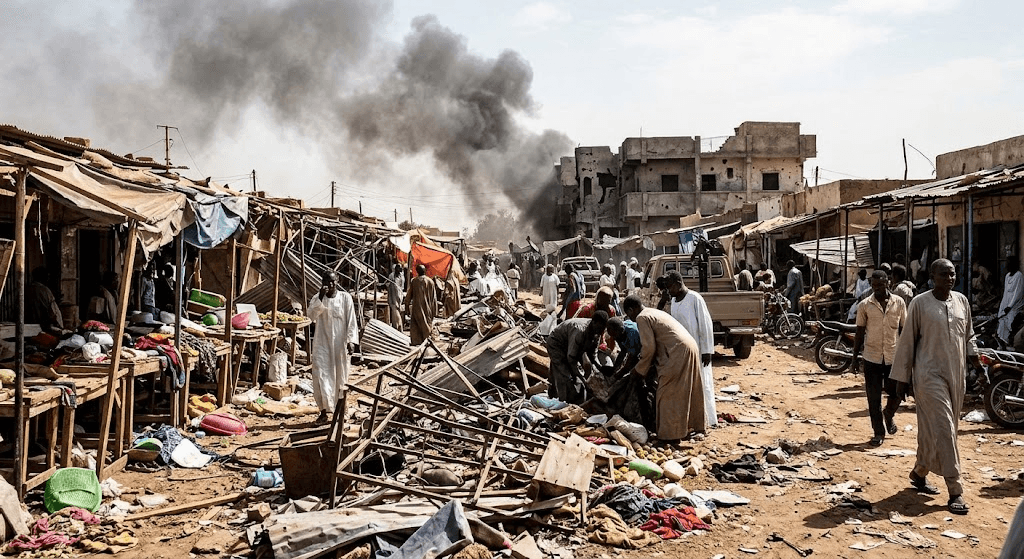
NYALA, Sudan — A devastating drone attack struck a bustling market in Nyala, South Darfur, killing at least 21 civilians and leaving more than 40 others severely wounded. The strike hit the heart of the regional hub, which has served as the de facto administrative stronghold for the paramilitary Rapid Support Forces (RSF).
The attack occurred during peak morning business hours when local merchants, shoppers, and livestock traders filled the open-air market. Witnesses described sudden explosions ripping through stalls, triggering mass panic and leaving vital infrastructure engulfed in flames.
"People were trading normally when the explosion hit," said an eyewitness who assisted in rescue efforts. "There was no warning. Dozens of people were thrown to the ground, and stall structures immediately caught fire."
Medical personnel at local facilities reported struggling to treat the influx of casualties. Dozens of victims arrived with severe blast injuries and shrapnel wounds, pushing emergency response teams beyond capacity amid chronic shortages of medical supplies.
Since taking control of Nyala, the RSF has utilized the city as its primary political and logistical center in Darfur. While no faction immediately claimed responsibility for the strike, the operation marks a major escalation in the ongoing aerial campaign targeting RSF-controlled territory across western Sudan.
The bombing highlights the persistent danger to civilians caught in the crossfire of Sudan's conflict. Humanitarian organizations have repeatedly warned against the deployment of explosive weapons and unguided strikes in densely populated urban centers, where markets, hospitals, and residential neighborhoods increasingly become targets.
Local aid workers warn that the destruction of commercial hubs like Nyala's market will further worsen severe food insecurity and economic distress across Darfur.
International community leaders and human rights watchdogs have urgently renewed calls for an immediate ceasefire, pressing both warring factions to establish safe humanitarian corridors and protect vital civilian supply routes. Without direct international intervention and enforced diplomatic pressure to curb aerial strikes on civilian centers, aid agencies caution that millions across the region face an escalating catastrophe with virtually no remaining safety net.
Published by Banx Network. This article is part of the Banx decentralized media programme, powered by the BXE token on the XRP Ledger.