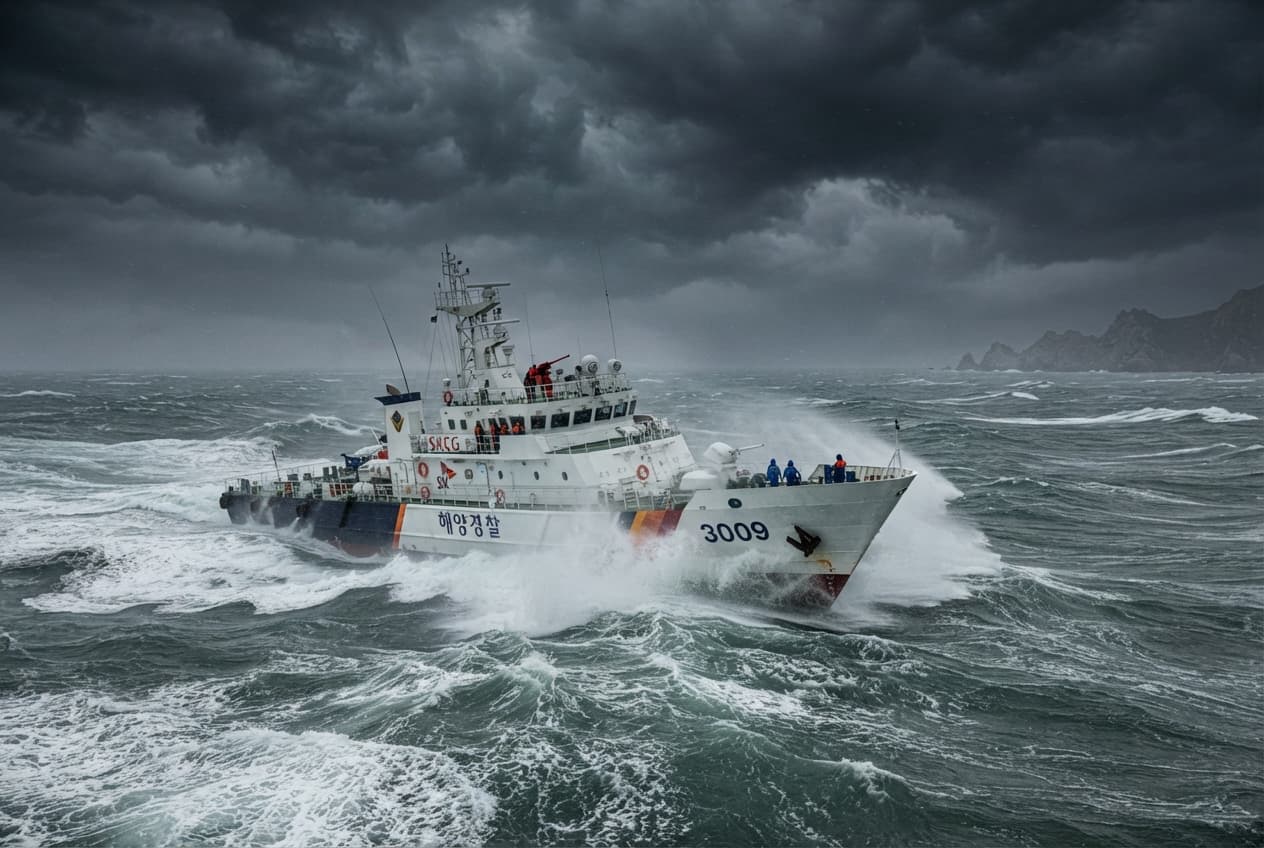
Seoul, South Korea—A commercial cargo vessel sank in turbulent offshore waters off South Korea's southern coastline early Monday morning after being battered by towering waves and gale-force winds, leaving five crew members dead. Maritime rescue coordination centers received an automated distress beacon from the sinking ship just before dawn, prompting the immediate deployment of coast guard cutters and rescue helicopters. Heavy swells and near-zero visibility hampered initial search operations as rescue teams battled torrential rain and hazardous sea states to locate survivors.
Coast guard patrol vessels managed to pull several unresponsive sailors from the churning swells, transferring them to emergency medical teams stationed at the nearest port facility. Hospital administrators confirmed that five crew members failed to revive following prolonged exposure to freezing water and severe physical trauma. Specialized underwater recovery teams prepared sonar equipment to map the exact resting position of the sunken hull lying on the continental shelf.
"High swells and storm-force winds created treacherous extraction conditions, severely limiting our helicopter hoist operations during the crucial initial response phase," a regional coast guard rescue mission coordinator stated at the site.
Maritime safety investigators launched an inquiry into the vessel's cargo manifest and structural integrity records to determine why the ship took on water so rapidly. Preliminary weather logs indicated that gale warnings had been issued for the maritime zone hours before the vessel attempted its routine coastal transit. Shipping industry representatives expressed condolences to the families of the victims while cooperating fully with national maritime administration audits.
Port authorities suspended outbound commercial departures across the regional shipping lane as severe weather warnings remained in effect for the coastal shelf. Naval auxiliary vessels joined the ongoing search grid to scan for any additional life rafts or drifting debris fields swept away by the strong currents. Commercial shipping companies across the peninsula activated emergency fleet communications to verify the status of other vessels operating in the storm zone.
Maritime unions renewed calls for stricter weather-routing protocols and mandatory stability checks for aging coastal freighters navigating rough winter sea corridors. Government transport ministers scheduled an extraordinary briefing in the capital to review national maritime emergency response readiness standards. Salvage coordinators began drafting containment plans to monitor potential fuel oil leakage from the submerged wreck site.
Search cutters continued sweeping the outer perimeter as evening darkness settled over the turbulent grey waters off the coast. Registry documents for the sunken freighter were seized by maritime inspectors for comprehensive legal and operational review. Officials promised regular updates as forensic teams complete autopsies and interview surviving crew members once medical clearance is granted.
Published by Banx Network. This article is part of the Banx decentralized media programme, powered by the BXE token on the XRP Ledger.