Quito, Ecuador—A strong shallow-depth earthquake struck Ecuador's Pacific coastal zone early Monday, triggering widespread panic, building collapses, and emergency structural inspections across multiple provinces. Seismological monitoring networks registered the tremor off the coastline, sending violent rolling shocks inland that fractured masonry walls and severed municipal power grids. Emergency dispatch centers received hundreds of distress calls from residents trapped inside residential apartments and commercial storefronts damaged by the sudden ground motion.
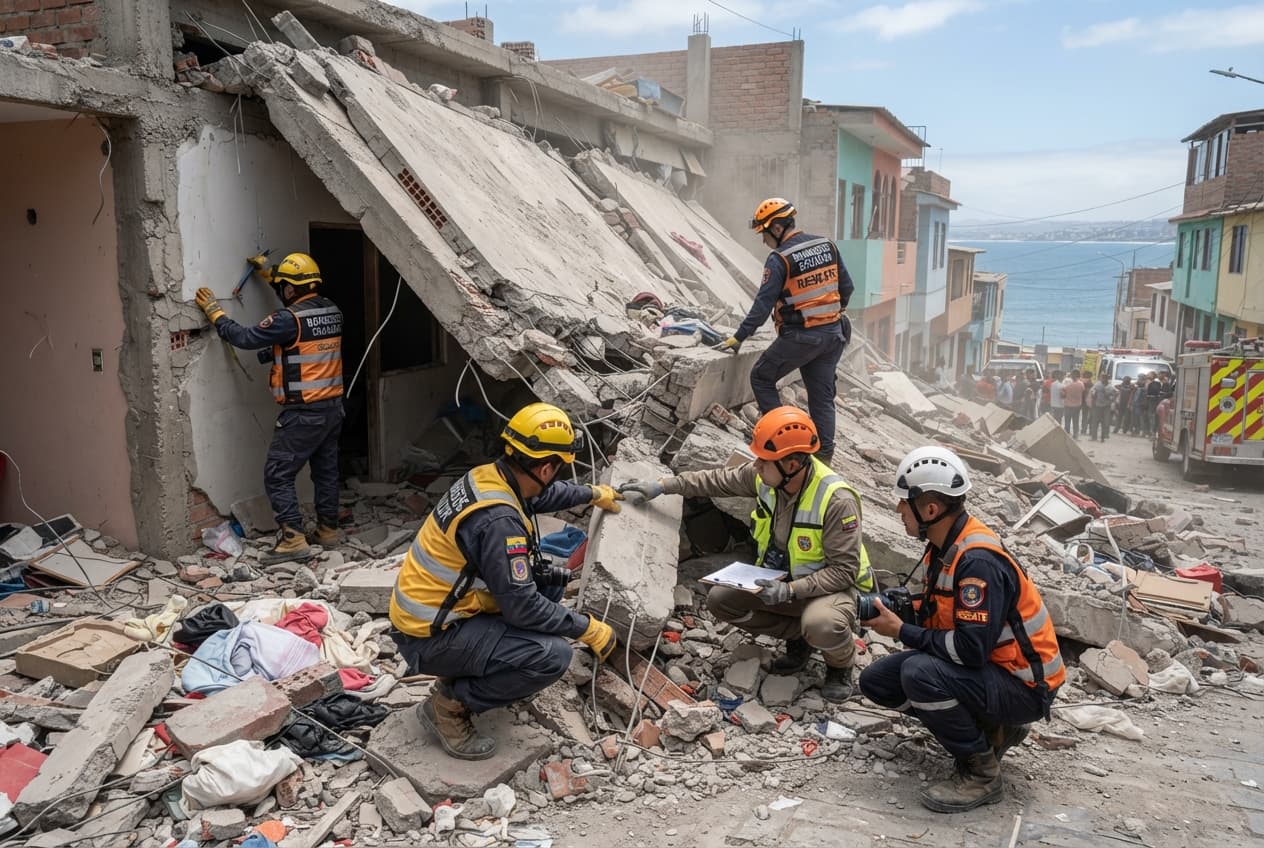
Civil defense teams rushed heavy lifting equipment to the worst-hit coastal municipalities, where older unreinforced brick structures crumbled into the streets. Local health clinics reported treating numerous patients for lacerations and panic attacks, while morgue officials confirmed that two individuals died when concrete overhangs collapsed onto pedestrian walkways. Search and rescue units utilizing acoustic sensors combed through rubble piles in search of missing persons reported trapped in commercial district basements.
"The shallow focus of the earthquake amplified surface shaking intensity along the soft coastal soils, causing immediate structural failures in older buildings," a regional civil defense coordinator stated at the site. "Our primary objective right now is stabilizing leaning walls before aftershocks trigger further collapses."
Municipal water authorities shut down main distribution aqueducts temporarily to inspect pipelines for rupture damage following reports of localized flooding from broken mains. Electrical utility crews mobilized emergency generators to power critical hospital facilities while high-voltage transmission lines underwent safety checks. Transportation officials temporarily halted regional rail services to inspect coastal viaducts and tunnel linings for hairline fractures.
Federal disaster relief agencies airlifted emergency supplies, drinking water, and modular shelters to municipal staging areas set up in public plazas. Makeshift medical tents sprang up outside damaged regional hospitals as medical staff treated patients under open skies out of fear of secondary structural failures. Engineering associations dispatched volunteer inspection teams to tag homes with color-coded safety notices indicating whether residents could safely return indoors.
International seismology agencies recorded multiple aftershocks ranging in magnitude throughout the morning, keeping coastal populations on edge. Coastal mayors declared local states of emergency to fast-track funding allocations for debris removal and temporary housing construction. Insurance representatives established mobile claims processing stations in central squares to assist families whose properties sustained structural devastation.
The national seismic institute warned citizens to remain clear of compromised architectural structures until engineering clearance teams complete comprehensive municipal surveys. Relief convoys navigated debris-strewn streets under heavy police escorts to distribute emergency provisions to isolated rural fishing hamlets. Engineers continued shoring up unstable facades with timber beams as dusk fell over the disaster zone.
Published by Banx Network. This article is part of the Banx decentralized media programme, powered by the BXE token on the XRP Ledger.