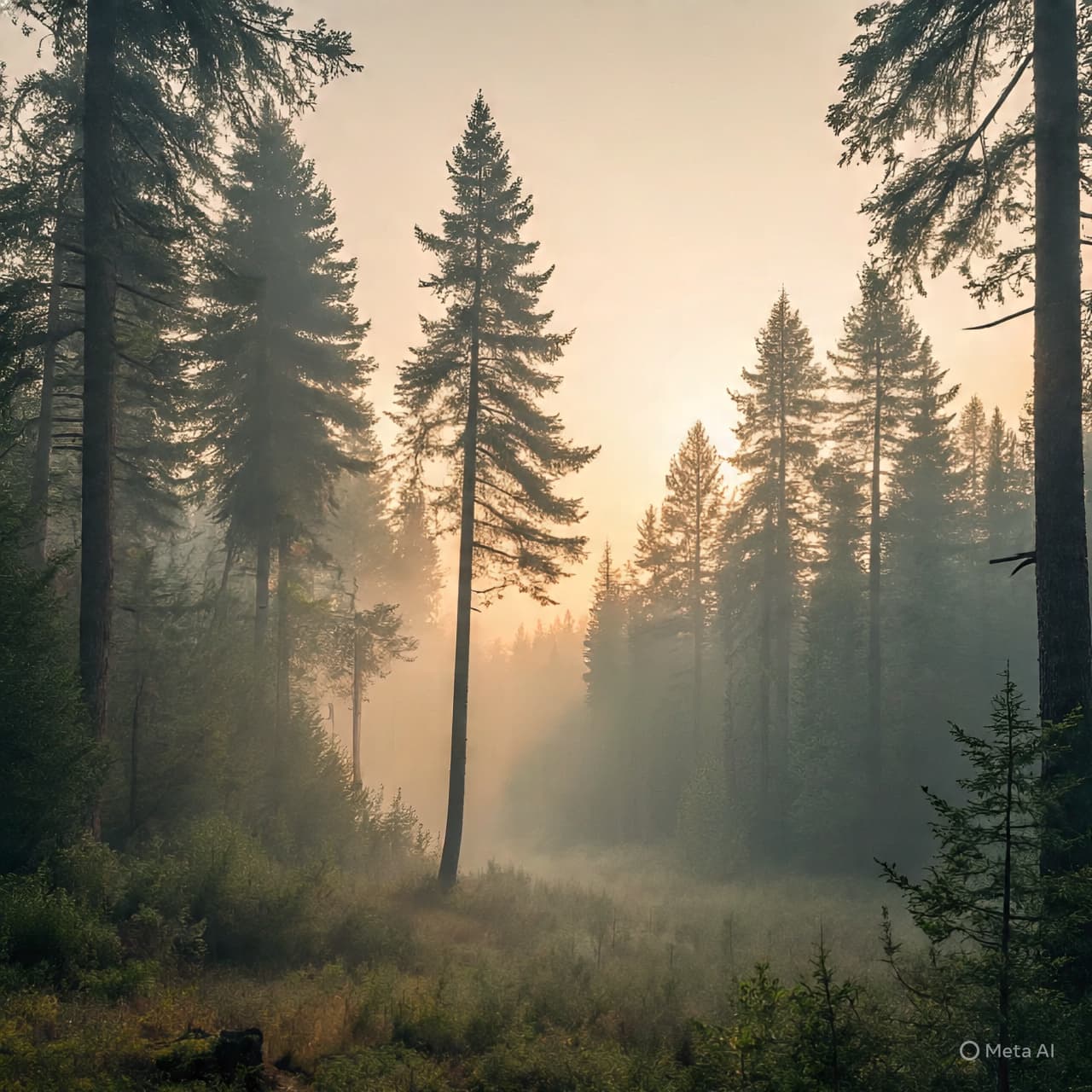
In the quiet tapestry of northern woods, where evergreen boughs buffer the long winters and the snow lingers like a whispered secret, there unfolds a subtle shift in the unseen chemistry of the soil. For generations these boreal forests — stretching across the high latitudes of the Northern Hemisphere — have stood as silent sentinels of Earth’s slow rhythms. Yet in recent decades, rising atmospheric carbon dioxide has begun to nudge those rhythms in ways that are only now coming into view.
At first glance, the connection between the invisible CO₂ spiraling skyward and the nitrogen buried beneath needles and needle‑litter might seem abstract. But beneath the forest floor, where roots and fungi whisper back and forth in nutrient exchange, rising carbon dioxide weaves quietly into the cycle of life. Emerging research suggests that elevated CO₂ doesn’t just spur leafy growth — it may tighten the nitrogen cycle in ways that leave less of this essential nutrient available where it matters most. For boreal forests, nitrogen isn’t just an ingredient — it’s a foundation stone of growth and resilience in an often harsh environment. What appears as enhanced photosynthesis on the surface might, paradoxically, starve the soil of nitrogen that helps trees persist and thrive.
In the most recent multi‑decadal study of forest nitrogen using tree‑ring isotopes, researchers found that as atmospheric CO₂ climbed over the past half‑century, measures of nitrogen availability in boreal trees declined. By analyzing the subtle shifts in nitrogen isotope signatures in wood from pine and spruce across Sweden’s vast forest landscapes, scientists could peer back through time and reconstruct how nitrogen dynamics changed. What they saw was consistent: as the global CO₂ signal rose, the story told by nitrogen became more muted, suggesting that trees and soil microbes were drawing down available nitrogen more tightly than before.
Two intertwined processes appear to be at work. On one hand, elevated CO₂ tends to enhance photosynthesis and plant growth, increasing the demand for nitrogen as trees build more biomass. On the other, the influx of carbon alters the balance between plants, microbes, and soil nutrients, often encouraging microbes to hoard nitrogen in their own tissues during decomposition rather than releasing it back into soil for plants. This “tightening” of the nitrogen cycle can progressively limit nitrogen availability over time, a phenomenon ecologists refer to as progressive nitrogen limitation.
Importantly, this emerging pattern seems distinct from changes driven by atmospheric nitrogen deposition — the input of nitrogen compounds from industrial and agricultural emissions — which has long been recognized as a driver of nutrient enrichment in some ecosystems. In boreal regions with low nitrogen deposition, the declining nitrogen availability correlates most strongly with rising CO₂ itself. That suggests a direct ecological influence of the global carbon rise that extends well beyond the more familiar carbon‑fertilization effects.
The implications are quietly profound. Boreal forests hold an outsized share of the planet’s terrestrial carbon — a boy standing beneath their towering canopy could feel the weight of their global importance. If nitrogen becomes scarcer relative to carbon gains, these forests may be slower to accumulate biomass over time than once expected, altering forecasts of how much carbon the land can absorb in an era of warming.
Yet this interplay is not simply a tale of decline. It reflects the layered complexity of ecosystem responses — of roots and fungi, of microbes and soils — all moving under the subtle pressures of a changing atmosphere. There is still uncertainty about how universal these patterns may be across the vast boreal zone, or how other factors like temperature, moisture regimes, and species composition might modulate them.
In this emerging portrait of boreal nutrient dynamics, the quiet drama of soil chemistry reveals itself as a lens into the future. As scientists continue to refine their understanding, one idea stands clear: the forest’s story is never just one thread, but many braided together by the living earth.
AI Image Disclaimer (rotated wording) Visuals are created with AI tools and are not real photographs.
📚 Sources (Mainstream/Credible) Nature Scientific American Proceedings of the National Academy of Sciences (PNAS) Global Change Biology Environmental Research Letters
Published by Banx Network. This article is part of the Banx decentralized media programme, powered by the BXE token on the XRP Ledger.