There is a particular awkwardness that settles over an international gathering when a participant withdraws not because of disagreement with the subject, but because of discomfort with a specific framing—a withdrawal that speaks louder than any statement could, that reveals the tensions beneath the surface of alliance and partnership. In Vilnius, Lithuania, this week, that awkwardness arrived at the EU DisinfoLab conference, an annual gathering of researchers and civil society organizations focused on combating foreign information manipulation and interference. Canada, along with the European External Action Service and Lithuania's Foreign Ministry, withdrew its sponsorship. The reason, according to Global Affairs Canada, was the framing of panels discussing the United States as a source of foreign interference .
The conference featured sessions examining "foreign information manipulation and interference (FIMI)"—a phenomenon in which foreign governments or actors manipulate information to confuse, divide, or mislead the public and erode confidence in institutions. Among the panels was one titled "How to push back on the U.S. as a foreign interference threat," and another on disinformation in the Arctic that proposed discussing "growing evidence that the United States has, in specific Arctic contexts, operated as a FIMI actor" . For the Canadian government, that framing was a step too far. Samantha Lafleur, a spokesperson for Global Affairs Canada, said the government "took issue with the framing of some panels" and decided to "revise its participation" in those sessions .
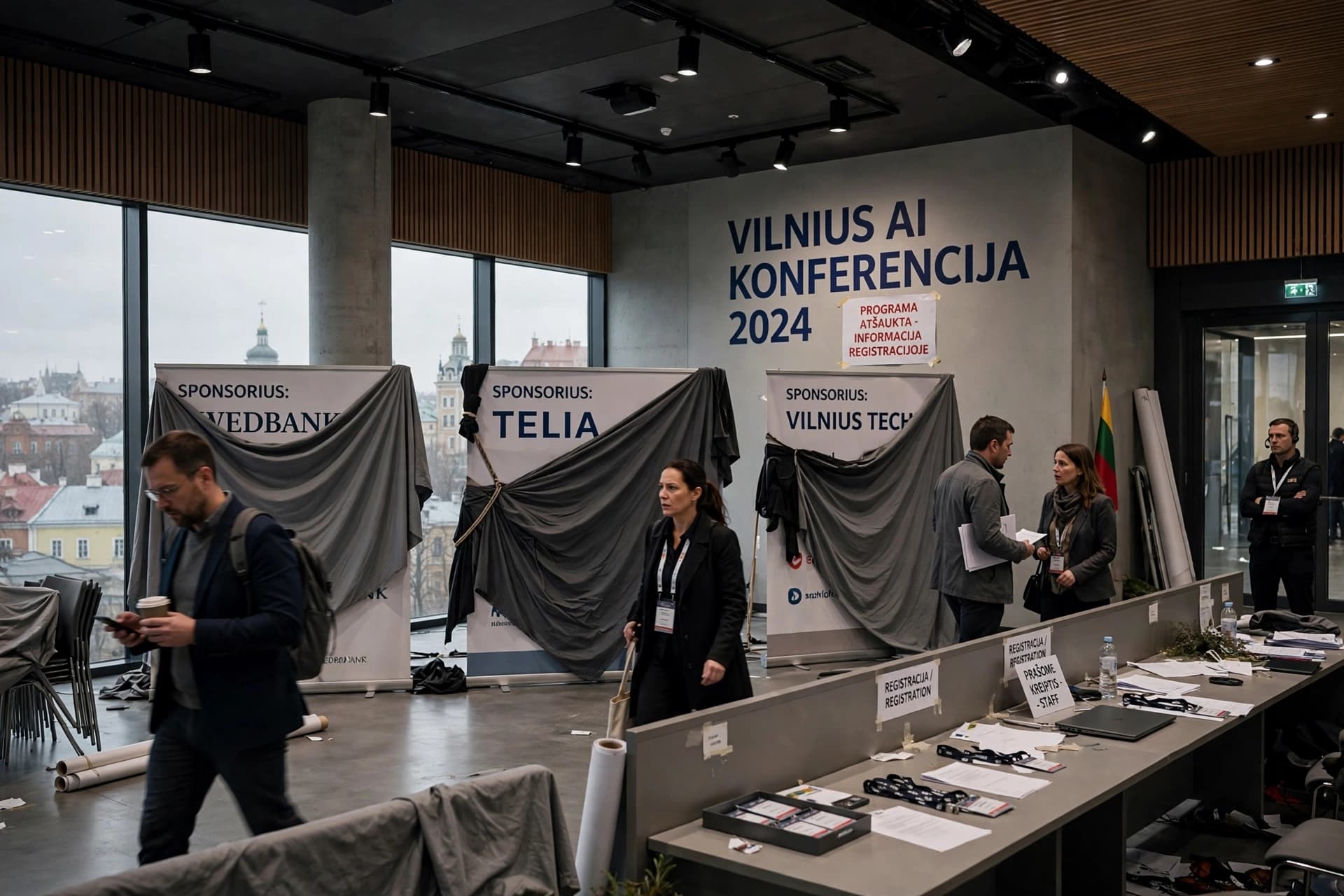
The withdrawal did not go unnoticed. Photos shared with CBC News showed that the names of the Canadian, Lithuanian, and EU sponsors had been covered up on signs around the conference venue as the gathering got underway . The European External Action Service said it asked to have its logo removed "in view of the content of the programme," adding that organizers "chose to frame some of the discussions in a way which does not align with the official positions held by the EU" .
For the researchers and speakers who had traveled to Vilnius, the withdrawal was a shock. Ben Shultz of the American Sunlight Project, who was scheduled to present on the Arctic panel, called the decisions "a shock" and questioned whether the governments had been pressured. "Thankfully every speaker has still shown up, which is awesome, and I think a testament to the resolve of the research community," he said. "But it's definitely put a bit of a damper on the atmosphere" .
The timing of Canada's withdrawal adds another layer of complexity. It came the same week that The Globe and Mail reported that some people involved in campaigning for Alberta independence had met with U.S. entities on both sides of the border, including meetings in U.S. State Department offices in Washington, D.C. last year. It also comes as Canada remains embroiled in a bitter trade dispute with the Trump administration . Global Affairs Canada maintained that the country "remains firmly committed to addressing the challenge of disinformation" and looks forward to engaging with partners on efforts to counter it . But the message sent by the withdrawal was clear: some framings, even in the fight against disinformation, are more uncomfortable than others.
AI Image Disclaimer: The images accompanying this article were generated by artificial intelligence and are for illustrative purposes only.
Sources: CBC News, Radio-Canada, Politico via Tanjug
Published by Banx Network. This article is part of the Banx decentralized media programme, powered by the BXE token on the XRP Ledger.