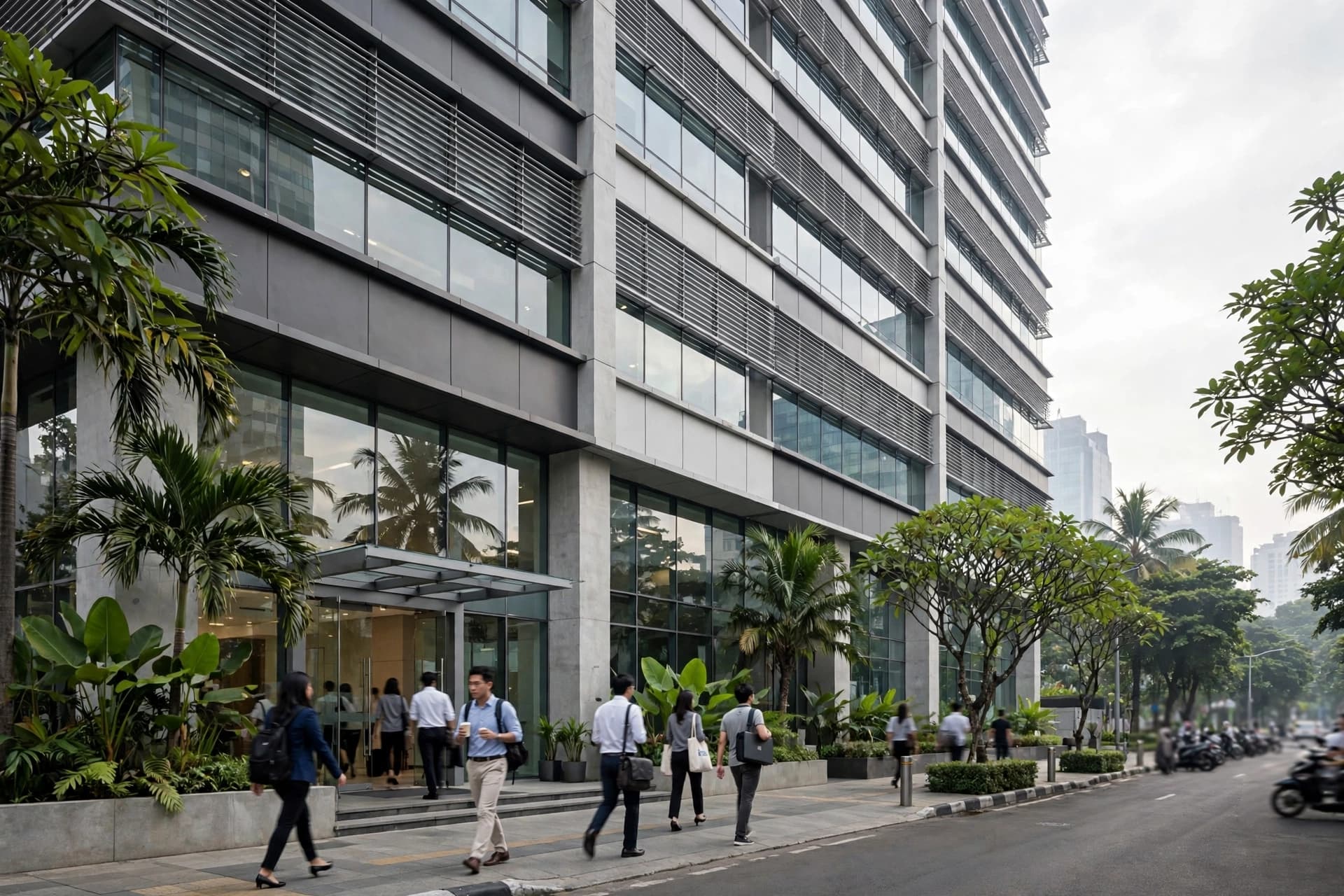
In a government office, a budget often appears as a set of columns, allocations, and deadlines. Beyond the figures, however, each line reflects a decision about how public resources will be used. Travel, administration, infrastructure, and essential services compete for space within a financial plan that must respond to both immediate needs and longer-term ambitions.
Indonesia has introduced new spending controls for the remainder of 2026. Reuters reported on October 8 that Finance Minister Suahasil Nazara directed ministries and government agencies to reduce their remaining travel budgets by 30% and freeze nonessential expenditure. The measures were intended to help keep the fiscal deficit within the legal ceiling of 3% of gross domestic product.
The directive came as the government’s latest deficit estimate stood at 2.85% of GDP, higher than the original target of 2.68%, according to the Reuters report. The figures placed additional importance on the final months of the budget year, when agencies must manage remaining funds while continuing to deliver their assigned programs and services.
Travel reductions are one way governments can limit spending without immediately cancelling major programs. Official trips, meetings, and administrative activities can sometimes be postponed, combined, or conducted remotely. The actual savings depend on how agencies implement the directive and whether reduced spending in one area creates additional costs elsewhere.
The broader challenge is to distinguish between expenditure that can be delayed and spending that supports essential public needs. Governments must maintain services while reviewing activities that may be less urgent. This requires more than a uniform percentage reduction; it also requires agencies to consider which commitments can be adjusted without disrupting operations.
Energy prices have added pressure to the fiscal outlook. Higher global fuel costs can increase government subsidy obligations and raise the cost of transport, logistics, and public operations. When those expenses rise unexpectedly, budget planners may have less room to accommodate other priorities without increasing borrowing or finding savings elsewhere.
Indonesia’s fiscal rules are designed to limit the deficit relative to the size of the economy. Staying within the ceiling can help support confidence in the country’s public finances, but the process of meeting that target involves choices about revenue, spending, and the timing of government programs. A deficit figure alone does not show whether the underlying distribution of spending is effective or equitable.
The budget discussion also has implications for businesses and households. Public spending can support construction, procurement, employment, and local demand, while fiscal restraint may affect the timing of contracts and other activities. The impact depends on which items are reduced and whether essential investment continues as planned.
For ministries, the coming weeks will involve reviewing allocations and preparing budget proposals under tighter constraints. Reuters reported that agencies were expected to submit proposals by October 16. Those submissions would help determine how the government intends to preserve public services while managing the deficit.
The spending measures illustrate a familiar challenge in public finance: maintaining the capacity to act while ensuring that commitments remain affordable. Indonesia’s immediate objective is to keep the deficit below its legal limit, but the longer-term task is to align spending with sustainable revenue and national priorities.
As the year approaches its final stretch, the effectiveness of the measures will depend on implementation, not merely on the announcement of cuts. Careful spending can create room for essential needs, provided that restraint is applied with attention to public services and the wider economy.
SEO Slug: `indonesia-government-spending-cuts-fiscal-deficit-2026`
Hashtags: #Indonesia #PublicFinance #FiscalPolicy #GovernmentBudget #IndonesianEconomy #BusinessNews #EconomicOutlook
Image Disclaimer
These AI-generated illustrations depict general government budgeting and administrative work. They are not photographs of specific Indonesian ministries, officials, or meetings.
Published by Banx Network. This article is part of the Banx decentralized media programme, powered by the BXE token on the XRP Ledger.