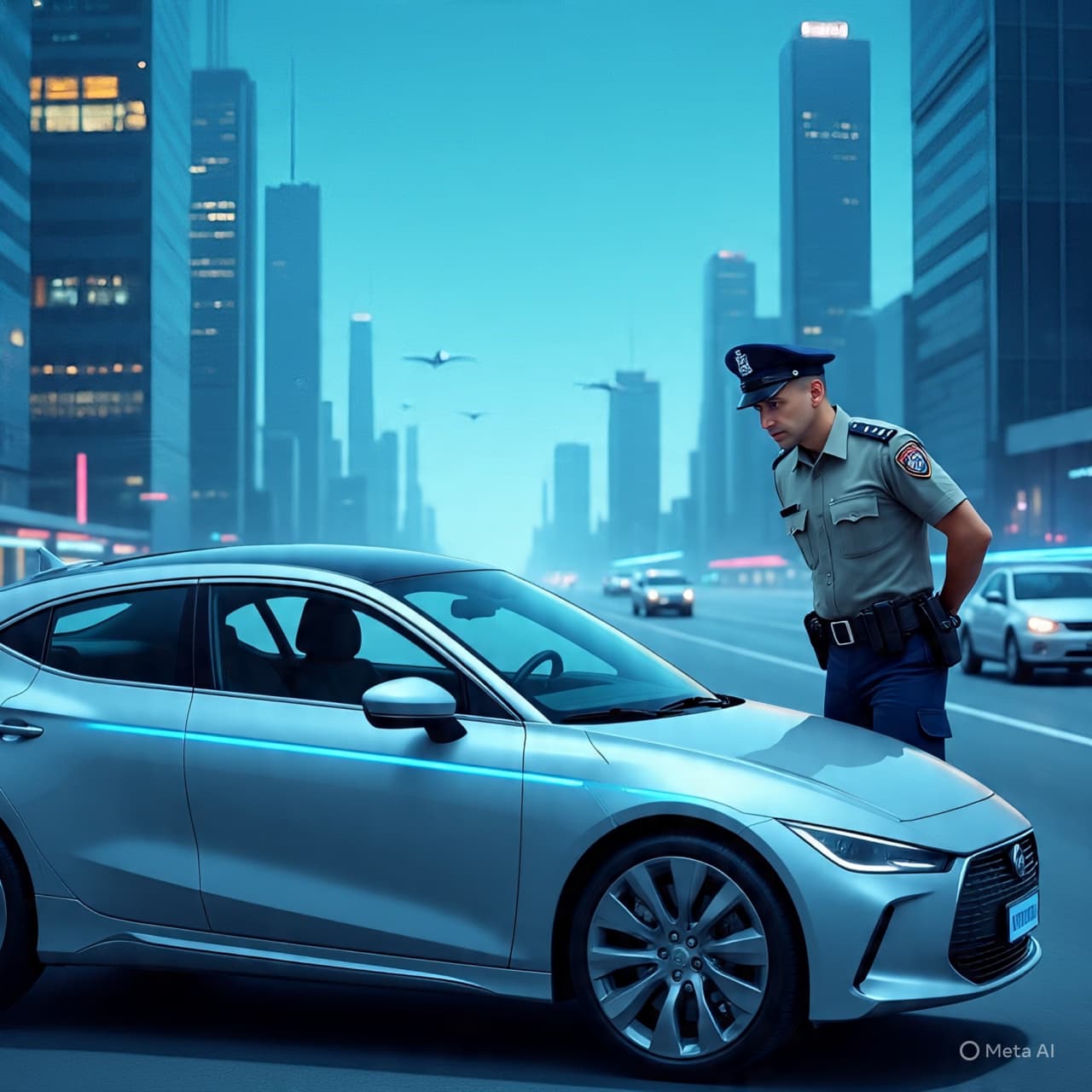
On a busy California street, a small scene unfolded that seemed almost comical but pointed toward profound questions about the future of transportation. A Waymo autonomous taxi made an illegal U-turn, catching the attention of local police officers. But when they approached the vehicle, ready to issue a ticket, they found themselves staring at an empty driver’s seat. The dilemma was simple to describe but difficult to resolve: who is responsible when a car drives itself into a violation? With no human behind the wheel, the traditional script of enforcement—license, registration, citation—suddenly had no actor to deliver it to. Waymo, the company behind the vehicle, quickly responded. A spokesperson explained that the incident was the result of a temporary glitch and reiterated that the company’s system is programmed to follow traffic laws. In this case, the self-driving software failed, raising the broader question of what accountability looks like in a world where machines share the road with humans. For police, the encounter was a reminder of how quickly technology outpaces regulation. Existing traffic codes were written with human drivers in mind. They assume the presence of judgment, error, and responsibility tied to a person. Autonomous systems, however, diffuse that responsibility across engineers, companies, and lines of code. A ticket written to a car has little meaning when the driver is a set of algorithms. The public, too, is watching. Self-driving cars carry the promise of fewer accidents and more efficient roads, but moments like these highlight the messy transition between ideals and reality. While some see glitches as expected growing pains, others wonder whether trust can be safely extended to a system that sometimes forgets the rules. California has long been the stage for technological experiments, and this latest event underscores the unfinished script of automation. As driverless taxis become more common, society will be forced to revisit not only traffic laws but the very definition of responsibility. For now, the ticket book remains closed—not out of forgiveness, but out of uncertainty.
This article is based on reporting from The Verge, Associated Press, Reuters, and TechCrunch.
Published by Banx Network. This article is part of the Banx decentralized media programme, powered by the BXE token on the XRP Ledger.