Opening Article: There are cars that ask to be admired from a distance, and then there are cars that quietly invite you to take the long way home. In the early mornings, when roads are still half-asleep and the city breathes slowly, the idea of a hypercar easing into daily life once felt like a contradiction. Power, after all, was meant to be rare and ceremonial. Yet history has a way of softening absolutes, and in the shared story of McLaren and Mercedes, performance slowly learned how to live alongside routine.
Long before “daily drivability” became a phrase whispered in supercar circles, these two names explored what happens when racing obsession meets road-going restraint. Their collaboration planted a question rather than an answer: could the peak of automotive engineering exist without demanding sacrifice from its driver? Over time, that question matured into something tangible, something that hinted at a future where extraordinary machines no longer needed to hide from everyday life.
Article Body: The roots of this idea trace back to moments when McLaren and Mercedes blurred boundaries between track and street. Their engineering philosophies, shaped by Formula One and endurance racing, began to influence cars that wore license plates without apology. The Mercedes-Benz SLR McLaren was one such step — not perfect, but significant — offering immense power wrapped in grand touring comfort. It suggested that extreme performance did not have to abandon civility, even if the balance was still being learned.
Years later, the philosophy reached a more focused expression with the Mercedes-AMG One. Drawing directly from Formula One hybrid technology, it arrived not as a museum piece, but as a road-legal machine designed to be driven — not just displayed. Engineers labored over details that rarely make headlines: idle stability, emissions compliance, manageable ride quality, and the simple act of starting the engine without ceremony. These were not compromises, but translations, turning race-bred complexity into something usable beyond the pit lane.
McLaren, walking a parallel path, refined the notion that a hypercar could adapt to its driver rather than dominate them. From the P1 onward, the company emphasized usability alongside spectacle, ensuring visibility, ergonomics, and drivability were treated as engineering priorities. In this shared evolution, the idea of the “daily hypercar” began to feel less like marketing poetry and more like a legitimate category taking shape.
What makes this moment quietly historic is not raw speed or lap times, but intent. These cars were engineered with the understanding that owners might drive them in traffic, park them at cafés, or take them on unplanned journeys. Climate control mattered. Suspension compliance mattered. Even software behavior in low-speed driving became part of the story. The hypercar, once defined by excess and rarity, was slowly learning the language of normal days.
This shift does not suggest that such machines are practical in the ordinary sense, nor does it pretend they belong to everyone. Instead, it reflects a philosophical turning point — one where engineering excellence is measured not only by how fast a car can go, but by how comfortably it can exist when it isn’t going fast at all. In that space, McLaren and Mercedes quietly rewrote expectations.
Closing Article: Today, the idea of a daily hypercar no longer feels impossible. Through years of collaboration, experimentation, and refinement, McLaren and Mercedes helped demonstrate that extreme performance and everyday usability can coexist. While such cars remain rare, their influence is already shaping how future high-performance vehicles are conceived, engineered, and ultimately driven.
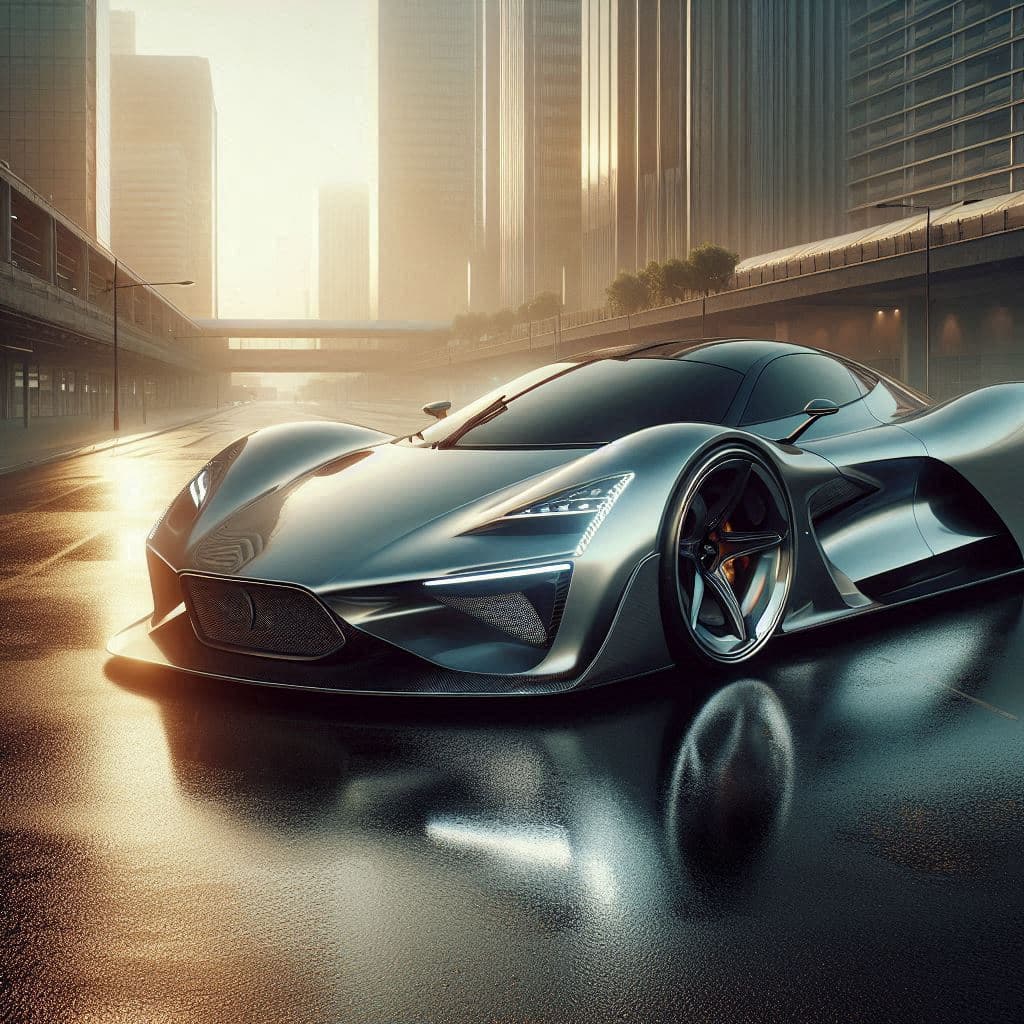
AI Image Disclaimer “Graphics are AI-generated and intended for representation, not reality.”
Source Check Credible Sources Found:
Top Gear MotorTrend Car and Driver Autocar Road & Track
Published by Banx Network. This article is part of the Banx decentralized media programme, powered by the BXE token on the XRP Ledger.