
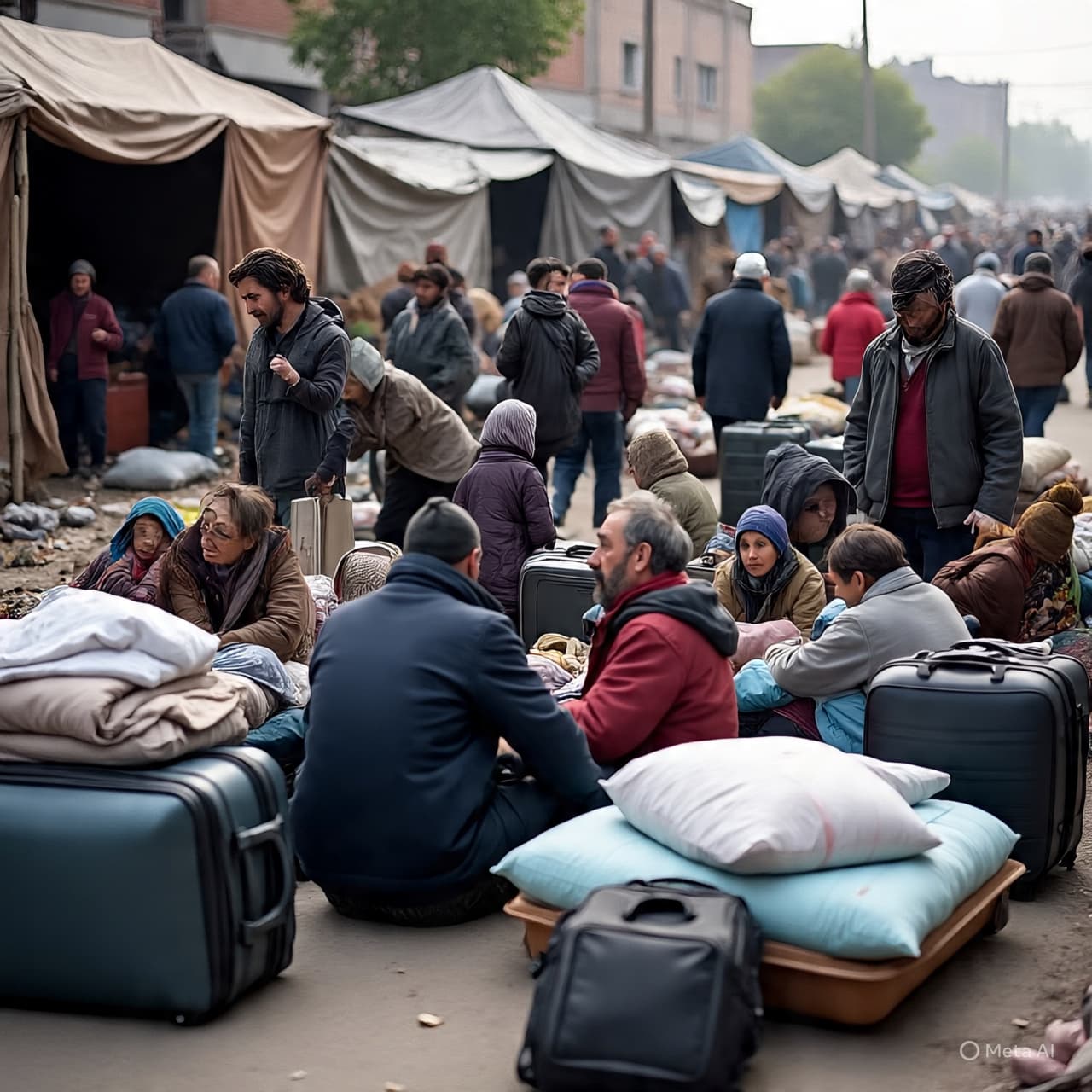
In the soft light before dawn, when the Mediterranean breeze carries salt and quiet thoughts across Beirut’s long promenades, the distant rumble of aircraft and explosions can feel like a rupture in the calm of everyday life. For residents of this ancient city — a place of poetry, commerce, and layered histories — such sounds are always heavy with meaning. In the latest chapter of a conflict that stretches across the Middle East, Lebanon’s leaders have openly turned on Hezbollah as Israeli airstrikes hit Beirut and thousands of civilians seek shelter from the violence, highlighting a moment of sharp internal tension and widespread fear.
For years, Hezbollah — the Iranian‑aligned militant group — held powerful sway in Lebanese politics and security policy, often acting independently of the central government. But in early March 2026, tensions erupted again when Hezbollah launched missile and drone attacks on Israel following the killing of Iran’s Supreme Leader, sparking a swift military response. Israeli jets targeted Hezbollah positions across Lebanon, especially in Beirut’s southern suburbs — strongholds of the group’s support base. As air‑raid sirens blared, families fled their homes, piling into cars with children and belongings, while others huddled in hastily prepared shelters.
In a significant political shift, Lebanon’s government — long cautious about challenging Hezbollah — took the rare step of formally banning the group’s military activities. President Joseph Aoun and Prime Minister Nawaf Salam issued statements asserting that all decisions on war and peace belong only to the state, not to an armed faction. They condemned Hezbollah’s unilateral attacks as illegal and a threat to national security, decisions that reflect growing domestic unease about being drawn into a wider war. This stand marks a striking departure from prior years, when Hezbollah’s actions were often tacitly tolerated or accommodated within Lebanon’s fractured political landscape.
The toll on everyday life has been swift and stark. According to government figures, over 29,000 civilians have been displaced by the strikes, with highways clogged by families fleeing south and emergency shelters set up across the country to receive those seeking refuge. Schools and public buildings have become temporary havens, yet many who have fled find themselves sleeping in public spaces or struggling to secure even basic necessities. The humanitarian strain adds a poignant layer to political arguments, as ordinary people bear the brunt of violence and displacement.
Lebanese citizens — from Beirut’s leafy neighborhoods to rural towns outside the capital — have expressed a mix of exhaustion, anger, and fear. Many who once supported Hezbollah’s resistance rhetoric now question the group’s priorities, accusing it of putting ideological alliances above the immediate safety and well‑being of Lebanon’s people. Such sentiments have gained traction amid the country’s enduring economic hardships and weariness with recurrent cycles of conflict.
The stance taken by the Lebanese government does not come without risks. Hezbollah remains an armed and politically influential organization, and its rejection of disarmament has drawn warnings that internal tensions could flare into broader confrontation. The group itself described the conflict as a response to Israeli and U.S. actions, portraying its stance as defensive and rooted in longstanding resistance to external pressure.
Regional dynamics add further complexity. Israel has reiterated its readiness to respond forcefully to any attacks emanating from Lebanese territory, and military officials characterize their operations as necessary to protect Israeli communities near the border. Meanwhile, international observers warn that escalation could draw neighboring states deeper into conflict, casting long shadows over a fragile peace.
For many displaced families, the focus in the immediate term is not geopolitics but survival: where to sleep tonight, how to care for children away from school, and how to find food and shelter amid uncertainty. These personal stories — of grandparents clutching grandchildren in city squares, of neighbors sharing water and blankets — remind observers that beyond the strategic calculus are people whose lives have been upended.
As Beirut and Lebanon at large navigate this deeply unsettled period, the government’s sharp critique of Hezbollah and its insistence on reclaiming state authority reflect an ongoing struggle over the heart and future of the nation. In a region long marked by overlapping conflicts and shifting alliances, Lebanon’s latest unfolding crisis reveals not only the external pressures it faces, but the internal dialogues that may shape its path forward.
AI Image Disclaimer “Visuals are created with AI tools and are not real photographs.”
Sources Associated Press, Reuters, The Guardian, Xinhua/AFP reports, local and international news agencies.
نُشر بواسطة Banx Network. هذا المقال جزء من برنامج الوسائط اللامركزية من Banx، مدعومًا برمز BXE على شبكة XRP Ledger.
.jpg&w=3840&q=75 "Blake Lively Awarded $400,000 in Legal Fees After Justin Baldoni Lawsuit Dismissed")
