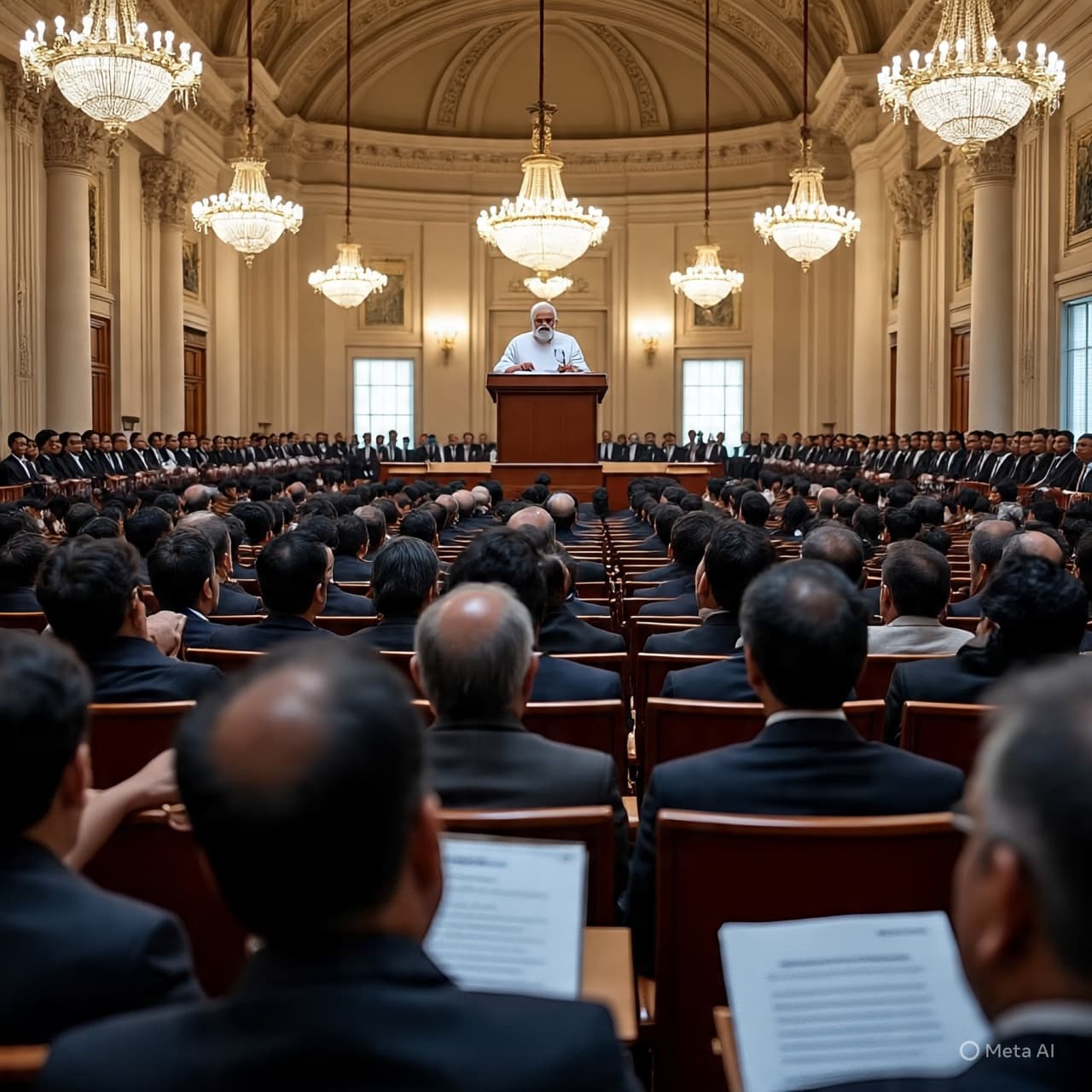
Like a great river drawing together countless streams, the Commonwealth has long served as a conduit for shared democratic values across continents and cultures. Today, in the heart of New Delhi, this flow of dialogue finds new focus as the 28th Conference of Speakers and Presiding Officers of the Commonwealth (CSPOC) opens its doors, with Prime Minister Narendra Modi set to inaugurate the gathering at the historic Central Hall of Samvidhan Sadan. It is a moment that feels both familiar and fresh – a continuation of decades-old traditions, yet rooted firmly in the challenges and opportunities of our time. The conference, chaired by Lok Sabha Speaker Om Birla, brings together 61 leaders from 42 Commonwealth nations and four semi-autonomous parliaments, making it the largest in the forum’s history. Much as a skilled gardener nurtures diverse plants to thrive in a single plot, these parliamentary heads will tend to the soil of democratic governance, exploring how institutions can grow stronger amid rapid change. Discussions will touch on the role of speakers in upholding legislative integrity, a task that requires both steadfastness and adaptability. Technological evolution takes center stage too: sessions will examine how artificial intelligence can enhance efficiency and access in parliamentary work, while also addressing ethical guardrails to ensure innovation serves the public good. The impact of social media on representatives and discourse will also be explored, as legislatures grapple with balancing connectivity and accountability. Beyond these themes, delegates will share ideas to deepen public understanding of parliament and expand citizen engagement beyond the ballot box – recognizing that democracy flourishes when it is a living, breathing partnership between people and their leaders. India’s role as host builds on a legacy of welcoming such gatherings, having previously hosted CSPOC in 1971, 1986, and 2010. This time, the event also weaves in the nation’s cultural fabric, with dignitaries having already experienced a visit to the Red Fort, a symbol of freedom that echoes the Commonwealth’s own commitment to self-governance. The three-day conference runs from January 14 to 16, with proceedings conducted entirely digitally to minimize environmental impact, supported by a dedicated app and web-based management system. Pakistan will not participate, and Bangladesh is not sending a speaker as general elections are scheduled for next month. At the close, the chair will pass to Lindsay Hoyle, Speaker of the UK House of Commons, ensuring the conversation continues its journey forward. As the world watches, this gathering stands as a reminder that democratic institutions, like rivers, must adapt their course while staying true to their source.
AI IMAGE DISCLAIMER “Visuals are created with AI tools and are not real photographs.” SOURCES 1. DD News On Air 2. Ramrajya News 3. New Delhi News.net 4. Kenya Star 5. UniIndia
Published by Banx Network. This article is part of the Banx decentralized media programme, powered by the BXE token on the XRP Ledger.