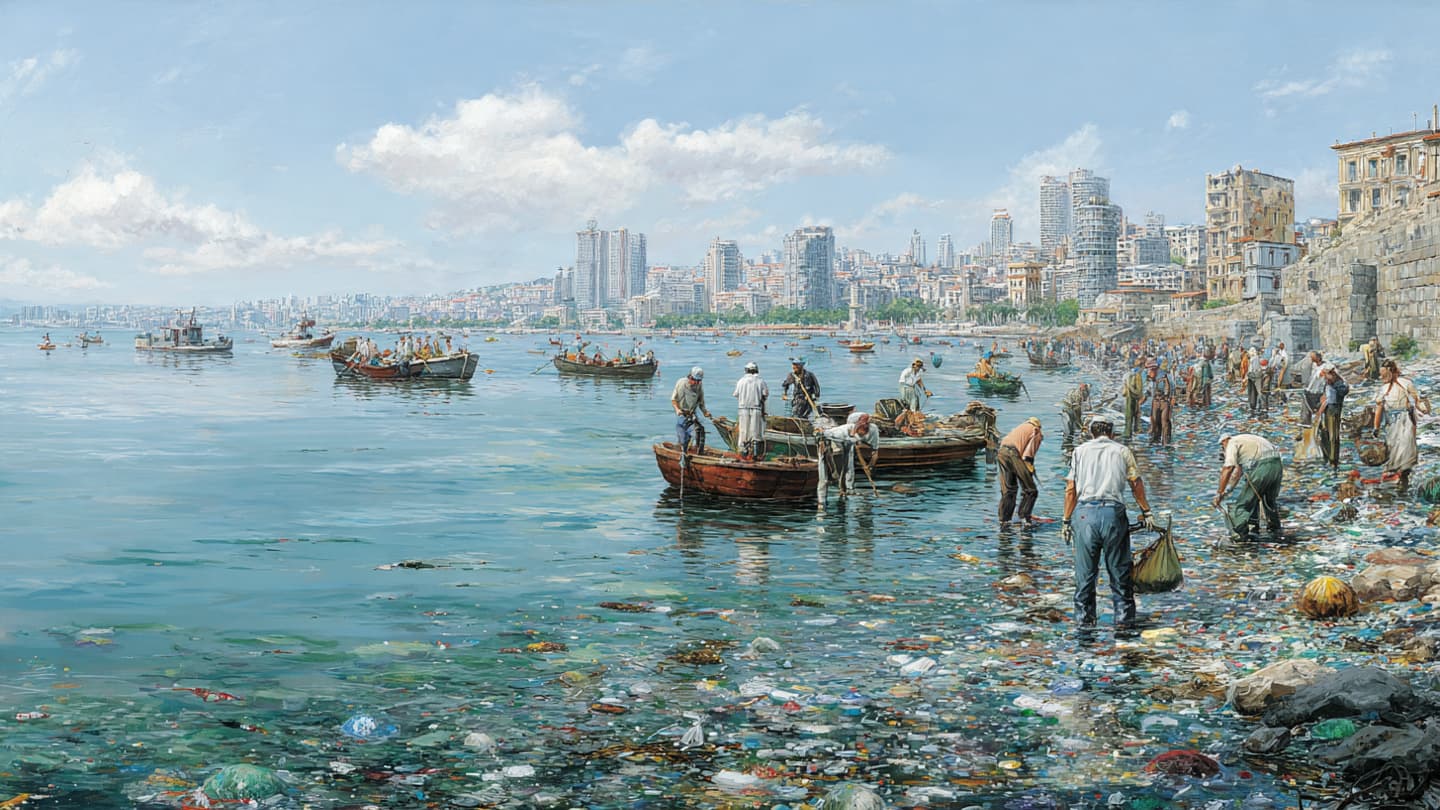
In the quiet meeting point between river and sea, where tides continuously shape the shoreline, a recent sight in Muara Angke drew public attention when floating waste appeared clustered together like an unintended island. The moment spread quickly through public discussion, carrying concern about the condition of the coastal environment in Jakarta.
Local authorities responded by stating that cleanup actions had been carried out in the area. The presence of sanitation teams and coordinated coastal cleaning efforts became part of the immediate response to the situation.
Muara Angke is part of a working coastal ecosystem that receives continuous input from river systems flowing through urban areas. In such environments, floating debris can accumulate temporarily depending on wind, tide, and water flow conditions.
Environmental observers often explain that visible waste clusters do not always represent permanent conditions but can form due to shifting currents that concentrate debris in specific points before dispersing again.
However, such events still highlight the broader challenge of managing waste in densely populated urban regions, where materials can enter waterways through drainage systems and river channels.
Even after cleanup operations restore visual cleanliness, environmental experts often emphasize that long-term solutions depend on reducing waste at its source and improving interception systems along rivers.
Authorities confirmed that the area has been cleaned, while monitoring efforts continue to ensure that similar accumulations can be addressed quickly if they reappear.
AI Image Disclaimer: Images used in relation to this article may be AI-generated for illustrative purposes.
Sources: Kompas, Antara News, Detik, CNN Indonesia
Published by Banx Network. This article is part of the Banx decentralized media programme, powered by the BXE token on the XRP Ledger.