
Key Highlights
- Waves up to 50 feet recorded along California's coastline.
- Evacuation warnings issued in Santa Cruz County due to flooding.
- Super El Niño conditions linked to increased wave activity.
This past weekend, California's coastline was rocked by waves of extraordinary size, with reports of surf reaching up to 50 feet in some areas. The National Weather Service (NWS) issued warnings for dangerous rip currents and sneaker waves, urging residents and visitors to stay away from the water. The sound of the ocean, a low, sustained roar, echoed across coastal roads and into the quiet of seaside towns, signaling a powerful force that demanded attention.
In San Mateo County, just south of San Francisco, surfers flocked to Mavericks Beach, a renowned big-wave surfing spot. Despite the warnings, these experienced riders were drawn to the waves, illustrating the dual nature of the ocean: a source of both danger and allure. The presence of surfers at Mavericks served as a reminder of the fine line between courage and recklessness, a line often dictated by the whims of the sea.
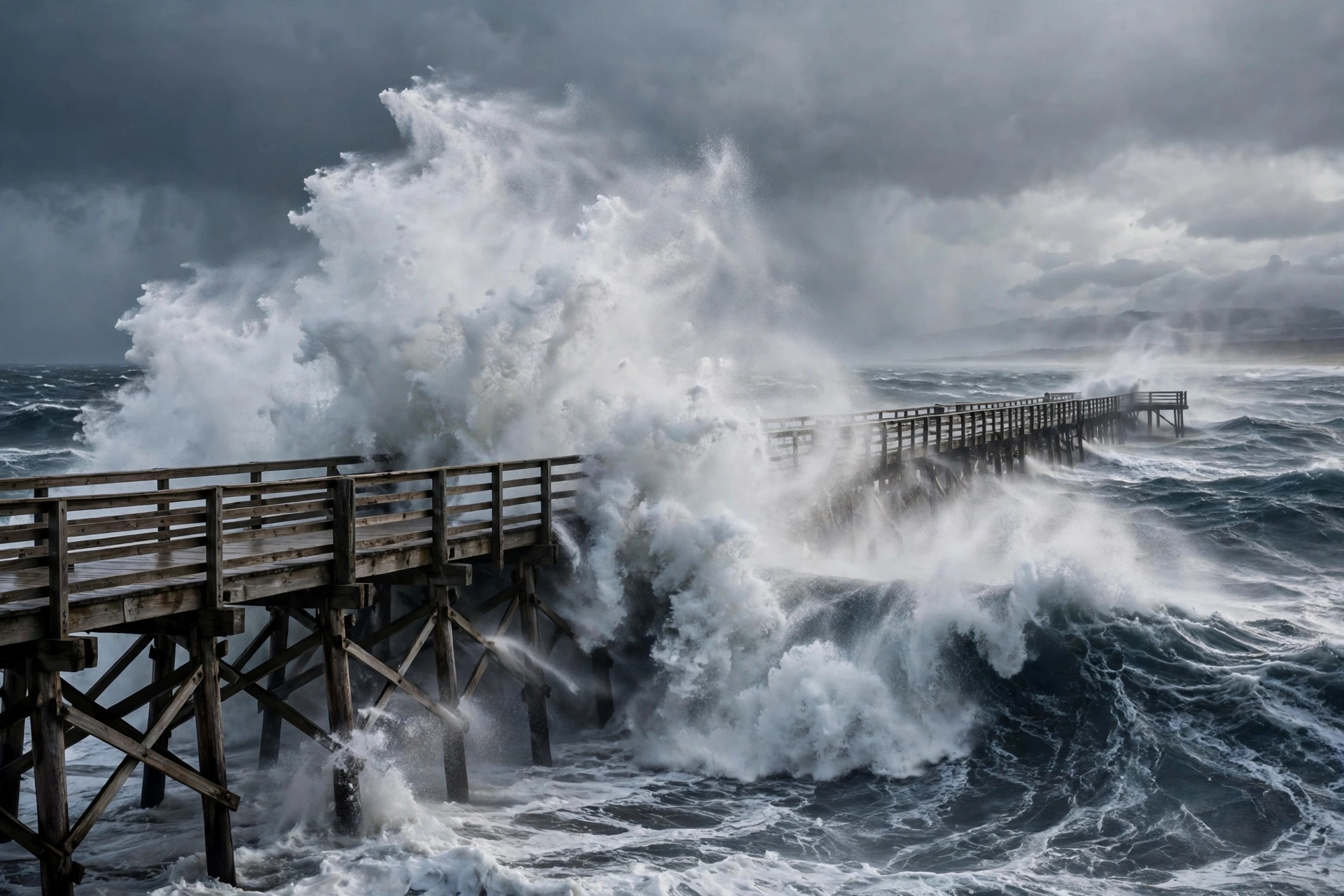
Farther south, the Santa Cruz County Sheriff's Office issued evacuation warnings for Capitola, a coastal town that faced significant flooding. In Southern California, piers in Ventura, Manhattan Beach, Huntington Beach, and San Diego's Pacific Beach were closed as waves crashed against their structures. In Orange County, Seal Beach saw several inches of water inundate the strand, flooding beachfront homes and submerging walkways. At La Jolla Cove, famous for its lounging sea lions, water overflowed onto the beach, cascading up a staircase leading to the sand.
The unrest along California's shores can be attributed to a super El Niño phenomenon, which has caused the Pacific Ocean's temperatures to rise. This warming leads to the expansion of seawater, resulting in higher baseline wave activity. The NWS's warnings were clear and precise: stay off rocks and jetties, and never turn your back on the ocean. These guidelines stem from years of experience with a sea that can change its temperament in an instant.
By Sunday afternoon, conditions began to calm, but forecasters cautioned that large waves would continue to impact the coastline throughout the week. For coastal communities, this means a period of vigilance—monitoring tide charts, maintaining a safe distance from the water's edge, and recognizing that the infrastructure built at the land-sea boundary is always a negotiation. While piers can be rebuilt and roads cleared, the ocean's rhythm remains an uncontrollable force.
As the waves recede, California's coastline presents a familiar tableau: beauty intertwined with hazard. The coastline, which attracts millions, now asks them to step back. Surfers will return to Mavericks when conditions improve, piers will reopen, and the sea lions at La Jolla will resume their sunbathing on rocks that are, for now, still above water. This weekend's events served as a powerful reminder that the Pacific Ocean operates on its own schedule, indifferent to human plans and timelines.
AI Image Disclaimer: The images in this article were generated by artificial intelligence and are intended for illustrative purposes only; they do not depict actual photographs of the events described.
Published by Banx Network. This article is part of the Banx decentralized media programme, powered by the BXE token on the XRP Ledger.