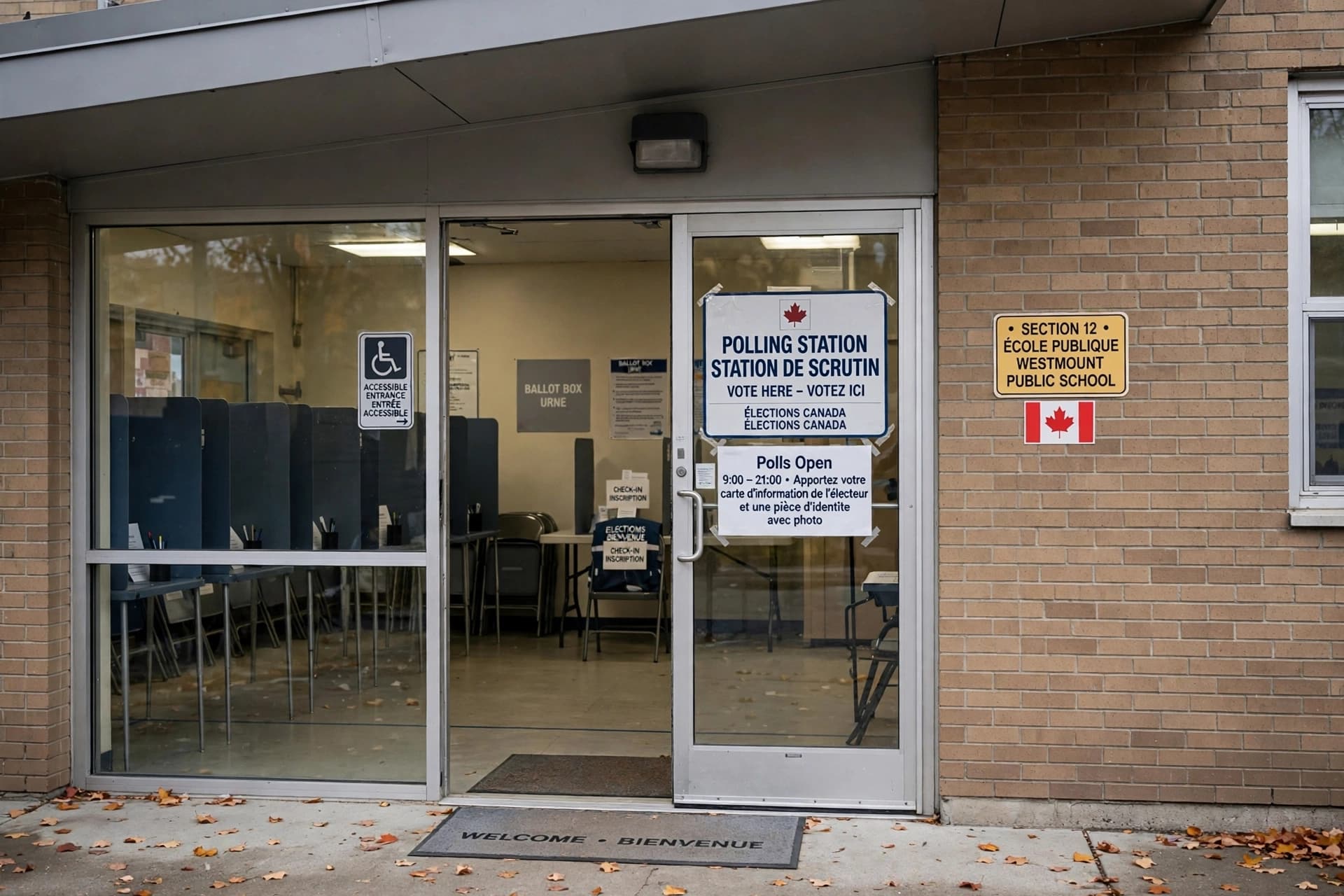
By-elections are the interstitial moments of a democracy, the fill-ins between the regular cycles. They rarely change a government's fate, but they do change the arithmetic of Parliament. On Sunday, Prime Minister Mark Carney announced by-elections in six federal ridings, with voting day set for December 7. The ridings are spread across Quebec (three), Ontario (two), and Saskatchewan (one), filling vacancies left by departing Liberal, NDP, Conservative, and Bloc Québécois members.
The political geography of the six ridings is varied. In Quebec, Laurier—Sainte-Marie was previously held by Liberal Steven Guilbeault, who left Parliament in August; Rosemont—La Petite-Patrie belonged to NDP MP Alexandre Boulerice; and Saint-Hyacinthe—Bagot—Acton was held by Bloc Québécois MP Simon-Pierre Savard-Tremblay. In Ontario, Scarborough North's Liberal MP Shaun Chen resigned for health reasons, and Brantford—Brant South's Conservative MP Larry Brock returned to his former role as a Crown attorney in Brantford. In Saskatchewan, Conservative MP Cathay Wagantall stepped down at the end of August.
The Liberals currently hold 173 seats in the House of Commons, a slim majority. Losing all six by-elections would not affect their ability to govern, but victories would bolster their caucus. The Conservatives hold historical advantages in Yorkton—Melville and Brantford—Brant South, but the latter presents a notable complication: the party bypassed the local nomination process and appointed Brantford Mayor Kevin Davis as its candidate. That decision prompted a longtime Conservative and pastor, Dave Carroll, to run as an independent, potentially splitting Davis's vote.
Quebec's contests are equally complex. The Liberals have nominated former Desjardins CEO Guy Cormier in Laurier—Sainte-Marie, seeking to hold a traditional Liberal seat. The NDP has put forward Pierre Céré, a former Quebec solidaire leadership candidate, in Rosemont—La Petite-Patrie, while the Bloc Québécois hopes to hold Saint-Hyacinthe—Bagot—Acton. Candidate lists were being released before the by-elections were formally announced, suggesting the campaigns had effectively begun behind the scenes.
The by-elections were triggered by a wave of departures. Since the 2025 general election, 13 of 343 MPs have chosen to leave, citing reasons including diplomatic appointments, provincial politics, and retirement. The prime minister must call a by-election within 11 to 180 days of a seat becoming vacant. The December 7 date falls in the middle of that window—neither rushed nor delayed. Elections Canada estimates the cost of this year's by-elections at $24 million.
For Carney, the six contests are a small-scale test of public opinion, but not a true one. Turnout in by-elections is typically low, and voter sentiment often reflects local issues and candidate qualities rather than national political trends. Still, with a slim majority, every victory has practical meaning. In Brantford—Brant South, if Liberal candidate Joy O'Donnell can capitalize on the Conservative split, it would be a symbolic signal. In Quebec, holding Laurier—Sainte-Marie would confirm the Liberals remain competitive in Montreal's core.
Voting day is December 7. Until then, the six ridings will experience a short, intense campaign: doorbells, flyers, candidate debates, and voter hesitation. By-elections will not change the government's fate, but they will change the numbers in Parliament. In a House where a majority is held by only a few seats, every number is worth counting.
Image Disclaimer: The visual accompanying this article was generated by artificial intelligence and does not represent actual ridings or politicians.
Sources: CBC News, The Canadian Press, Radio-Canada, Calgary Sun
Published by Banx Network. This article is part of the Banx decentralized media programme, powered by the BXE token on the XRP Ledger.