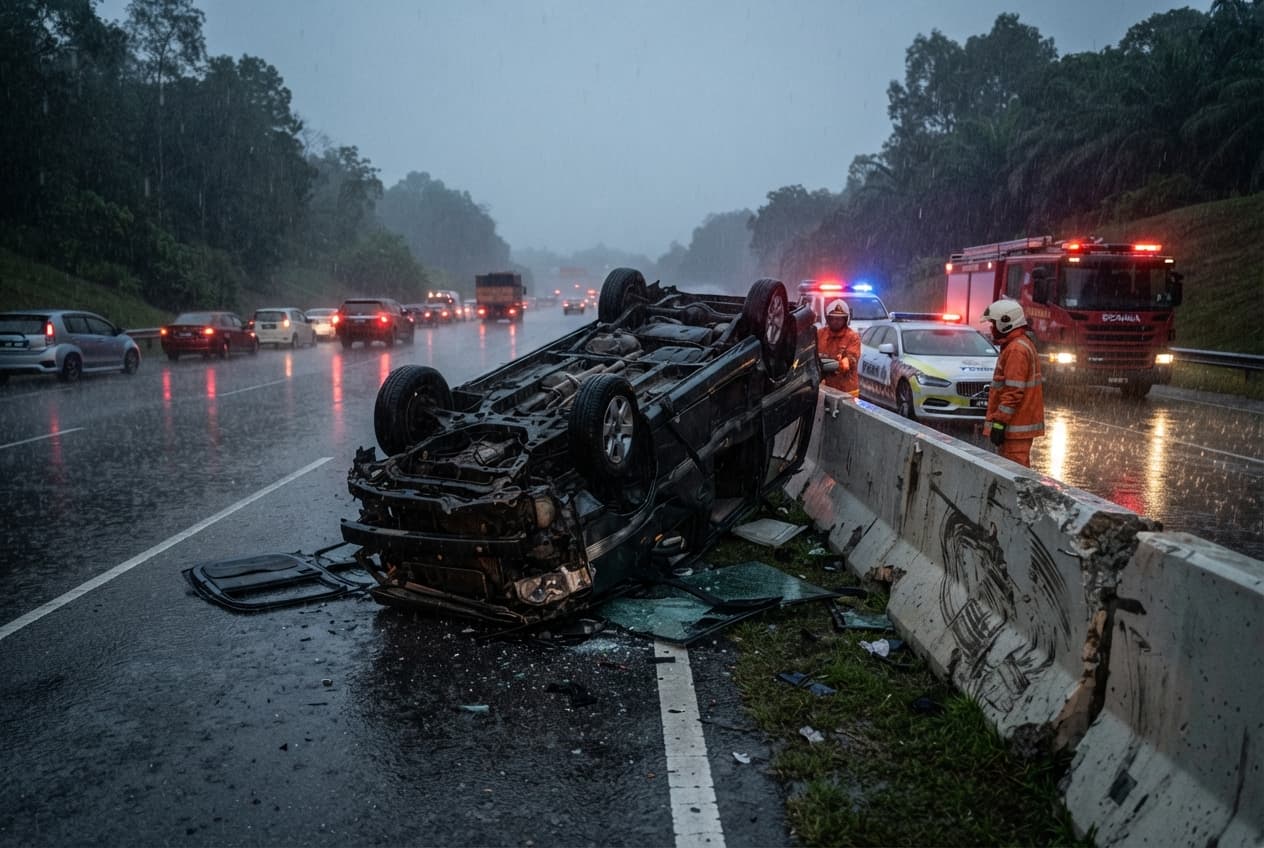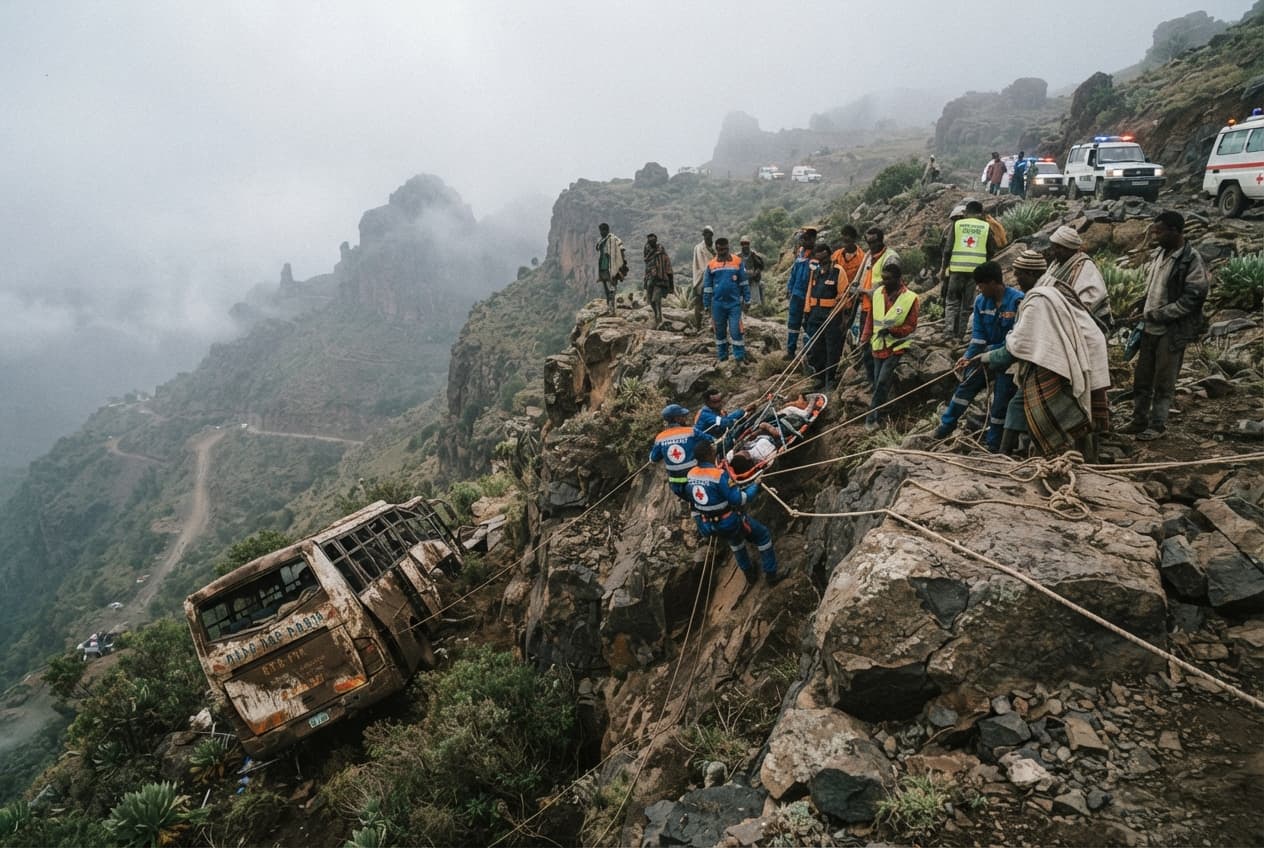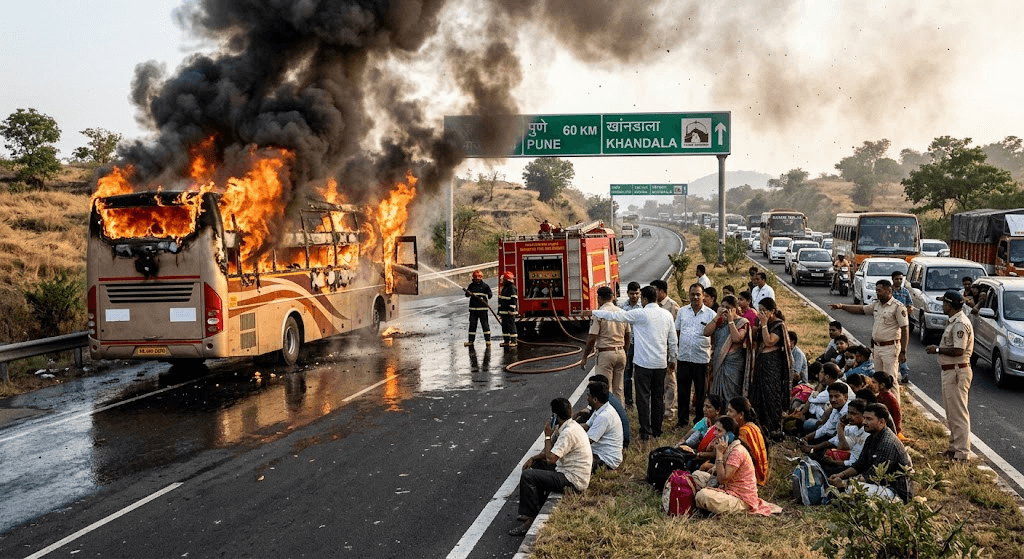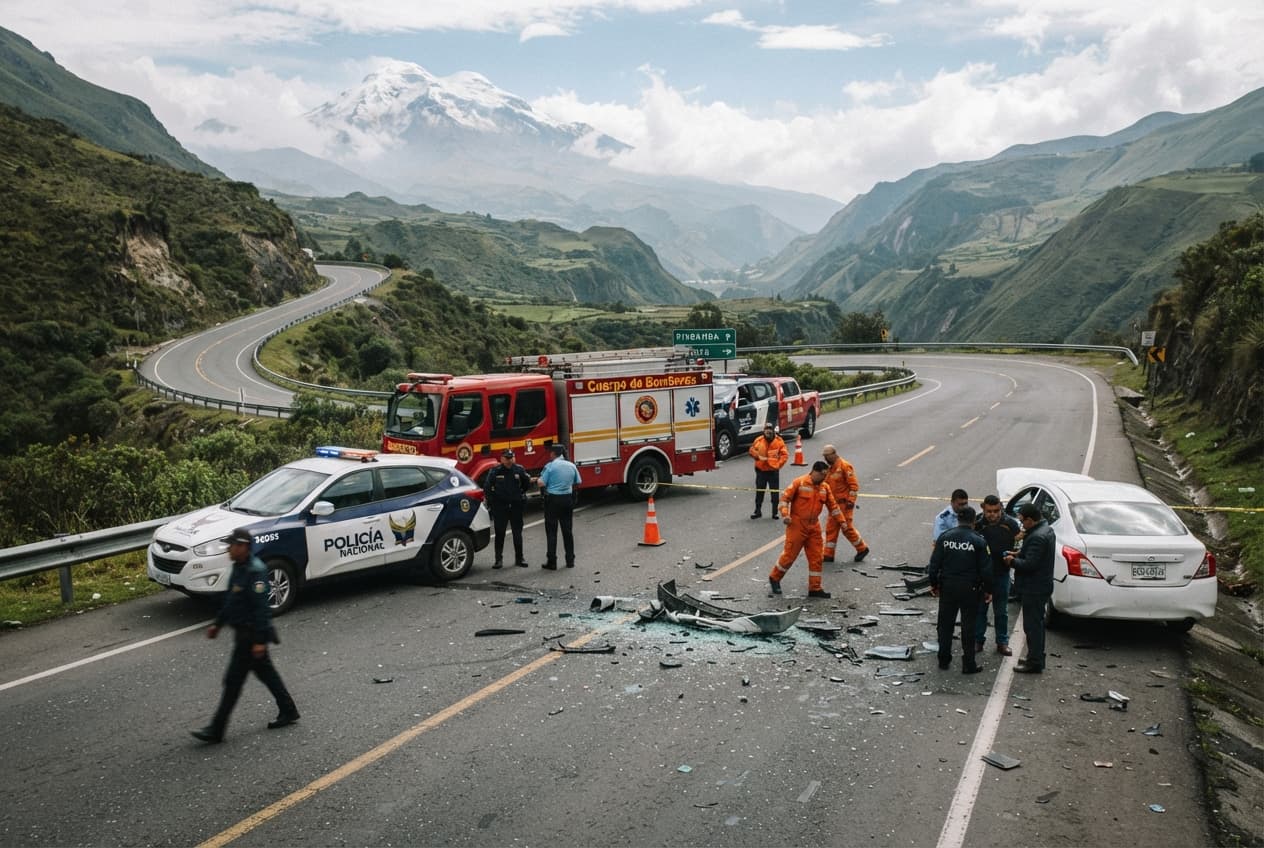
Riobamba, Ecuador—An interprovincial passenger bus skidded out of control across rain-slicked asphalt along a high-altitude highway in Ecuador's central Chimborazo province. Provincial transit authorities confirmed that four passengers lost their lives when the heavy vehicle breached the roadside shoulder and overturned down a steep grassy slope. The transport coach was traveling at excessive speed under intense downpours when the driver lost directional stability on a sloping curve. Emergency dispatchers scrambled multiple ambulance units, national police patrols, and fire rescue squads to the remote mountain highway.
The violent skid tore away side body panels and shattered cabin windows as the bus rolled multiple times before coming to a rest against a cluster of eucalyptus trees. Surviving passengers scrambled through emergency roof hatches, calling for assistance as local farmers rushed down the slope with flashlights and ropes. First responders utilized hydraulic extraction tools to reach individuals trapped beneath luggage compartments and heavy seating rows. Police officers cordoned off both lanes of the highway to manage incoming emergency traffic and prevent secondary pileups.
Highway safety coordinators and transit union representatives pointed to chronic road maintenance delays, worn asphalt friction layers, and a lack of adequate drainage channels along Andean transport routes. Passenger companies frequently operate heavy fleets over mountainous terrain without enforcing mandatory rest cycles or tire tread standards. Repeated petitions submitted to public works offices requesting high-friction surface treatments went unheeded for months. Those administrative oversights set the stage for the highway tragedy.
National transit police commander Colonel Patricio Andrade briefed journalists near the cordoned highway perimeter. The vehicle hydroplaned due to a combination of slick road surfaces and excessive speed entering the curve, Andrade stated. Our accident reconstruction specialists are analyzing tachograph records and tire conditions. Both lanes will remain closed while heavy cranes clear the wreckage.
Paramedics set up a roadside triage station on the grass shoulder, treating twelve surviving passengers for severe polytrauma, fractures, and acute shock. Emergency medical helicopters landed on the blocked asphalt to airlift critical casualties to regional trauma centers in Riobamba and Ambato. Heavy towing units arrived to winch the wrecked bus up the slope and clear the travel lanes. Transport authorities diverted commercial buses and cars onto secondary municipal detour tracks.
State prosecutors initiated a formal criminal investigation into vehicular manslaughter and commercial transport compliance against the bus operating company. Forensic examiners documented the exact position of the wreckage and verified brake system functionality before clearing the site. Maintenance crews deployed mechanical sweepers to clean up spilled oil and glass fragments from the travel lanes. The highway clearance operation extended well into the afternoon hours before partial traffic flow resumed.
Published by Banx Network. This article is part of the Banx decentralized media programme, powered by the BXE token on the XRP Ledger.