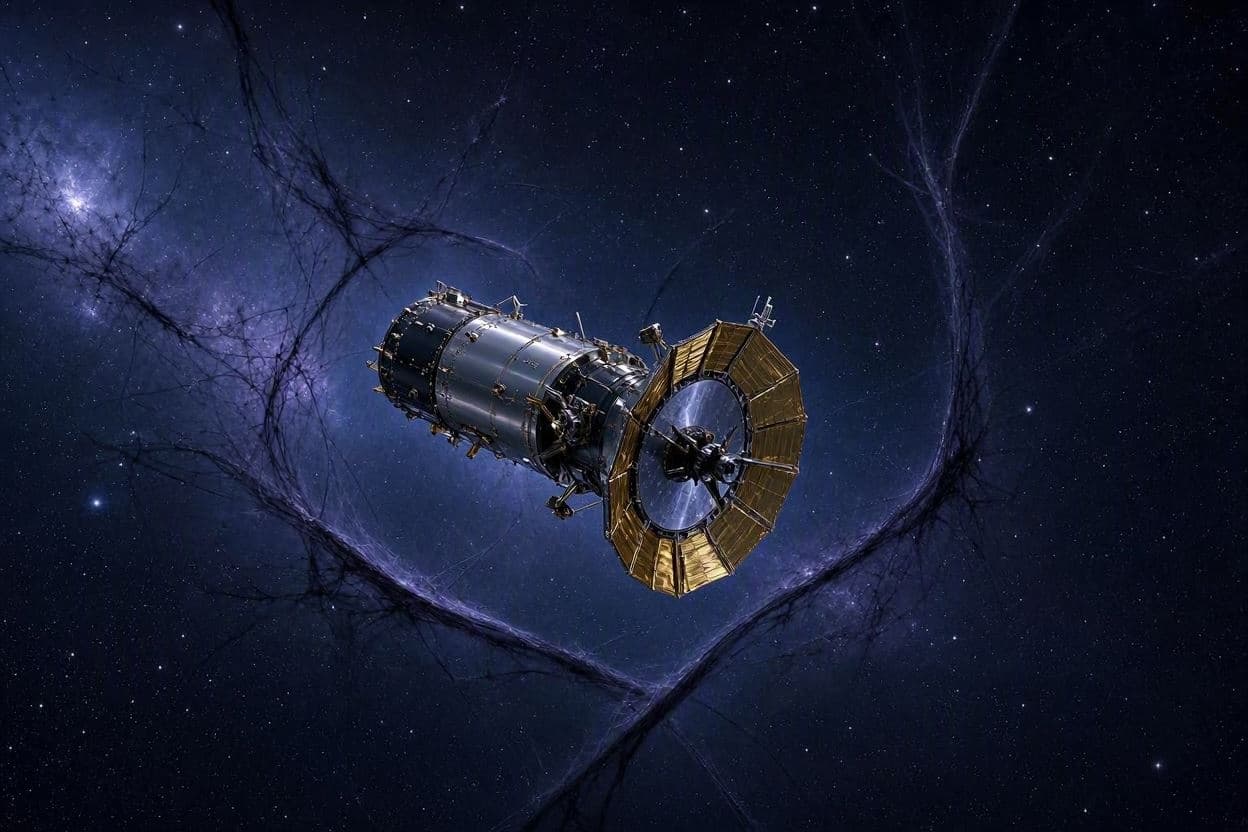
In the vast silence of space, satellites drift like silent observers, watching the cosmos unfold. Usually, their longevity is prized, a testament to engineering endurance. But for NASA’s Swift Observatory, the priority has shifted from preservation to discovery. By adjusting its orbit to shorten its remaining lifetime, scientists aim to maximize its scientific output in its final years. This decision invites reflection on the purpose of exploration, suggesting that the value of a mission lies not in its duration, but in the depth of its contributions to human knowledge.
Launched in 2004, Swift has been a pioneering tool for studying gamma-ray bursts, the most energetic explosions in the universe. Over nearly two decades, it has provided invaluable data, helping astronomers understand the life cycles of stars and the formation of black holes. Now, as fuel reserves dwindle and orbital decay accelerates, the mission team has chosen to embrace the end rather than fight it.
Shortening the orbital lifetime involves lowering the spacecraft’s altitude, which increases atmospheric drag. This maneuver allows Swift to observe different parts of the sky more frequently, optimizing its viewing angles for specific scientific targets. It is a strategic trade-off, sacrificing years of potential operation for intensified, focused research in the present.
This approach challenges the conventional wisdom that satellite missions should be prolonged at all costs. Instead, it prioritizes scientific yield over operational longevity. By accepting the inevitable end, researchers can extract every last bit of data, ensuring that the mission’s legacy is defined by its discoveries rather than its lifespan.
The decision also reflects responsible space practices. Lowering the orbit ensures that Swift will re-enter the Earth’s atmosphere and burn up safely, reducing the risk of becoming space debris. This proactive step aligns with growing efforts to maintain a sustainable orbital environment, setting a positive example for future missions.
For the scientific community, Swift’s final chapter is an opportunity to address unanswered questions. Gamma-ray bursts remain mysterious, and additional observations could unlock new insights into high-energy physics. The urgency of the shortened timeline drives innovation, encouraging teams to work efficiently and creatively.
Public engagement with the mission has remained strong, with many following Swift’s journey from launch to its impending conclusion. The story of a satellite choosing to go out with a bang, scientifically speaking, resonates with themes of purpose and fulfillment. It reminds us that endings can be meaningful if they serve a greater good.
As Swift descends, it carries with it the hopes and curiosity of generations of astronomers. Its data will continue to be analyzed long after it is gone, influencing theories and models for years to come. The mission’s impact is not measured in years, but in the breadth of understanding it has provided.
NASA’s Swift Observatory has adjusted its orbit to shorten its lifetime, prioritizing maximum scientific output in its final years. This strategic decision highlights the mission’s commitment to discovery and responsible space practices, ensuring a impactful legacy in the study of gamma-ray bursts.
AI Image Disclaimer: The visual elements accompanying this article are AI-generated interpretations designed to symbolize space observation, orbital mechanics, and scientific legacy, using abstract and cosmic imagery.
Sources: NASA Goddard Space Flight Center Astrophysical Journal Space.com
Published by Banx Network. This article is part of the Banx decentralized media programme, powered by the BXE token on the XRP Ledger.