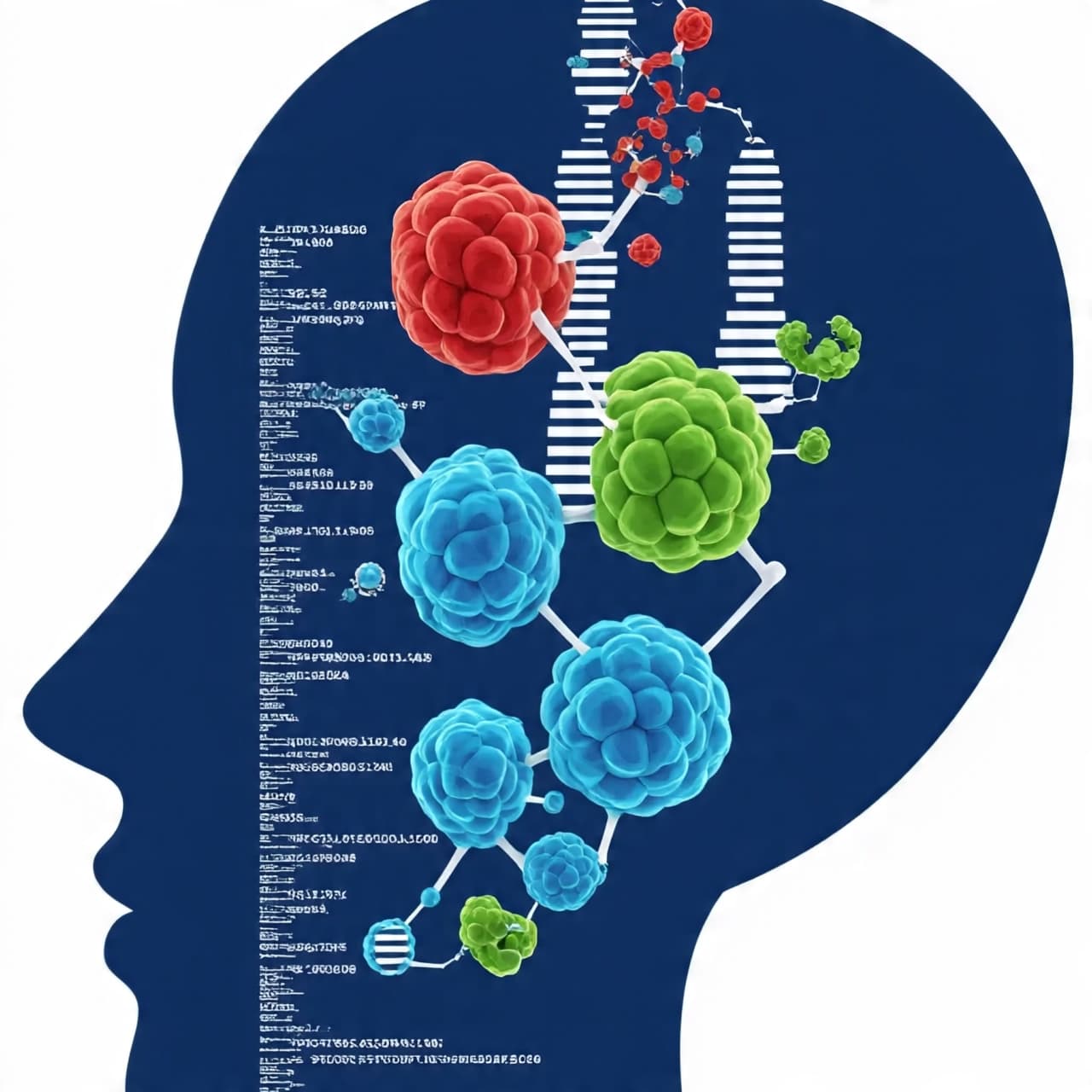
In a library of living things, proteins are the books that tell us how the story of a cell gets read, chapter by chapter. For decades, geneticists have cataloged variants in the DNA — the author’s pencil marks — but only recently have we begun to read how those marks rewrite the protein text across the whole proteome. A proteome-wide model for human disease genetics is an effort to move from single-gene anecdotes to a broad, systemic narrative: which proteins—when nudged by genetic variation—change disease risk, and how.
Proteome-wide approaches combine large-scale protein measurements, genetic maps of protein quantitative trait loci (pQTLs), and generative or predictive models that estimate how sequence variation alters protein function or abundance. New methods such as proteome-wide association studies (PWAS) test whether genetically predicted changes in protein levels or function correlate with disease, offering a more direct line from genotype to mechanism than variant-level association alone.
Beyond association, recent work builds generative models that learn the rules of protein evolution and population variation to predict the functional impact of missense and other coding variants across thousands of proteins. Those models—recently exemplified by deep generative frameworks—can prioritize genes and variants in developmental disorders and complex traits without needing labeled pathogenic examples. This lets researchers flag candidate disease genes from sequence data alone.
The proteome-wide strategy is already producing tangible discoveries. PWAS and proteome-wide Mendelian-randomization approaches have nominated causal proteins for cardiovascular and neurodegenerative diseases, and multi-tissue proteogenomic studies are finding proteins in plasma, CSF, or brain that map back to disease loci. These results help convert statistical hits into testable biological hypotheses and drug targets.
But the promise comes with important caveats. pQTL datasets remain uneven: many proteins are measured only in plasma, not in the tissue where disease processes occur, and sample ancestries are often limited. Predictive models may miss noncoding regulatory mechanisms and complex interactions such as post-translational modification or protein-protein networks—features that determine how a variant actually alters cellular behavior. Recent work addresses nonlinearity and interaction effects, showing that linear protein–disease models sometimes miss signals that a non-linear proteome-wide pipeline can capture.
Practically, integrating proteome-wide models into disease genetics requires careful triangulation: combine PWAS hits, causal inference (Mendelian-randomization), experimental follow-up, and cross-tissue validation. When multiple lines of evidence converge on the same protein—genetic association, predicted functional disruption, and orthogonal biochemical data—the candidate moves from “statistical hit” to “biologically plausible target.” That convergence is the clearest path toward translational impact: biomarker development, target prioritization, and repurposing of existing drugs.
Looking ahead, two advances will accelerate progress. First, richer proteomic atlases (single-cell proteomics, broader tissue coverage, and diverse ancestries) will reduce blind spots and improve causal mapping. Second, improved generative and mechanistic models that embed protein structure, interaction networks, and cell-type context will sharpen predictions about variant effect and inheritance mode. Combined, these advances could allow proteome-wide models to predict not just associations, but the molecular mechanism behind them—what a variant does to a protein, and how that change cascades into disease.
AI image disclaimer “Illustrations were produced with AI tools and are intended as conceptual depictions, not real photographs.”
Sources : NatureG enome Biology medRxiv Cell Genomics JAMA Network Open
Published by Banx Network. This article is part of the Banx decentralized media programme, powered by the BXE token on the XRP Ledger.