There is a particular rhythm to infrastructure promises in Queensland, a cadence of announcements and consultations and geotechnical investigations that stretches across electoral cycles like a long, slow tide. The Bribie Island Bridge has been part of that rhythm for years—promised, debated, dismissed, revived. On Sunday, the Crisafulli government unveiled its preferred design for a new four-lane crossing, and with it, a timeline measured in years rather than months.
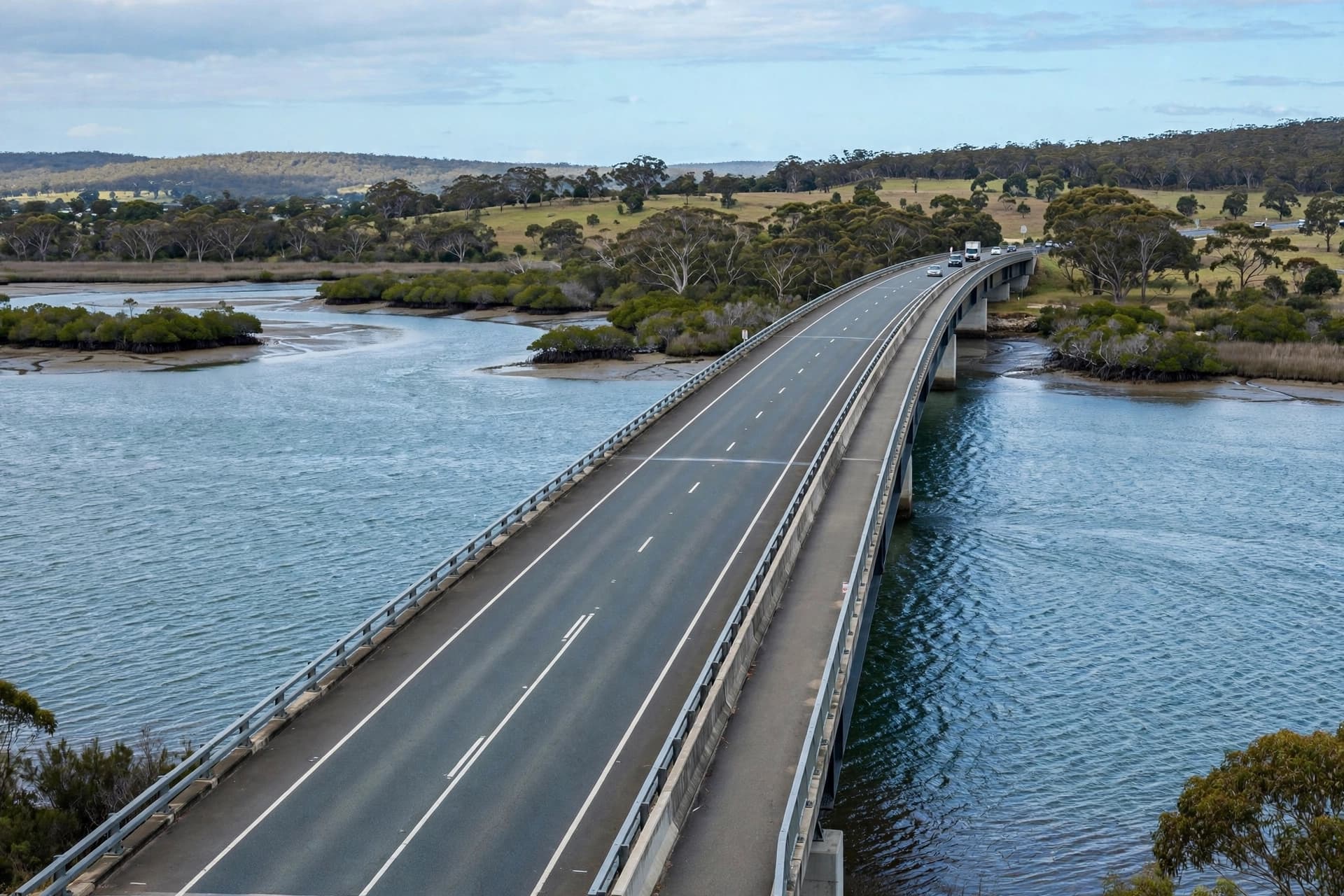
The plan would double the capacity of the existing two-lane bridge, which carries traffic to and from the island north of Brisbane, and retain the old structure as a dedicated active transport crossing for pedestrians and cyclists . Premier David Crisafulli described it as "a game changer for the region," and a fulfillment of a promise "people here heard about for a long, long time" . Transport Minister Brent Mickelberg said geotechnical investigations would begin this week, with community consultation open until the end of November .
The arithmetic of the project is substantial. The business case-recommended option was estimated at $756.56 million, and Mickelberg said the new four-lane design could be delivered "within the existing funding envelope" . But the timeline is less certain. Federal environmental approvals across the ecologically significant Pumicestone Passage are expected to take two to three years, followed by three to four years of construction. Mickelberg said it was his expectation that the bridge "should be finished before the Olympics"—the 2032 Games in Brisbane .
The politics of the announcement were not far beneath the surface. The LNP's Ariana Doolan won the seat of Pumicestone at the 2024 election, and the new bridge was a key election commitment . Labor's transport spokesperson, Bart Mellish, noted that it was the former government that released concept designs and committed funding, and criticized the LNP for not laying out a clear budget or timeline. "The Premier and his Transport Minister are more focused on self-promotion than getting shovels in the ground," he said .
For the community, the announcement offers a measure of clarity after years of uncertainty. The existing bridge, built six decades ago, has long been a bottleneck, with population growth, tourism, and traffic volumes placing increasing demands on a structure never designed for them . Mickelberg acknowledged that while the bridge is safe, "it was not built to deal with the volume of traffic, and hence why the community's been dealing with congestion, and … the challenges in relation to that emergency response when there is an incident on or around the bridge" .
The consultations will proceed, the investigations will begin, and the approvals process will unfold at its own pace. The bridge, when it comes, will be a four-lane crossing over a passage of ecological significance, connecting an island to the mainland with a capacity the old bridge could not provide. But the finish remains years away, and the promise, like the bridge itself, is still being built.
The imagery accompanying this report is generated by AI.
Sources: WAtoday, Queensland Government, Inside Local Government, Infrastructure Magazine, Ministerial Media Statements
Published by Banx Network. This article is part of the Banx decentralized media programme, powered by the BXE token on the XRP Ledger.