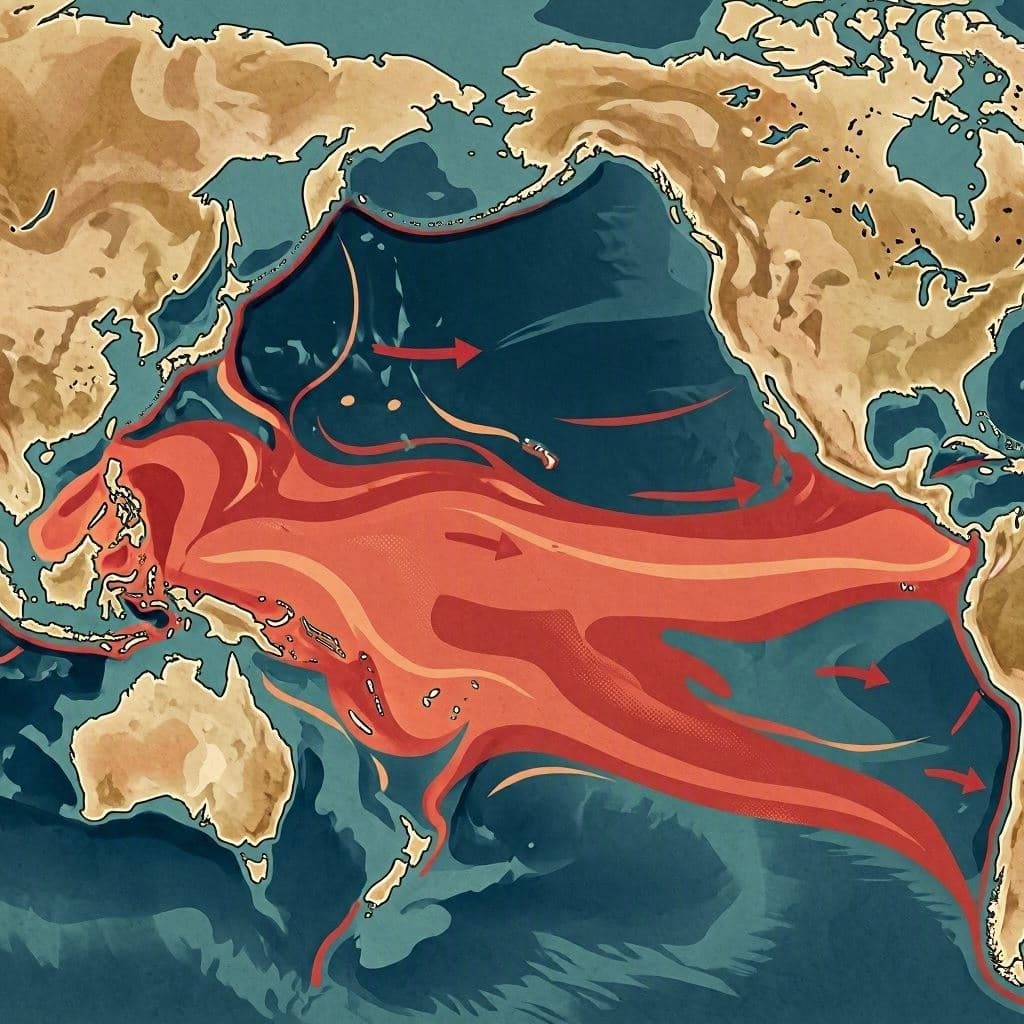
The Pacific Ocean, vast and deep, breathes in rhythms that span decades, influencing weather patterns across the globe with a subtle yet profound power. Currently, this great body of water is warming in a manner that scientists describe as unprecedented for living memory. A "Super El Niño" is brewing, a climate phenomenon expected to surpass the intensity of any event recorded since modern instrumentation began, promising to reshape weather systems from the Americas to Asia.
El Niño occurs when trade winds weaken, allowing warm surface water to accumulate in the eastern Pacific. This shift disrupts atmospheric circulation, leading to altered rainfall and temperature patterns worldwide. While El Niño events are part of a natural cycle known as the El Niño-Southern Oscillation (ENSO), the current iteration is distinguished by its projected strength. Climate models suggest it could exceed the record-setting events of 1997-1998 and 2015-2016, which were themselves considered historic.
The implications of such a powerful event are far-reaching. In the United States, it typically brings wetter conditions to the South and warmer temperatures to the North. For farmers, this means potential flooding in some regions and drought in others, challenging agricultural planning and crop yields. Globally, the impact extends to monsoon seasons in India, rainfall in Australia, and hurricane activity in the Atlantic, where El Niño tends to suppress storm formation.
Scientists attribute the exceptional strength of this upcoming event to a combination of natural variability and long-term global warming. As ocean temperatures rise due to climate change, the baseline for El Niño events shifts, potentially amplifying their effects. This synergy between natural cycles and human-induced warming creates a new normal, where extreme weather becomes more frequent and intense. Understanding this interaction is crucial for predicting future climate scenarios.
For communities vulnerable to weather extremes, the forecast serves as both a warning and a call to action. Governments and organizations are reviewing emergency preparedness plans, focusing on flood control, water management, and public health responses. Early warning systems play a vital role in mitigating risks, allowing societies to adapt before the full force of the phenomenon is felt.
The economic costs of a Super El Niño can be substantial. Disruptions to supply chains, damage to infrastructure, and losses in agriculture contribute to global economic volatility. Insurance industries adjust their models accordingly, while governments may need to allocate additional resources for disaster relief. The financial ripple effects underscore the interconnectedness of climate and economy.
Despite the challenges, there is also an opportunity for innovation. Advances in climate modeling and satellite observation allow for more accurate predictions than ever before. This knowledge empowers policymakers and citizens to make informed decisions, from planting drought-resistant crops to reinforcing coastal defenses. Resilience is built not just on reaction, but on anticipation and adaptation.
As the Pacific continues to warm, the world watches with a mix of concern and readiness. The Super El Niño is a reminder of nature’s immense power and the delicate balance of our planetary systems. By studying and respecting these forces, we can better navigate the changes ahead, ensuring safety and stability for generations to come.
AI Image Disclaimer: The visual elements in this article are AI-generated illustrations depicting ocean temperature maps and atmospheric patterns, designed to visualize the concept of El Niño without showing real-time data or specific geographic locations.
Sources: NOAA, CNN, Nature, The Climate Brink
Published by Banx Network. This article is part of the Banx decentralized media programme, powered by the BXE token on the XRP Ledger.