In the quest to make space travel more efficient and sustainable, engineers have long sought ways to reduce the need for heavy onboard fuel. A breakthrough in plasma propulsion technology now offers a promising solution: an engine that can breathe the thin air of the upper atmosphere. This innovative design, known as an air-breathing electric propulsion (ABEP) system, uses ambient air molecules as propellant, potentially revolutionizing how satellites maintain their orbits.
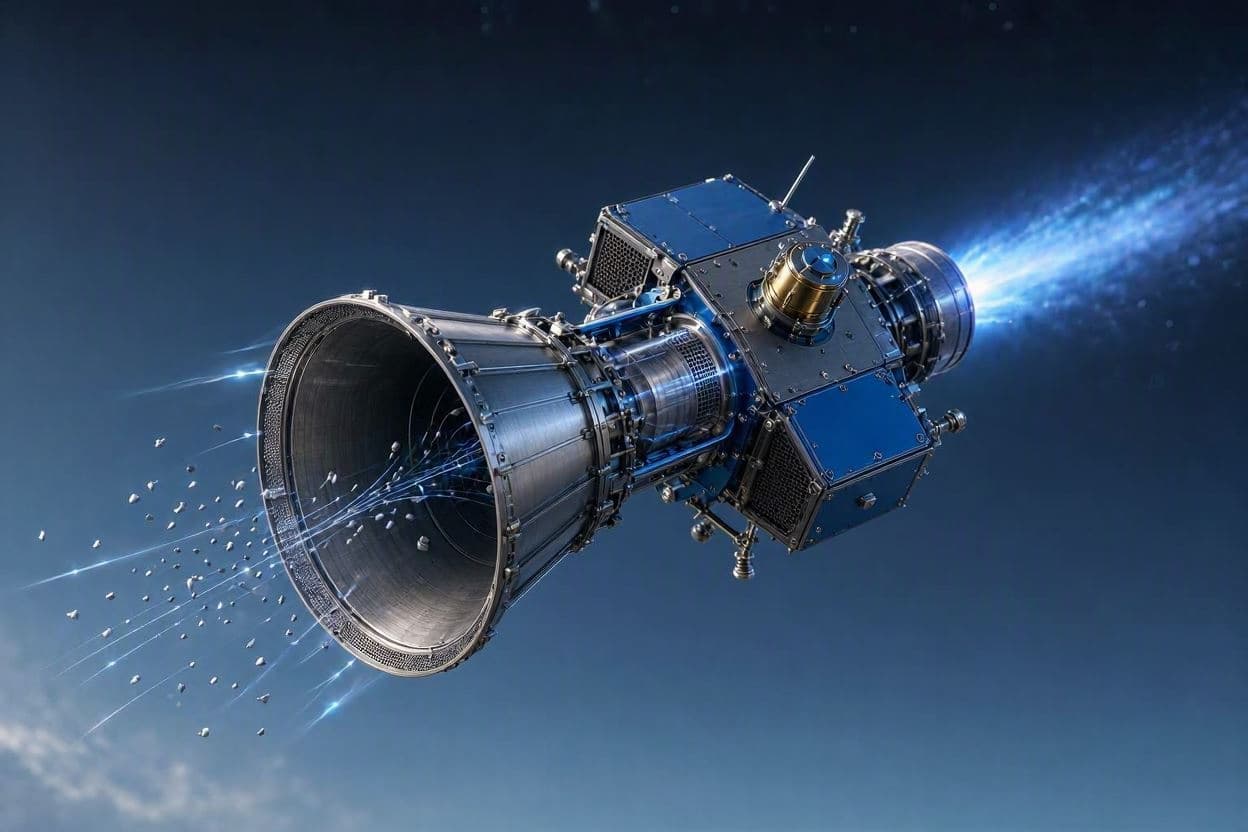
Traditional electric thrusters, such as Hall-effect thrusters, require stored propellants like xenon or krypton. While efficient, these gases add weight and limit the lifespan of a satellite. The new plasma engine design eliminates this constraint by collecting rarefied air particles at altitudes of 200 kilometers or higher. Using a specialized intake, the engine ionizes these particles and accelerates them using magnetic fields to generate thrust.
The key to this technology is the "specular intake," a parabolic mirror-like structure coated with materials such as graphite or silicon dioxide. This intake reflects and focuses incoming air molecules into the ionization chamber, where they are converted into plasma. By efficiently capturing and utilizing the sparse atmosphere, the engine can operate continuously without running out of fuel, extending the operational life of spacecraft significantly.
Recent tests have demonstrated the feasibility of this approach, marking a critical milestone in aerospace engineering. Researchers have successfully ignited and sustained plasma using collected air samples in vacuum chambers that simulate upper atmospheric conditions. These results suggest that full-scale prototypes could soon be tested in orbit, paving the way for practical applications in low-Earth orbit missions.
The implications for satellite operations are profound. Satellites equipped with ABEP systems could maintain their altitude indefinitely, compensating for atmospheric drag without needing refueling missions. This capability would reduce launch costs, as less propellant needs to be carried into space, and decrease space debris by allowing satellites to deorbit more effectively at the end of their lives.
Furthermore, this technology could enable new types of missions, such as long-duration atmospheric sampling or persistent observation platforms. By staying in orbit longer and more flexibly, these spacecraft could provide continuous data on climate change, weather patterns, and other global phenomena. The ability to "breathe" the atmosphere transforms the satellite from a passive observer into an active, enduring participant in the space environment.
As development continues, challenges remain in optimizing the intake efficiency and managing the thermal loads on the engine components. However, the progress made so far is encouraging. This new design represents a shift toward smarter, more autonomous space systems that work in harmony with their environment. In the thin air of the upper atmosphere, a new era of propulsion is beginning to take shape.
AI Image Disclaimer: The visual content in this article is AI-generated to represent the concepts of plasma propulsion and aerospace innovation.
Sources: Universe Today, Phys.org, ResearchGate
Published by Banx Network. This article is part of the Banx decentralized media programme, powered by the BXE token on the XRP Ledger.