Tunja, Colombia—An intermunicipal passenger coach careened off an unpaved mountain ledge and plunged several hundred meters into a deep ravine in the rugged Boyacá department. Regional rescue authorities confirmed that seven travelers died at the scene, while multiple others sustained critical injuries. The transport vehicle was negotiating a steep, fog-shrouded switchback during heavy evening precipitation when the driver lost steering control. Emergency dispatchers scrambled dozens of civil defense units, rural police, and ambulances to the isolated canyon base.
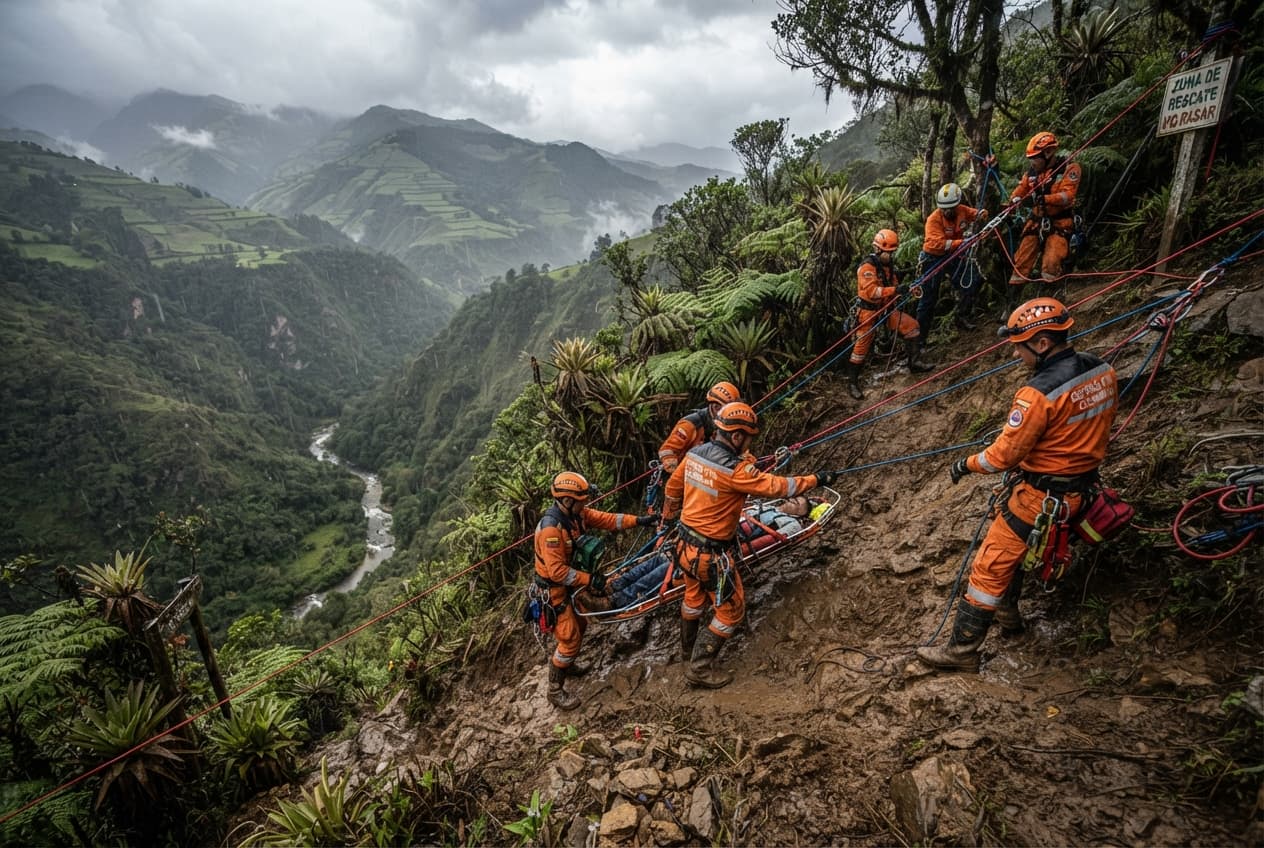
The violent descent shredded the bus chassis against exposed rock formations and eucalyptus trees before it came to rest upside down in a swollen creek bed. Surviving passengers scrambled out of broken windows, calling for help in the gathering darkness as local farmers rushed down the slope with flashlights. First responders utilized ropes, pulleys, and stretchers to haul injured survivors up the precipitous clay embankment. Police officers cordoned off the upper highway rim to manage civilian traffic and media access.
Transport safety coordinators and regional transit unions pointed to chronic infrastructure neglect, missing guardrails, and unpaved road surfaces across Andean secondary routes. Passenger companies frequently operate aging fleets over unstable mountain passes without mandatory mechanical inspections. Repeated petitions submitted to departmental public works offices requesting safety barriers and road widening went unheeded for years. Those administrative failures set the stage for the fatal plunge.
Civil defense commander Major Hernán Torres briefed reporters near the highway checkpoint overlooking the canyon. The vehicle departed the roadway on an unlit curve during heavy rain conditions, Torres stated. Our alpine rescue squads worked through extreme vertical hazards to extract the injured and recover the deceased. Every available medical unit is mobilized across the province.
Paramedics established a triage station on the highway shoulder, treating multiple survivors for severe fractures, internal trauma, and hypothermia. Emergency ambulances transported critical trauma cases to regional hospitals in Tunja and Duitama. Heavy crane units arrived to secure the hanging bus wreckage and prevent further sliding into the creek. Transport authorities suspended all heavy vehicle transit along the mountain corridor pending geotechnical clearance.
State prosecutors initiated a formal criminal investigation into the transport company's licensing compliance and vehicle maintenance logs. Forensic examiners documented the debris distribution across the ravine floor while alpine guides secured the overhead cliff face. Maintenance crews began clearing fallen mud and stones from the upper road surface. The emergency rescue and recovery operation extended well into the night hours.
Published by Banx Network. This article is part of the Banx decentralized media programme, powered by the BXE token on the XRP Ledger.