Geopolitics is often a game of boundaries, where lines on a map define sovereignty and influence. In a recent statement, former President Donald Trump suggested that the United States might claim the Strait of Hormuz as its territory following a hypothetical defeat of Iran. This remark invites reflection on the complexities of international law, the strategic importance of global chokepoints, and the rhetoric of political ambition. It is a moment where hyperbole meets geopolitical reality.
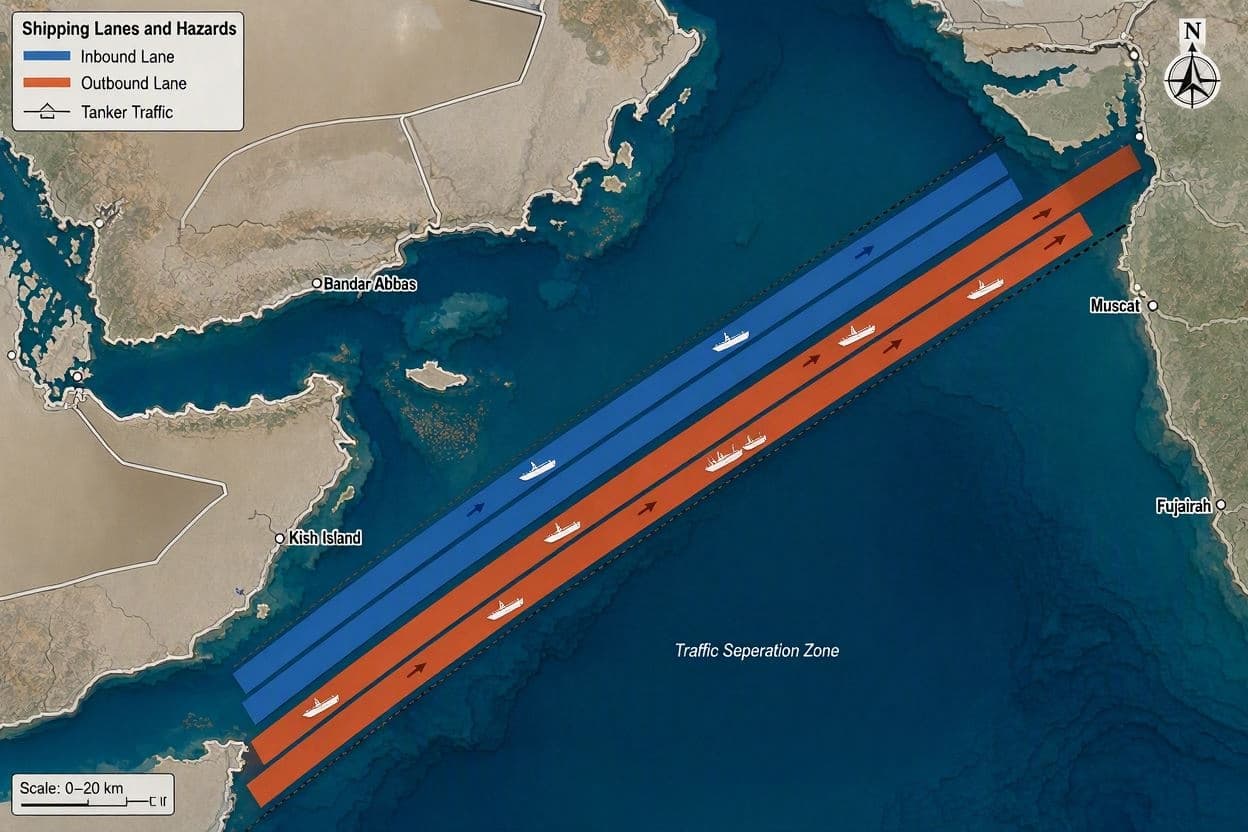
The Strait of Hormuz is a critical artery for global oil transport, through which a significant portion of the world’s petroleum supplies pass. Its status as an international waterway is protected by longstanding maritime laws and treaties. Law defines space. Treaties protect flow.
Trump’s comment, likely intended to project strength and deterrence, contrasts sharply with established norms of territorial sovereignty. Most nations view such a claim as legally untenable and diplomatically provocative. Rhetoric projects power. Norms constrain action.
Experts note that declaring an international strait as U.S. territory would face immense legal and military challenges, potentially destabilizing the region further. The idea serves more as a political signal than a feasible policy proposal. Signal sends message. Feasibility requires law.
For allies and adversaries alike, the statement raises questions about the future of U.S. foreign policy and its commitment to international cooperation. It highlights the tension between unilateral action and multilateral stability. Unilateralism risks conflict. Cooperation builds peace.
As the political discourse continues, the focus remains on maintaining open sea lanes and ensuring global energy security. The hope is for diplomatic solutions that respect international law and promote regional stability. Diplomacy ensures order. Stability benefits all.
Donald Trump has suggested the U.S. could declare the Strait of Hormuz as territory after defeating Iran, a statement that contradicts international maritime law. The remark highlights ongoing tensions in the Middle East. The hope is for continued adherence to international norms and peaceful resolution of conflicts.
AI Image Disclaimer: The images provided are AI-generated to visually represent the geopolitical and maritime aspects of the story.
Sources: Reuters Al Jazeera The Guardian Foreign Policy
Published by Banx Network. This article is part of the Banx decentralized media programme, powered by the BXE token on the XRP Ledger.