History is often written by the victors, but in the natural world, it is written in bone and blood. For decades, the fossil record of North America held a persistent mystery: the presence of a swift, spotted predator known as the American cheetah. It was believed to be a close relative of the modern African cheetah, a testament to a time when the continent teemed with megafauna. However, recent advances in genetic science have rewritten this chapter of evolutionary history. DNA analysis has revealed that this ancient hunter was not a cheetah at all, but a distinct lineage of cougar. This discovery invites us to reflect on the fluidity of classification and the surprising twists that lie within our understanding of the past.
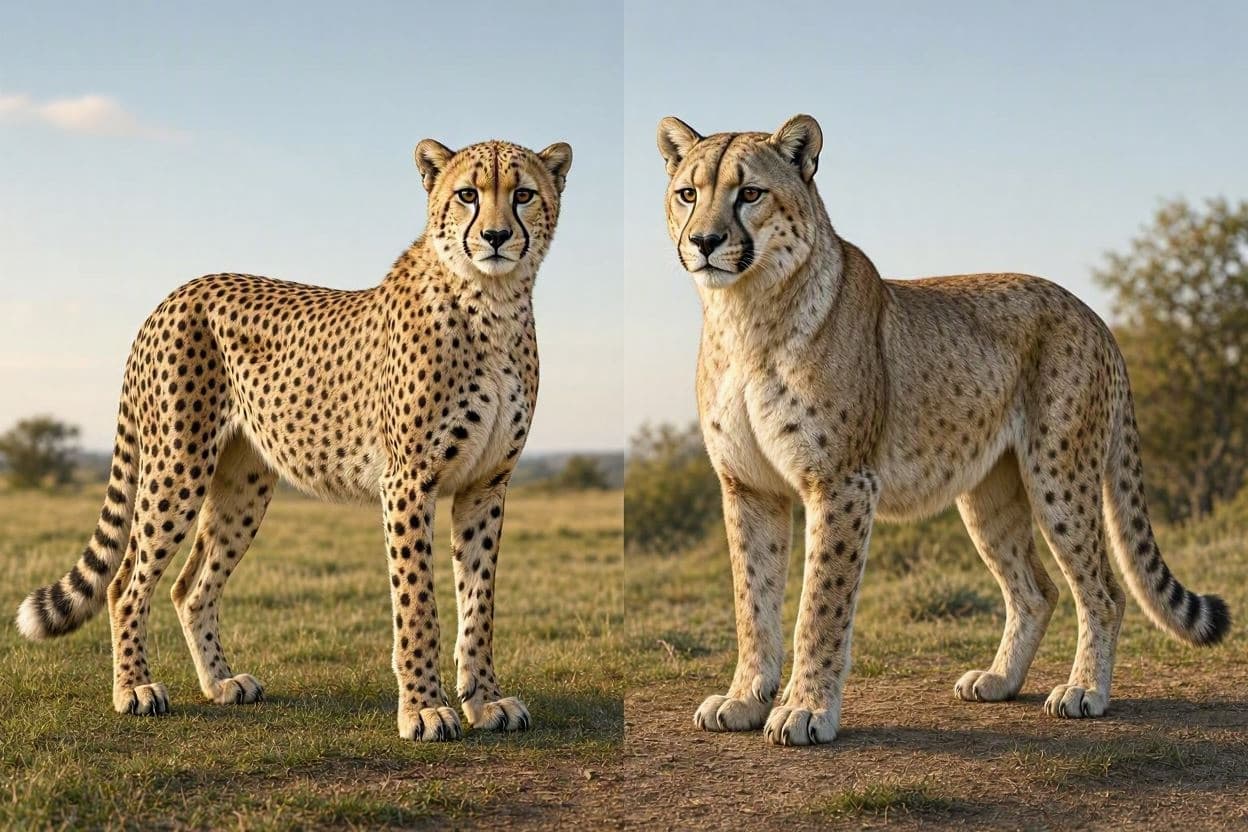
The creature in question, Miracinonyx, lived during the Pleistocene epoch, sharing the landscape with mammoths, saber-toothed cats, and early humans. Morphologically, it bore a striking resemblance to the modern cheetah, with long limbs and a slender build adapted for speed. This physical similarity led scientists to assume a close evolutionary relationship, suggesting that cheetahs once roamed both Africa and North America. It was a logical conclusion, drawn from the visible evidence of skeletal structure and ecological niche.
However, the extraction and sequencing of ancient DNA have provided a different narrative. By analyzing genetic material preserved in fossilized remains, researchers discovered that Miracinonyx shares a much closer genetic ancestry with the puma, or cougar, than with Acinonyx jubatus, the true cheetah. This finding suggests that the American "cheetah" was an example of convergent evolution, where unrelated species develop similar traits to adapt to similar environments. In this case, the open grasslands of prehistoric North America favored speed, leading the cougar lineage to evolve a cheetah-like form.
This revelation highlights the limitations of relying solely on morphology for classification. Bones can tell us how an animal moved, but they cannot always reveal its true family tree. Genetic data provides a deeper, more accurate look at lineage, uncovering relationships that physical appearance might obscure. It serves as a reminder that nature is complex and that our initial assumptions, however well-founded, must remain open to revision in the face of new evidence.
The distinction is significant for understanding the evolutionary history of felids in the Americas. It suggests that the cougar lineage was more diverse and adaptable than previously thought, capable of producing specialized hunters that could compete with other apex predators. This adaptability may have contributed to the survival of cougars into the present day, while other large cats, including the true American cheetah mimic, went extinct. It offers insights into the resilience and versatility of the puma genus.
For paleontologists, this study underscores the importance of interdisciplinary collaboration. The integration of genetics, paleontology, and ecology allows for a more holistic reconstruction of ancient ecosystems. It transforms fossils from static objects into dynamic participants in a broader biological story. This approach enriches our understanding of biodiversity and the forces that shape it over millions of years.
The public fascination with the American cheetah remains undiminished, even if its identity has changed. The image of a swift, spotted cat chasing prey across the Ice Age plains is still powerful. Knowing that it was actually a specialized cougar adds a layer of intrigue, highlighting the creative power of evolution. It shows how life can find multiple solutions to the same challenge, resulting in forms that mirror each other across distant branches of the family tree.
As we continue to unlock the secrets of ancient DNA, more surprises are likely to emerge. Each discovery refines our map of life’s history, correcting errors and revealing new connections. The story of the American cheetah is a testament to the progress of science, where truth is pursued with patience and precision. It reminds us that knowledge is not static, but a living, evolving entity.
The reclassification of the American cheetah as a cougar relative illustrates the power of genetic science to correct historical assumptions. It deepens our appreciation for evolutionary complexity. Let this discovery inspire continued curiosity about the natural world.
AI Image Disclaimer: Please note that any visual representations in this article are AI-generated illustrations created for conceptual clarity.
Sources: Nature Ecology & Evolution Smithsonian Magazine Live Science
Published by Banx Network. This article is part of the Banx decentralized media programme, powered by the BXE token on the XRP Ledger.