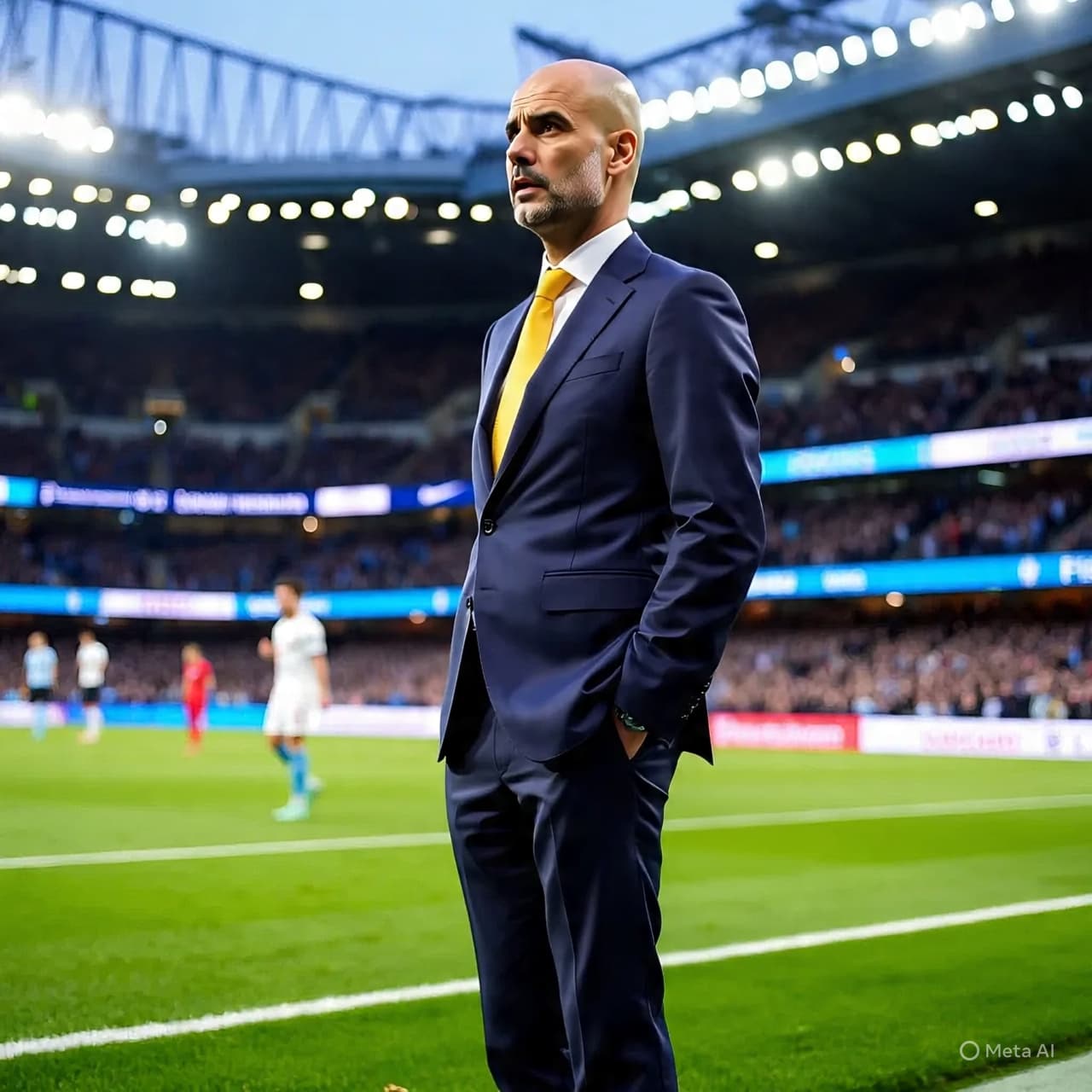
In football, as in life, the brightest lights eventually cast long shadows — and in those shadows we see not just what is, but what might come next. Pep Guardiola, the architect of Manchester City’s golden age, has stood at the Etihad Stadium’s touchline for nearly a decade, guiding the club to six Premier League titles, domestic cups, and a long‑sought Champions League. Yet even as he reiterates his focus on the present, there is a quiet recognition that no tenure — however glorious — lasts forever. As questions about his future surface once again, Guardiola himself has acknowledged that Manchester City “must be prepared” for what comes after him, even while he remains committed to the job today.
Guardiola, 54, dismissed speculation about an imminent departure ahead of City’s Premier League clash with West Ham, emphasizing that he and the club have no ongoing discussions about his exit and that his contract runs until June 2027. He stressed his contentment with the team’s development and his current focus on immediate goals, from league fixtures to personal time off with family. Yet, in the same breath, he acknowledged football’s inherent unpredictability and the necessity for his club to plan for all eventualities, including his eventual departure.
That call to readiness comes amid renewed public discussion — and media speculation — about who could succeed Guardiola when his remarkable reign inevitably ends. Reports from The Athletic and other outlets suggest that City have begun looking at potential managerial successors, even if no formal process has been launched. One name frequently mentioned is Enzo Maresca, now head coach at Chelsea and with past ties to City’s coaching setup, whose familiarity with the club’s playing philosophy has drawn interest as a future candidate.
Despite such mentions, figures linked with succession have been quick to temper expectations. Maresca himself has dismissed links to the City job as “speculation,” underscoring that he is focused on his current role and contract through 2029. Meanwhile, Guardiola has repeatedly reiterated that there is no active discussion about his exit, signalling that such speculation remains in the realm of media fodder rather than club planning — for now.
Yet City’s leadership must balance loyalty to a manager whose impact has been profound with the practicalities of long‑term planning. Guardiola’s era has not only delivered trophies but also a distinctive style of play and a culture of meticulous preparation. In contemplating the future, the club is trying to ensure that the transition — whenever it comes — does not undermine the identity he has helped build. That may mean identifying a successor who can preserve the club’s ethos while bringing fresh ideas, a challenge both immediate and distant.
For supporters and observers, the conversation is not about if Guardiola’s time at City will end, but when and how the baton will be passed. In this sense, the coach’s gentle reminder — that the club should be ready for everything — is as much about football’s infinite change as it is about safeguarding the stability of a team that, under his leadership, has become one of the defining forces in world football.
AI Image Disclaimer “Visuals are created with AI tools and are not actual photographs and serve conceptual representation only.”
Sources
• Reuters
• The Independent
• Yahoo Sports
• The Guardian
Published by Banx Network. This article is part of the Banx decentralized media programme, powered by the BXE token on the XRP Ledger.