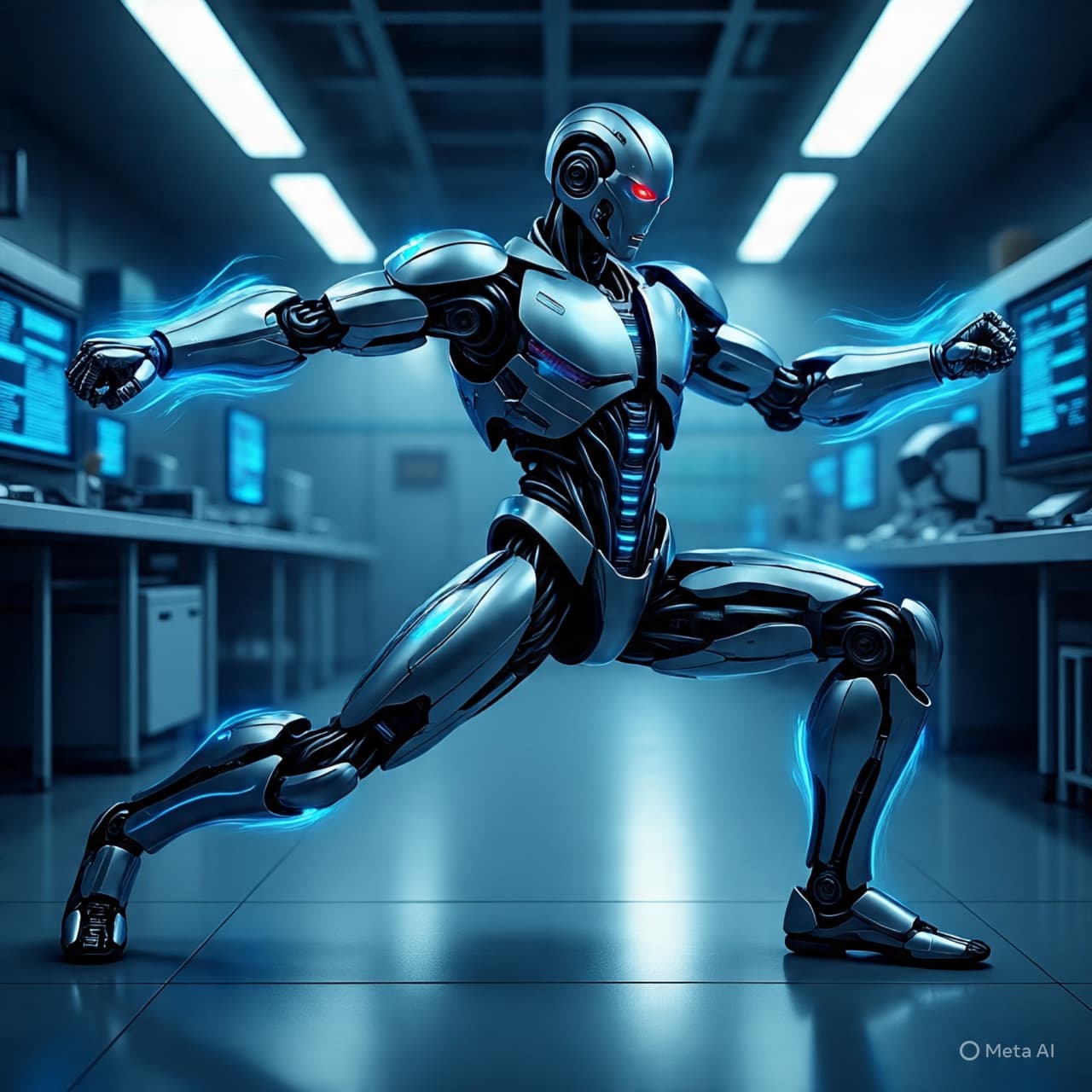
There is something both familiar and unsettling about machines that move like us. Not because motion itself is new, but because it carries with it a reflection—a suggestion that the boundary between human ability and mechanical precision is becoming less distinct. When that movement is shaped into something as deliberate and disciplined as martial arts, the effect becomes even more striking.
Recently, presented a new generation of humanoid robots capable of performing complex martial arts movements. The demonstration, while technical in nature, carried a certain theatrical quality—robots balancing, striking, and responding with a level of coordination that suggests rapid progress in robotics, artificial intelligence, and motion control systems.
At first glance, the display can feel like a spectacle, a glimpse into a future where machines mirror human physical expression. Yet beneath that surface lies a more practical narrative. Developing robots capable of such precise and adaptive movement has implications far beyond performance. It speaks to advancements in balance, real-time decision-making, and physical interaction—capabilities that could be applied in fields ranging from manufacturing to disaster response.
The question raised in parts of —whether such developments should prompt concern—is less about the movements themselves and more about the pace and direction of innovation. Robotics, like many technological domains, is increasingly shaped by global competition. Each breakthrough becomes both a step forward and a signal to others.
Still, the meaning of such progress depends greatly on context. A robot performing martial arts is not, in itself, an indication of intent or application. It is a demonstration of capability, one that highlights how far systems have come in replicating complex human motions. Whether that capability is used for constructive or concerning purposes depends on choices made beyond the laboratory.
There is also a broader reflection to consider. As machines grow more capable, the conversation shifts from what they can do to how they fit within human society. The presence of humanoid robots raises questions about collaboration, regulation, and the boundaries we choose to maintain between human and machine roles.
For Europe and other regions observing these developments, the response may not lie in alarm, but in engagement. Investment in research, clear frameworks for ethical use, and international dialogue may prove more effective than simple comparison. In this sense, technological progress becomes less a race to outpace others and more a shared challenge to guide innovation responsibly.
The image of a robot moving through a martial arts sequence lingers not because it signals an immediate shift, but because it invites a deeper question: as machines become more like us in form and function, how do we choose to shape the future they are part of?
AI Image Disclaimer (Rotated): Graphics are AI-generated and intended for representation, not reality.
Source Check (Credible Media Identified):
Reuters BBC The Guardian Bloomberg CNBC
Published by Banx Network. This article is part of the Banx decentralized media programme, powered by the BXE token on the XRP Ledger.

.jpg&w=3840&q=75 "US Declares Drought Disaster for Parts of Puerto Rico as Dry Conditions Persist")