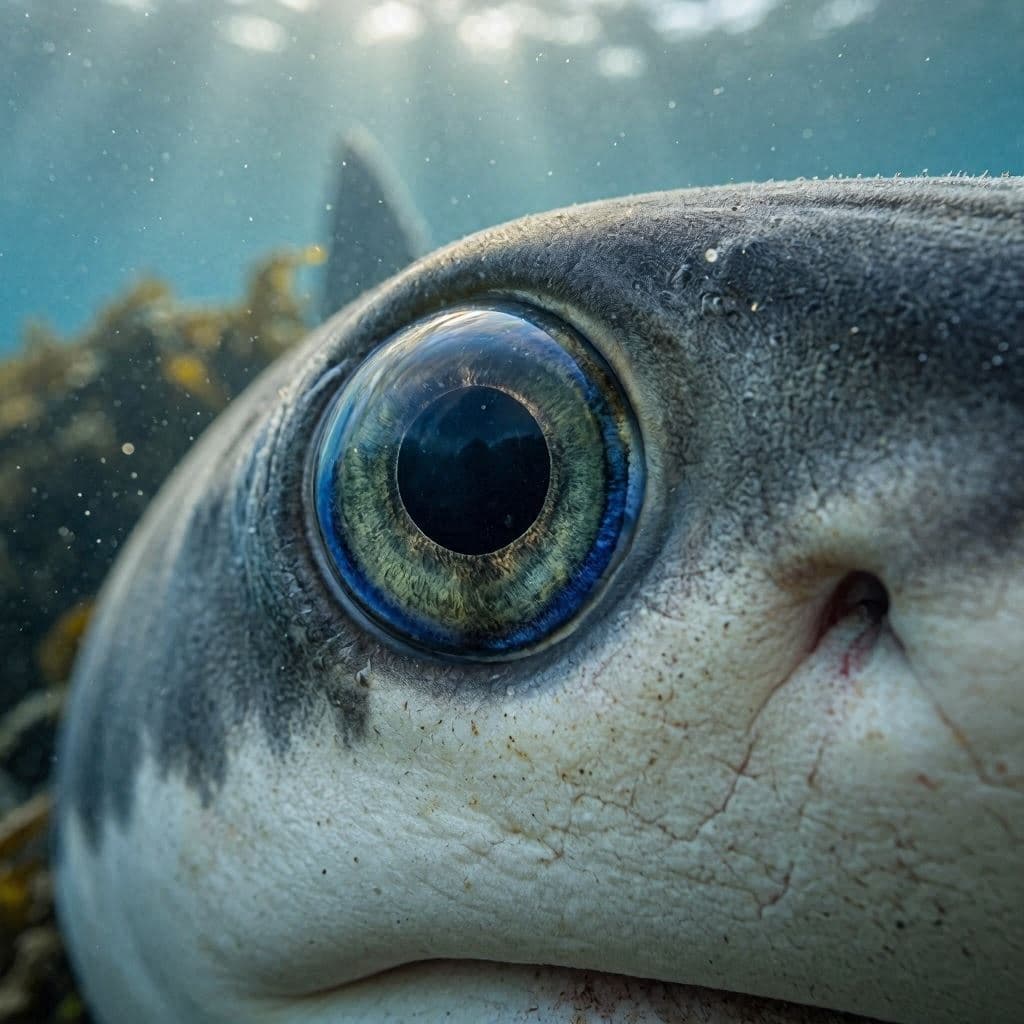
Sharks are often portrayed as mindless predators, driven solely by instinct and hunger. Yet, beneath the surface of this fearsome reputation lies a world of surprising complexity and sophistication. Recent insights reveal that sharks are capable of mathematical reasoning, exhibit preferences for certain types of music, and possess social structures that defy simple categorization. These nine extraordinary facts invite us to reconsider our relationship with these ancient mariners. They are not just monsters of the deep but intelligent, sensitive beings with rich inner lives. This shift in perspective encourages empathy and respect for one of the ocean’s most misunderstood inhabitants.
Body: One of the most startling discoveries is the shark’s ability to perform basic arithmetic. Studies have shown that some species can distinguish between quantities, a skill that likely aids in hunting and navigation. This cognitive ability suggests a level of mental processing that was previously attributed only to higher mammals. It challenges the notion that intelligence is exclusive to land-dwelling creatures, expanding our definition of what it means to be smart.
Another fascinating trait is their response to sound. Research indicates that sharks may show preferences for certain frequencies and rhythms, akin to a fondness for jazz or classical music. While they do not have external ears, their lateral line system detects vibrations with incredible precision. This sensitivity allows them to interpret the acoustic landscape of the ocean, turning noise into information. It is a form of listening that is both alien and deeply attuned to their environment.
Sharks also exhibit complex social behaviors, forming hierarchies and recognizing individual companions. Some species return to the same gathering spots year after year, suggesting a sense of community and memory. These interactions are not random but structured, indicating a social intelligence that facilitates cooperation and survival. It reveals a side of sharks that is communal rather than solitary.
Their sensory capabilities extend beyond sight and sound. Sharks can detect electromagnetic fields, allowing them to locate prey hidden in sand or mud. This sixth sense is a biological marvel, enabling them to navigate the dark depths with ease. It is a reminder of the diverse ways in which life adapts to its surroundings, evolving tools that seem almost magical to human observers.
Furthermore, sharks play a crucial role in maintaining the health of marine ecosystems. As apex predators, they regulate populations of other species, ensuring balance and biodiversity. Their presence is a sign of a healthy ocean, and their decline signals broader environmental issues. Protecting sharks is therefore not just about saving a single species but preserving the integrity of the entire marine web.
Despite their importance, sharks face significant threats from overfishing and habitat loss. Misconceptions about their danger to humans often fuel fear rather than conservation. Education is key to changing this narrative, highlighting their beauty and ecological value. By understanding their extraordinary traits, we can foster a deeper appreciation for their role in the natural world.
The nine facts serve as a gateway to this deeper understanding. From their longevity to their unique reproductive strategies, each detail adds depth to our knowledge. It transforms the shark from a caricature into a complex organism worthy of study and protection. It is a journey of discovery that rewards curiosity with wonder.
Closing: In the end, the extraordinary traits of sharks remind us of the diversity and intelligence of life on Earth. They challenge our assumptions and invite us to look closer. As we learn more about these ancient creatures, the hope is that we will move from fear to fascination, ensuring their survival for generations to come.
AI Image Disclaimer: The visual representations associated with this article are AI-generated artistic interpretations designed to illustrate the themes of marine biology and animal intelligence.
Sources: National Geographic Smithsonian Ocean Marine Biological Association
Published by Banx Network. This article is part of the Banx decentralized media programme, powered by the BXE token on the XRP Ledger.