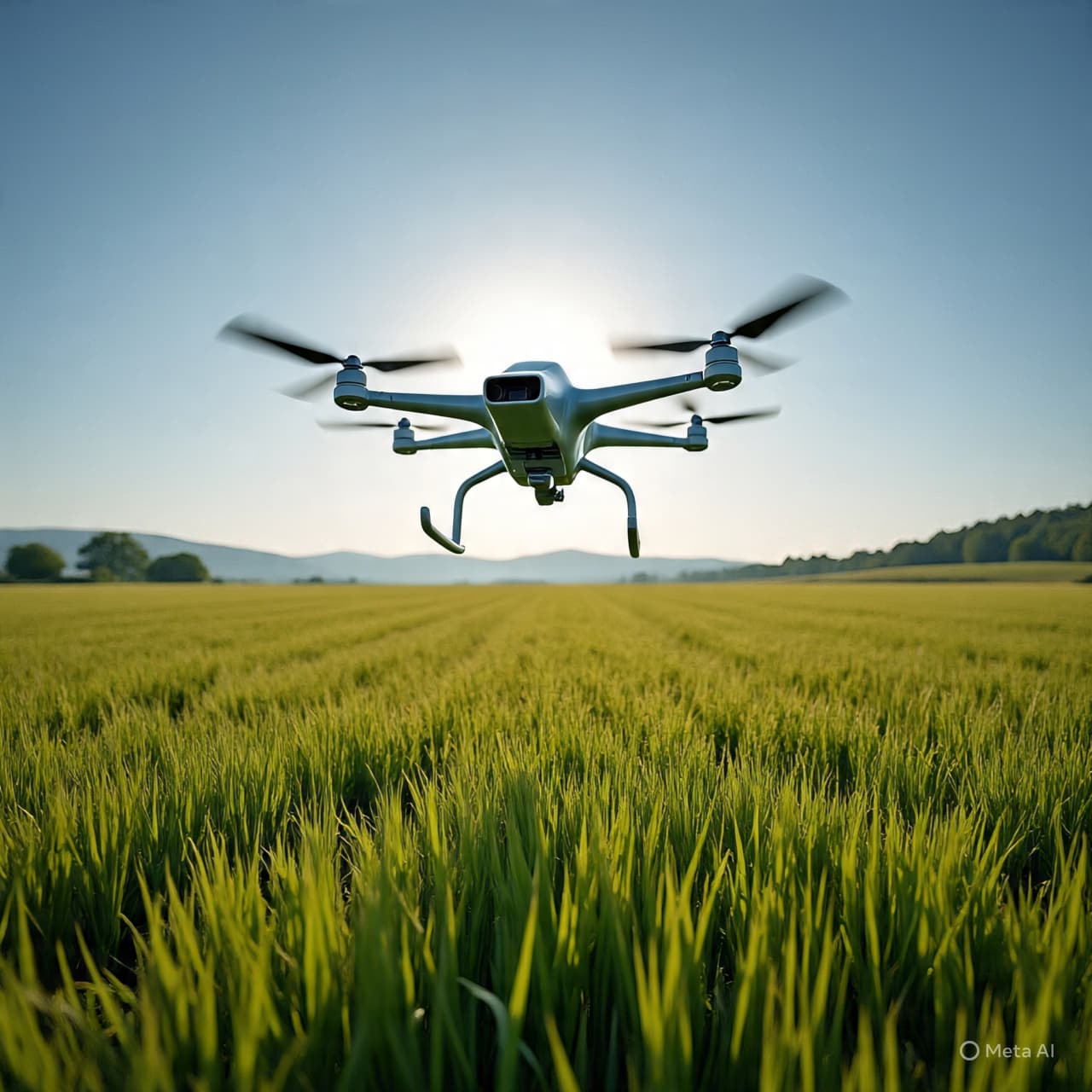
In the half-light of early morning, when quiet thoughts commingle with the first faint stirrings of the day, we find metaphors in places we least expect them — even in machines that fly. Like birds adapting to shifting winds, the hum of a distant rotor or the streak of a frame against the sky evokes stories of aspiration, innovation, and the unending human quest to see farther and reach higher. In the skies above conflict zones and open fields alike, drones — once tools of hobbyists and dreamers — are now caught in the winds of change, hinting at how swiftly technology can transcend its original purpose.
Recently, a new Guinness World Record captured the imagination of many, not for what it means in war or peace, but for what it suggests about speed and possibility. A South African father-son team, Luke and Mike Bell, pushed a custom-built quadcopter — the Peregreen V4 — to a breathtaking ground speed of 408 mph, far beyond what most small drones are expected to achieve. In that moment of propulsion, of precision and forward motion, there was a quiet reflection of how engineering dreams outpace even their creators’ expectations.
These high-speed feats, achieved with 3D-printed parts and off-the-shelf components, offer more than spectacle. They trace a line between what is and what could be — a line that Ukrainian engineers and defense innovators find both inspiring and laden with technical challenges. Interceptor drones used by Ukrainian forces to counter Russian Shahed-type loitering munitions today typically reach speeds around 200 mph — about the pace of a fast-moving express train — and efforts are underway to push these limits further as threats evolve.
The urgency of speed in interceptor drones is not an abstract ideal but a practical need. Russian advancements with faster, jet-propelled Shahed variants — reportedly capable of speeds estimated above 230 mph — have added new dimensions to aerial threats, requiring countermeasures that can respond swiftly and reliably, not just nimble enough to catch up, but resilient enough to endure the strain of extended pursuits.
Yet, building drones that can fly faster has its own set of constraints. It is not merely about achieving a record in straight-line speed; military interceptor drones must balance velocity with agility, control, payload capacity, and the ability to be produced in large numbers. The spinning motors, structural frames, and power systems all face wear and heat that civilian record attempts can afford — and sometimes spectacularly document — but battlefield designs cannot.
These high-velocity pursuits echo a larger narrative in which innovation and necessity intertwine. Ukrainian developers — from grassroots groups to defense research teams — have created interceptor systems such as the Sting, a drone capable of engaging enemy UAVs and credited with significant operational results, including intercepting jet-powered threats. Seen in this light, the Guinness World Record for speed is more than a number; it is a reminder of how far the technology has come and how far it may yet go.
In the skies above Ukraine and beyond, these humming machines — whether set to break records or shield communities — represent a kind of silent dialogue between invention and impact. They are the visible markers of unserious dreams made real, and of serious conflicts that turn innovation toward protection rather than mere performance.
Looking ahead, the pursuit of faster interceptor drones continues, shaped by both civilian ingenuity and the harsh demands of modern aerial warfare. Guinness’ latest record underscores not only the limits pushed by hobbyists but also the space for innovation that remains — where speed, purpose, and the human spirit meet in the open air.
AI Image Disclaimer Graphics are AI-generated and intended for representation, not reality.
Sources Business Insider United24 Media Wikipedia — Sting (drone) defence-ua.com United24 Media (interceptor in action)
Published by Banx Network. This article is part of the Banx decentralized media programme, powered by the BXE token on the XRP Ledger.