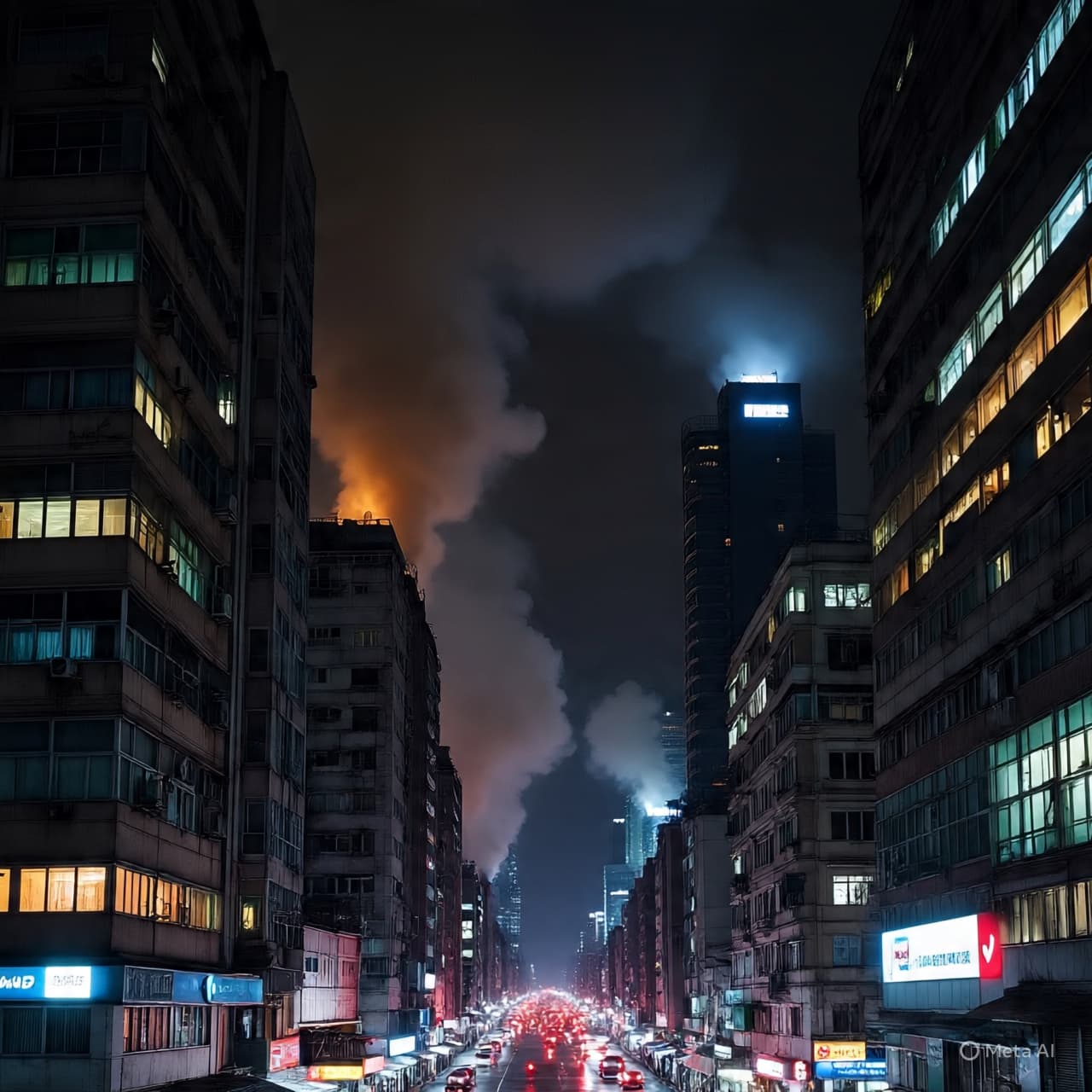
In the still-smoke of charred concrete and twisted scaffolding, Hong Kong’s skyline — once a testament to urgency and renewal — seems to bear the heavy weight of tragedy. Flames tore through the hulking towers of Wang Fuk Court, not just burning apartments, but igniting a deeper fear: what becomes of safety, accountability, and voice, when a city’s bonds with dissent grow frail?
The inferno began on the afternoon of November 26, 2025, amid renovation works at Wang Fuk Court, a crowded residential estate in Tai Po. The blaze spread with shocking speed, enveloping seven high-rise towers that housed over 4,000 residents. By the time firefighters subdued the flames — more than 40 hours later — at least 159 lives were lost, including infants and elderly people, with dozens more still missing and many displaced.
As the city mourns, early investigations have cast harsh light on systemic failures. The renovation used exterior plastic netting and foam-board insulation that failed fire-safety standards; bamboo scaffolding and malfunctioning fire alarms reportedly worsened the disaster’s rapid spread. Arrests swiftly followed — executives from the construction company, suspected of manslaughter, along with corruption charges — and a judge-led independent committee was ordered by Chief Executive John Lee to probe the causes and oversight failures.
Yet even as the city promises accountability, a darker undercurrent has emerged: calls for transparency and public grieving have been met with warnings under tightened security laws. Critics say the authorities are treating demands for answers — pleas for justice and safety — as potential dissent.
For many Hongkongers, the fire is becoming more than disaster — it is a cold reminder that in an era of national-security oversight, a tragedy may not just consume lives but also consume voice. When citizens question structural failures, demand accountability, or seek independent scrutiny, they may find themselves caught not only in rubble, but in the broad net of suppression.
As investigators sift through debris — charred walls, collapsed scaffolding, the ghosts of lives lost — the city stands at a crossroads: Will it treat this as a moment of reckoning, with real structural reform and open dialogue? Or will grief and outrage be quietly absorbed, while warnings echo: speak carefully, question even more carefully?
In the embers of Wang Fuk Court, more than buildings burned. A question lingers: in the shadow of enforced security, where does responsibility end — and silence begin?
AI Image Disclaimer: Graphics are AI-generated and intended for representation, not reality.
Sources: Reuters, Al Jazeera, Human Rights Watch, ABC News, The Guardian.
Published by Banx Network. This article is part of the Banx decentralized media programme, powered by the BXE token on the XRP Ledger.