There are moments in sports where what is unseen feels bigger than what is visible — a breath before a play, the tense beat between collision and recovery, and the brain, quietly bearing the burden of each echoing hit. In the cadence of a football season, every stride and every impact narrates a tale of strength, resolve, and, increasingly, concern for what lingers beyond the cheers. In that space where science brushes against sport, a new study offers a flicker of cautious optimism, as if a gentle dawn breaks over a horizon long overshadowed by uncertainty.
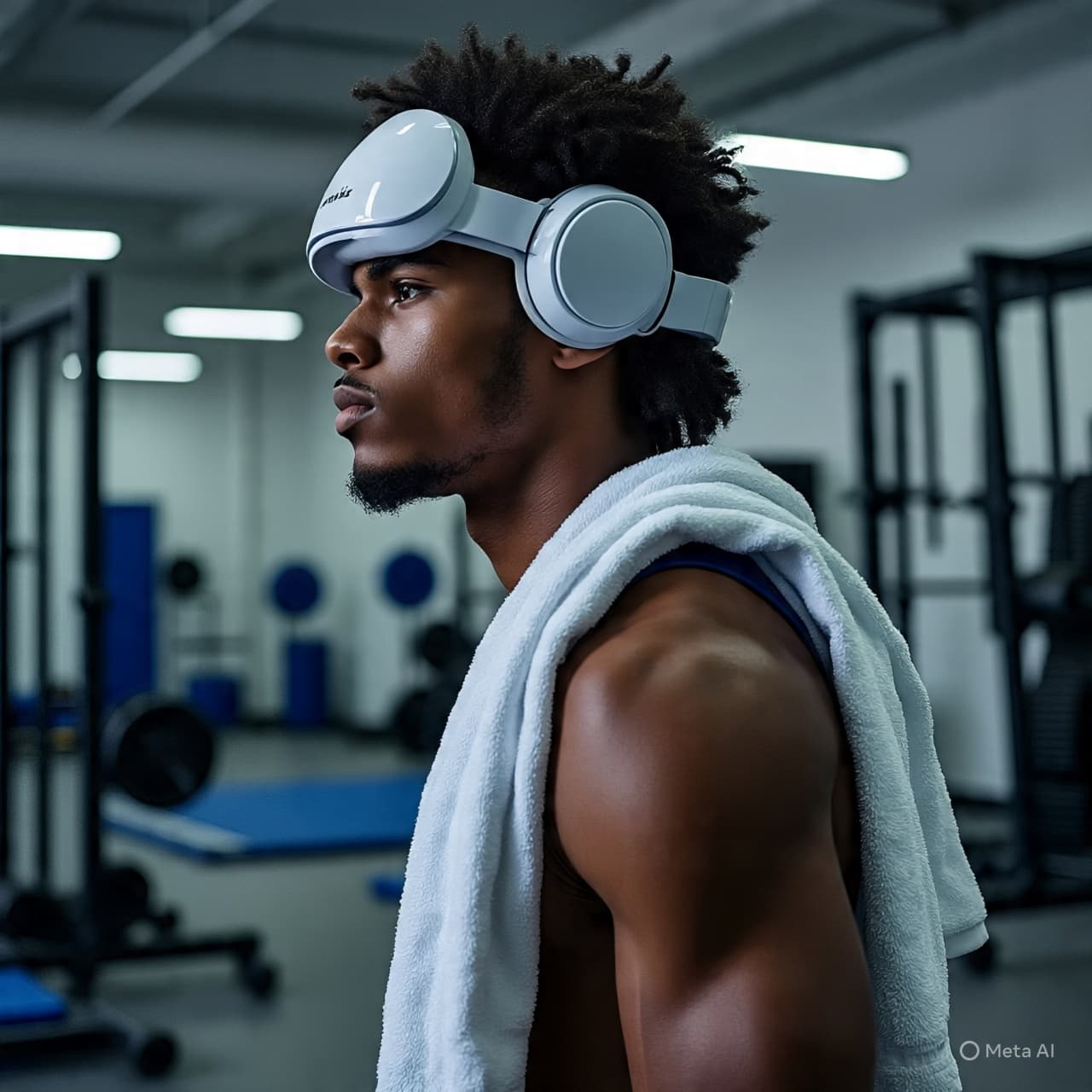
In recent research published in the Journal of Neurotrauma, scientists followed collegiate football players through a full season of games and practices to examine the subtle yet cumulative effects of repetitive head accelerations. Players were assigned either an active near-infrared light therapy device — specifically a patented intranasal and transcranial system known as the Neuro Gamma — or a placebo equivalent. Over 16 weeks, under the watchful eye of diffusion MRI scans, the delicate architecture of the brain was measured not by headlines, but by shifts in markers associated with neuroinflammation and axonal stress.
What emerged was something both striking and gently hopeful: while players in the control group showed increases in markers of inflammation — the silent undercurrent of cumulative stress — those who received the light therapy maintained more stable neurological signatures, hinting at preserved neural integrity. It was not a shout, not a clamorous revelation, but a subtle song of resilience written into regions of the brain often most vulnerable to the rigors of contact sport.
The landscape of sports medicine has long wrestled with an enduring question: how to shield the brain without diminishing the game itself. Helmets and rule changes have seen their place, but they primarily guard against acute injury — the visible, momentary shock. What unfolds over the weeks and seasons, in the gradual rise of microscopic strain and immune response deep within neural tissue, has remained elusive. In this study, near-infrared photobiomodulation did not demand reduced playing time, nor drastic alteration of participation. Instead, it whispered into the neural symphony, offering light at specific wavelengths that may ease inflammation and support cellular health.
In interviews woven through the research narrative, players expressed a sense of assurance — that safeguarding the mind may be as vital as protecting the body’s physical frame. Coaches and medical directors spoke of the hope this technology ignites, not as definitive proof, but as a companion to existing safety measures. Still, they acknowledge that larger studies and longer follow-up are needed before light-based therapy becomes standard practice.
This gentle convergence of science and sport reminds us that progress often shines not in blinding bursts, but in steady, thoughtful illumination. As researchers continue exploring how light interacts with neural tissue — and what it might offer those who risk daily collisions — the conversation about athlete wellbeing grows richer, more nuanced, and infused with possibility.
AI Image Disclaimer “Illustrations were produced with AI and serve as conceptual depictions.”
Sources GlobeNewswire press release on the breakthrough study. University of Utah Health medical report on near-infrared light therapy research. EurekAlert! science news release summarizing the study published in Journal of Neurotrauma. New York Post coverage referencing the therapy’s potential in brain protection. Vielight technology context and background on photobiomodulation.
Published by Banx Network. This article is part of the Banx decentralized media programme, powered by the BXE token on the XRP Ledger.