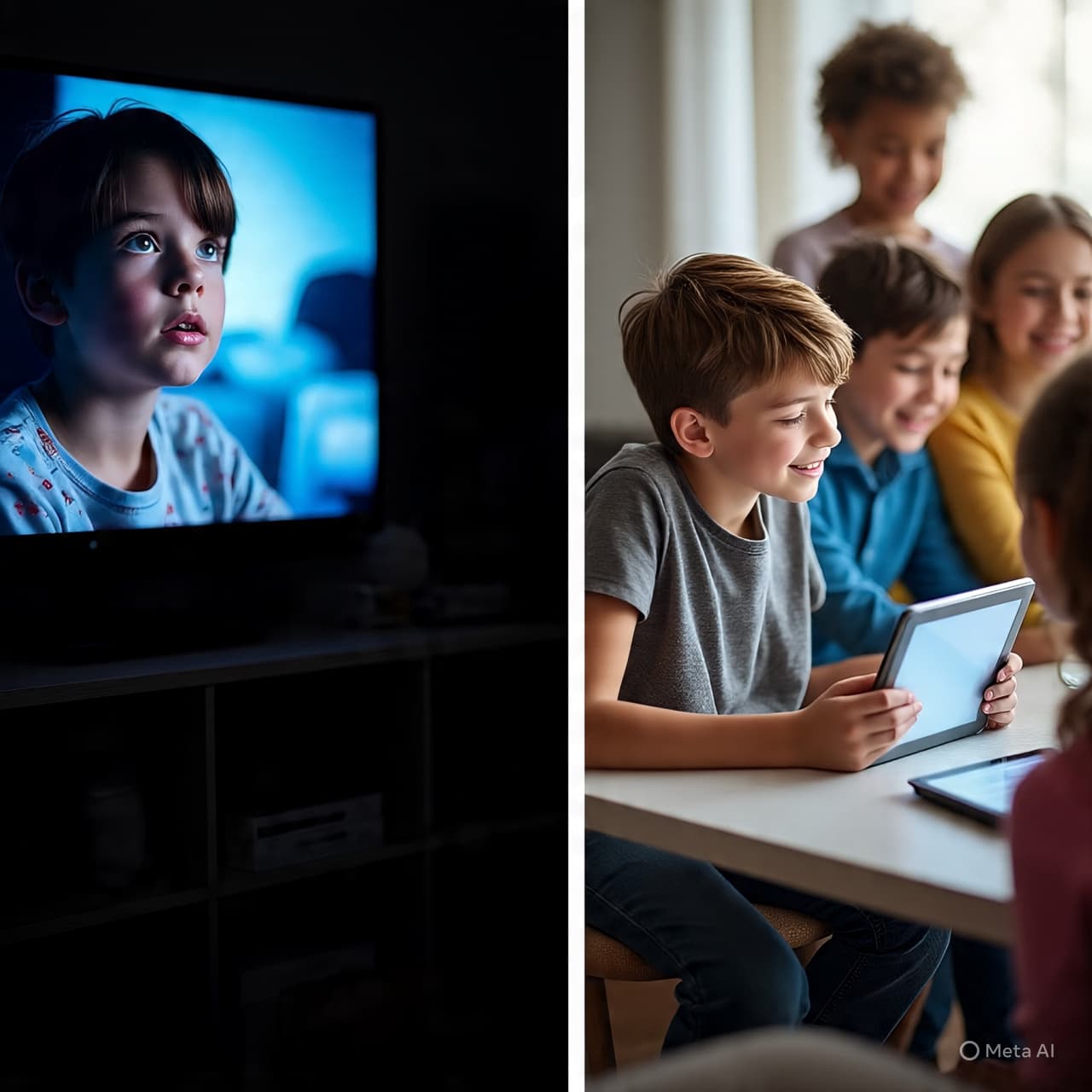
In the quiet glow of evening, a tablet rests in small hands—its light painting a child’s face with color and distraction. Parents often measure this moment with a clock, asking, “How long has it been?” But science and lived experience now whisper a different question: “What is my child doing on that screen—and how does it make them feel?”
For years, advice revolved around counting hours. Two hours a day, said one guideline; no devices before bed, said another. Yet recent studies are reshaping that conversation. It turns out that what matters most for a child’s mental health is not *how long* they spend on a device, but *how* that time is spent.
Consider two children who both spend an hour on screens. One explores a story-based educational game, learns, laughs, and talks about it afterward with their parent. The other scrolls endlessly through overstimulating videos alone, long past bedtime. Both sessions lasted the same sixty minutes—but their impact on wellbeing couldn’t be more different.
Researchers have found that meaningful, creative, or social screen activities can even support emotional development and learning. Meanwhile, passive, isolating, or late-night use tends to correlate with higher risks of anxiety, sleep issues, and irritability. The distinction lies not in the seconds ticking by but in the *texture* of engagement—the difference between curiosity and compulsion, between exploration and escape.
This shift in understanding demands a gentler kind of guidance. Instead of imposing rigid limits, parents and educators can cultivate digital awareness: co-viewing with children, discussing what they watch, setting screen-free routines, and teaching them to notice how online experiences make them feel. The goal is not prohibition but presence.
The modern child’s world is inevitably digital. Tablets and phones are no longer luxuries—they are classrooms, playgrounds, even comfort spaces. But as with any powerful tool, their value depends on context and care. A hammer can build or break; a screen can teach or trap.
In truth, the healthiest screen use resembles a balanced diet: a mix of enrichment, rest, connection, and play. The clock still matters—but only as part of a larger story about purpose, meaning, and moderation. When we stop counting minutes and start noticing moments, we find that digital wellbeing is not measured in hours, but in harmony.
This article is based on reporting from JAMA Network Open, University of Jyväskylä, University of Eastern Finland, BMC Psychology, and Columbia University Irving Medical Center.
Published by Banx Network. This article is part of the Banx decentralized media programme, powered by the BXE token on the XRP Ledger.