In forests at the edge of winter, deer move differently. Birds rehearse their songs weeks before spring. Across much of the animal kingdom, time itself seems to signal when life should begin again. Hormones rise with daylight, temperatures shift, migrations align. For many species, reproduction belongs to a season — brief, urgent, and choreographed by the turning Earth.
Humans, by contrast, are curiously untethered.
We do not wait for spring thaws or autumn abundance. Children are conceived in every month, in every climate, under nearly every condition imaginable. From equatorial cities to Arctic settlements, birth records trace a steady rhythm through the calendar, with modest fluctuations but no strict biological window. Why, in evolutionary terms, did our species step outside the pattern that governs so many others?
Evolutionary biologists point first to ecology. Many mammals evolved mating seasons to ensure that offspring are born when survival odds are highest — typically when food is plentiful and weather mild. A synchronized breeding period means synchronized births, increasing the chance that young will find adequate nourishment. For species whose gestation periods are fixed and whose environments vary dramatically by season, timing can be everything.
Humans evolved under different pressures.
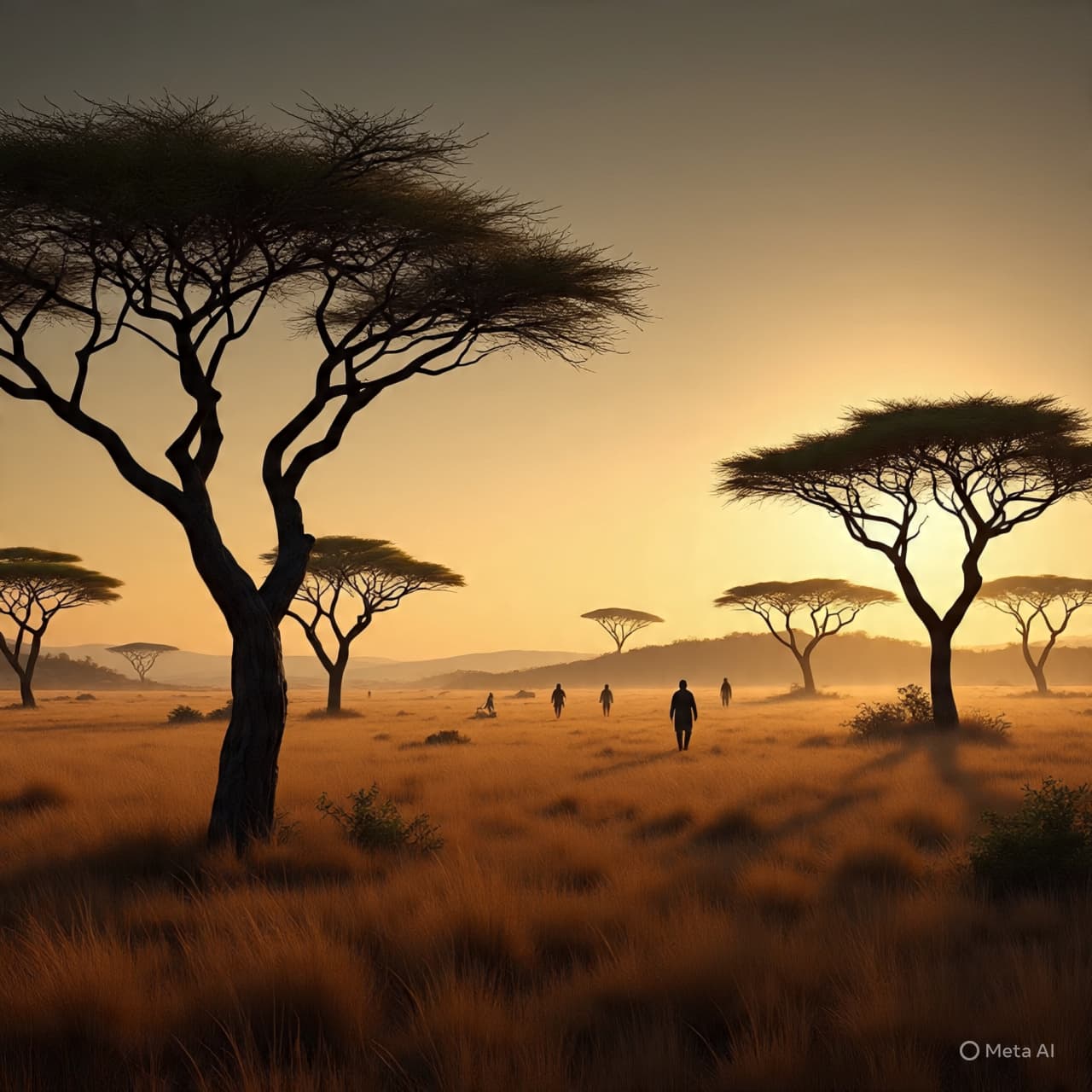
Our ancestors lived in tropical and subtropical regions where seasonal variation was less extreme. In equatorial Africa, where early members of the genus Homo emerged, daylight hours and temperatures shift far less dramatically over the year than they do in temperate zones. Food availability fluctuated, but not in the sharply defined cycles seen in higher latitudes. Under such conditions, there was less evolutionary pressure to confine reproduction to a narrow window.
Biology followed suit. Unlike many mammals, human females do not experience an obvious estrus cycle — the brief “heat” period during which ovulation is externally visible and sexual receptivity peaks. Instead, ovulation occurs on a roughly monthly cycle, largely concealed. Sexual behavior in humans is not limited to fertile days, nor is it hormonally restricted to specific seasons. Desire, bonding, and reproduction are intertwined in ways that extend beyond simple timing.
Researchers from institutions such as Harvard University and University of Oxford have suggested that this year-round receptivity may have strengthened long-term pair bonding and cooperative parenting. Human infants are unusually dependent compared to other primates. They require prolonged care, shared provisioning, and social support. Continuous sexual receptivity may have reinforced social bonds between partners, increasing paternal investment and group cohesion.
There is also the matter of brain and body. Humans have long gestation periods — about nine months — and extended childhoods. Our species invests heavily in fewer offspring compared to many mammals. Rather than producing large litters during a brief season, humans evolved a strategy of intensive parental care over many years. In such a system, reproductive timing becomes less about synchronization and more about stability and social structure.
Modern data show slight seasonal birth patterns in some regions — often influenced by cultural practices, climate, or economic cycles rather than strict biological programming. In parts of Europe and North America, for instance, late-summer and early-autumn births are common, reflecting conceptions during winter holidays. But these patterns vary widely and lack the rigid hormonal enforcement seen in seasonal breeders.
From an evolutionary perspective, flexibility itself became adaptive. The capacity to reproduce at any time allowed early humans to respond to opportunity rather than calendar — to conceive when social bonds were strong, resources sufficient, or communities stable.
There is something quietly revealing in this departure from the seasonal script. While other species align reproduction with rainfall or migration, humans have woven it into culture, relationship, and choice. Biology sets the foundation, but society shapes the expression.
In the end, the absence of a mating season is not an absence at all. It is a different kind of rhythm — one less governed by daylight and more by connection. Our species stepped beyond the narrow gate of spring and found, in year-round possibility, another path to survival.
Published by Banx Network. This article is part of the Banx decentralized media programme, powered by the BXE token on the XRP Ledger.