In the quiet dust of time, shards of stone and bone sometimes speak louder than any written chronicle. Imagine holding a tool so old that its maker may have belonged to a branch of humankind we barely understand — a simple flake shaped by someone millions of years before Homo sapiens walked the earth. Such relics invite us to whisper a new origin story.
Recent discoveries have stirred the archaeological world: in Kenya, researchers have unearthed stone tools dated to approximately 3.3 million years ago, far older than what was long assumed to mark the advent of tool-making. These artifacts suggest that what we once saw as a unique spark in our direct lineage might, in fact, have flickered in other hominin relatives. Indeed, stone tools discovered in another Kenyan site show wear consistent with butchery and plant processing, and those were found beside teeth belonging to Paranthropus, a hominin not in our direct ancestral line.
Meanwhile, in Olduvai Gorge, Tanzania, a surprising “factory” of bone tools has come to light — 27 hand-crafted instruments made from elephant and hippopotamus leg bones, dating back some 1.5 million years. These bone tools, likely produced systematically, hint at advanced abstract reasoning far earlier than many had dared imagine. Their very existence invites us to reconsider the technological versatility of early hominins, who may have woven stone and bone into their toolkits.
Yet the surprises do not end in Africa. On the Indonesian island of Sulawesi, archaeologists have dated simple chert flakes to between 1.04 and 1.48 million years ago, long before modern humans set foot there. The identity of the toolmakers remains unknown — perhaps Homo erectus, or even a more enigmatic species — but the find underscores a much earlier and broader dispersal of hominins than previously believed.
Taken together, these discoveries form a pattern of deep antiquity: toolmaking was not the exclusive preserve of our immediate ancestors, but a practice shared among diverse hominins, emerging in different places, at different times. These implements are like whispers from prehistory, telling us that our story may be richer — and more complex — than the tidy narrative we once accepted.
Nevertheless, we must tread carefully. Dating ancient artifacts is a delicate science, full of assumptions and ongoing debate. Different materials, contexts, and dating methods can yield different interpretations. Archaeologists themselves remain cautious, emphasizing that new finds compel us not to discard older theories wholesale, but to refine and expand them.
In the end, these ancient tools do not offer answers as much as they invite questions. Who shaped them? For what purpose? How did those early makers think, live, and move across their landscapes? And crucially, how much of what we believe about our beginnings remains unwritten in the archaeological record? The past, it seems, still has many stories to tell — if we are ready to listen.
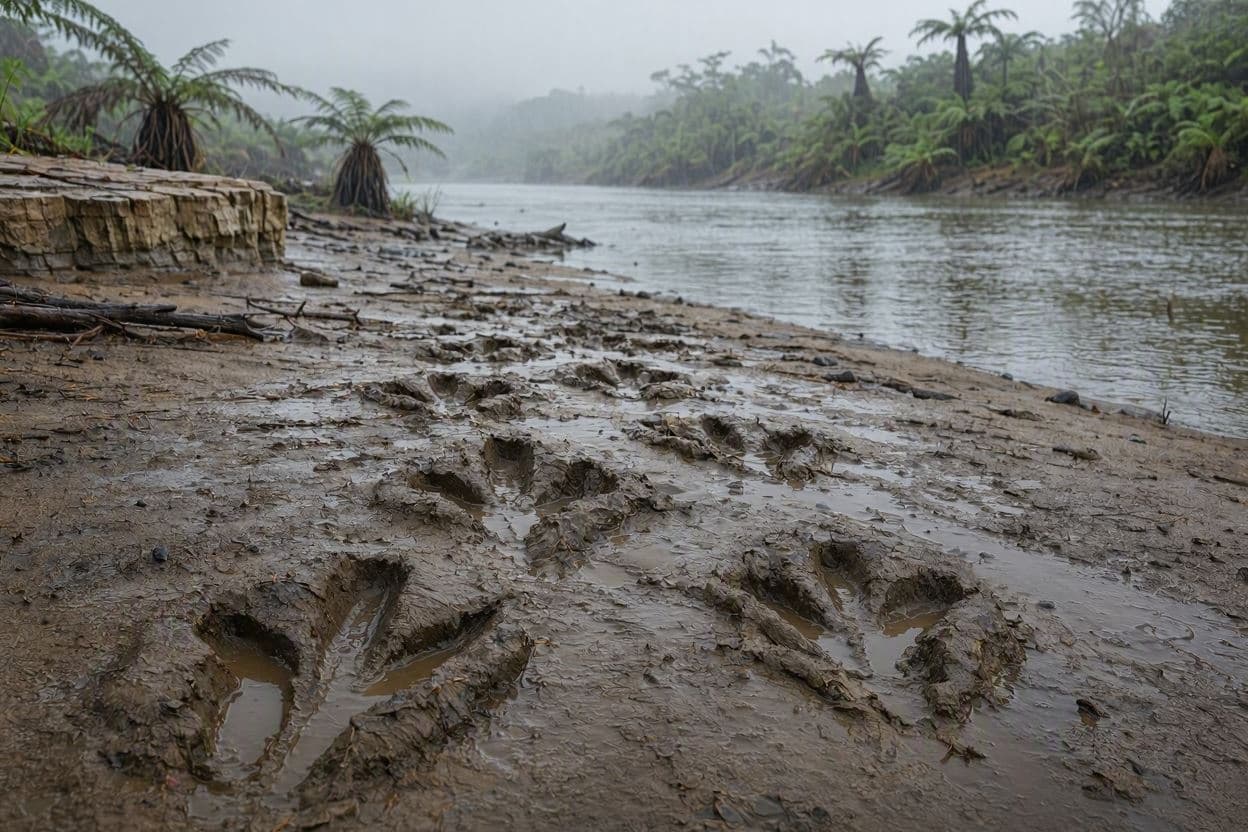
AI Image Disclaimer “Visuals are created with AI tools and are not real photographs.”
Sources The Guardian National Geographic UCL and ScienceDaily ABC News
Published by Banx Network. This article is part of the Banx decentralized media programme, powered by the BXE token on the XRP Ledger.