
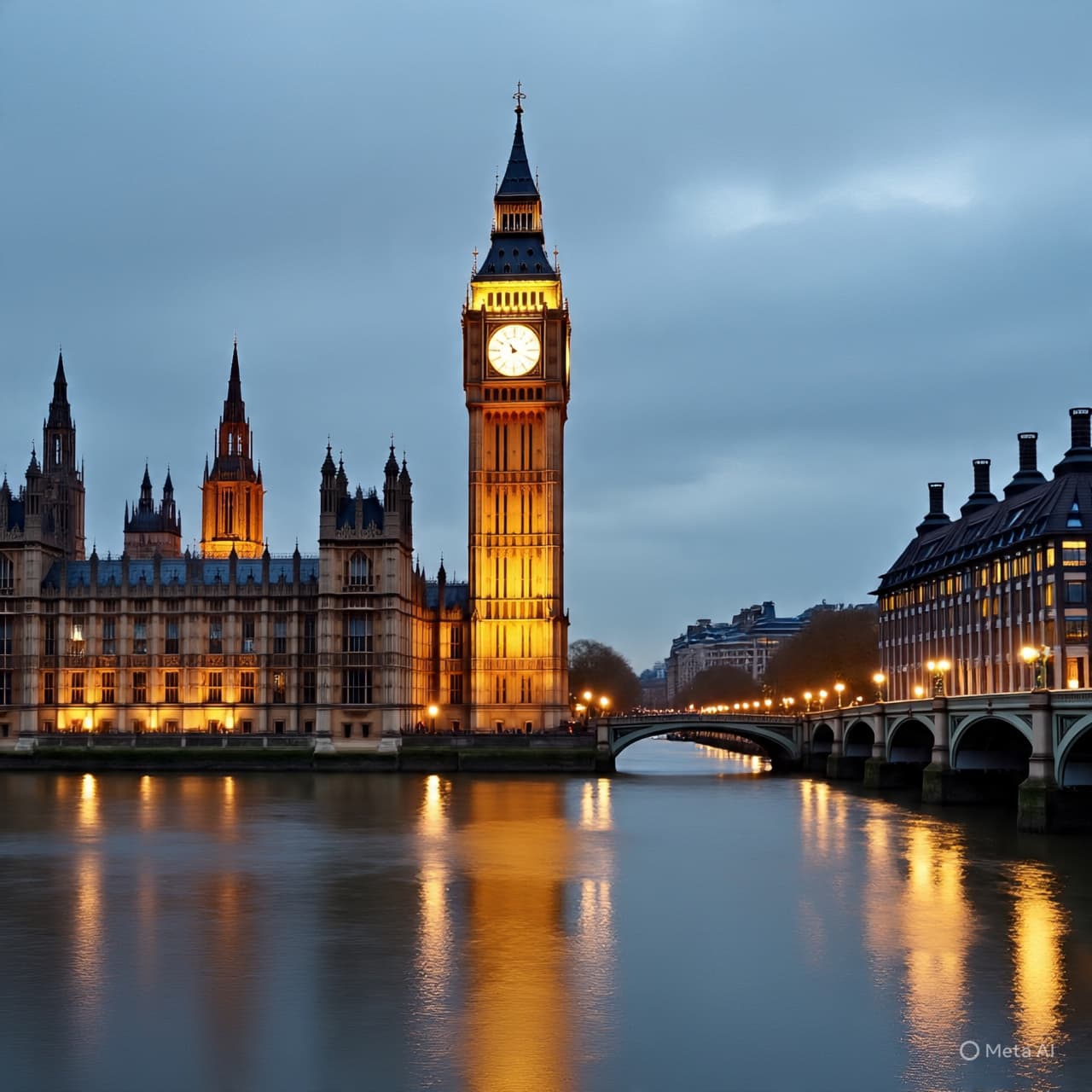
The Thames moves quietly at dusk, its surface catching the last light like a page half-turned. In Westminster, the stone facades hold centuries of argument within their walls, echoes of speeches that once bent the course of wars and alliances. It is here, in the measured cadence of broadcast studios and parliamentary corridors, that questions of distance and duty have returned to the foreground.
In a recent interview with the BBC, former British Prime Minister Boris Johnson suggested that the United Kingdom should consider sending non-combat troops to Ukraine now, framing the move as a signal of long-term commitment rather than escalation. His remarks arrive at a moment when the war in Ukraine has stretched deep into its third year, and Western capitals are once again weighing the contours of support — what it means, how far it should extend, and how visibly it should stand.
Johnson’s proposal centers not on frontline engagement but on roles such as training, logistical assistance, and technical support within Ukrainian territory. The distinction between combat and non-combat presence, while precise in military language, carries symbolic weight. To place uniformed personnel on Ukrainian soil — even outside active battle zones — would mark a new phase in the United Kingdom’s involvement, moving beyond weapons shipments and remote instruction toward a more tangible footprint.
The British government has so far maintained that its support remains robust yet carefully bounded. Since Russia’s full-scale invasion in 2022, London has provided military aid, intelligence cooperation, and extensive training programs conducted primarily on British soil. Ukrainian soldiers have cycled through training grounds across the UK, learning battlefield medicine, engineering, and infantry tactics. The idea of relocating some of that effort closer to the theater of war reflects both logistical reasoning and political calculation.
Across Europe, the conversation is not confined to London. French President Emmanuel Macron earlier stirred debate by declining to rule out the possibility of Western troops in Ukraine under certain circumstances, though no consensus has formed among NATO members. The alliance itself, led by Secretary-General Jens Stoltenberg, has consistently emphasized that it is not a direct party to the conflict, even as member states provide significant assistance.
In Moscow, officials have warned that any deployment of Western troops — regardless of designation — would be viewed as a serious provocation. The Kremlin has long described the war as a broader confrontation with NATO expansion, and rhetoric surrounding foreign involvement is tightly woven into its narrative of national defense.
Within Britain, the debate carries its own undertones. Parliament remains attentive to public opinion shaped by economic pressures at home and the memory of previous overseas engagements. Johnson, no longer in office but still an influential voice within the Conservative Party, has argued that visible resolve now may prevent greater instability later. His position reflects a strand of thinking that deterrence must be demonstrated as well as declared.
Yet even as policymakers discuss troop designations and alliance frameworks, the daily realities in Ukraine persist. Cities rebuild damaged energy grids between missile strikes. Civilians navigate blackouts and air-raid sirens. The frontlines shift in increments measured by villages and crossroads. Against that backdrop, the presence of foreign trainers or engineers would be less a spectacle than a continuation of the layered international support already in motion.
As night settles over Westminster, the river darkens and the lights along the embankment glow steadily. The question Johnson has raised does not immediately alter policy, but it adds another thread to the broader tapestry of Western deliberation. Whether non-combat troops will one day stand on Ukrainian ground under a British flag remains uncertain. For now, the conversation itself reflects the enduring complexity of a war that has drawn distant capitals into its orbit — asking not only how to help, but how visibly, and at what cost.
AI Image Disclaimer Illustrations were created using AI tools and are not real photographs.
Sources BBC News Reuters The Guardian UK Ministry of Defence NATO
نُشر بواسطة Banx Network. هذا المقال جزء من برنامج الوسائط اللامركزية من Banx، مدعومًا برمز BXE على شبكة XRP Ledger.


