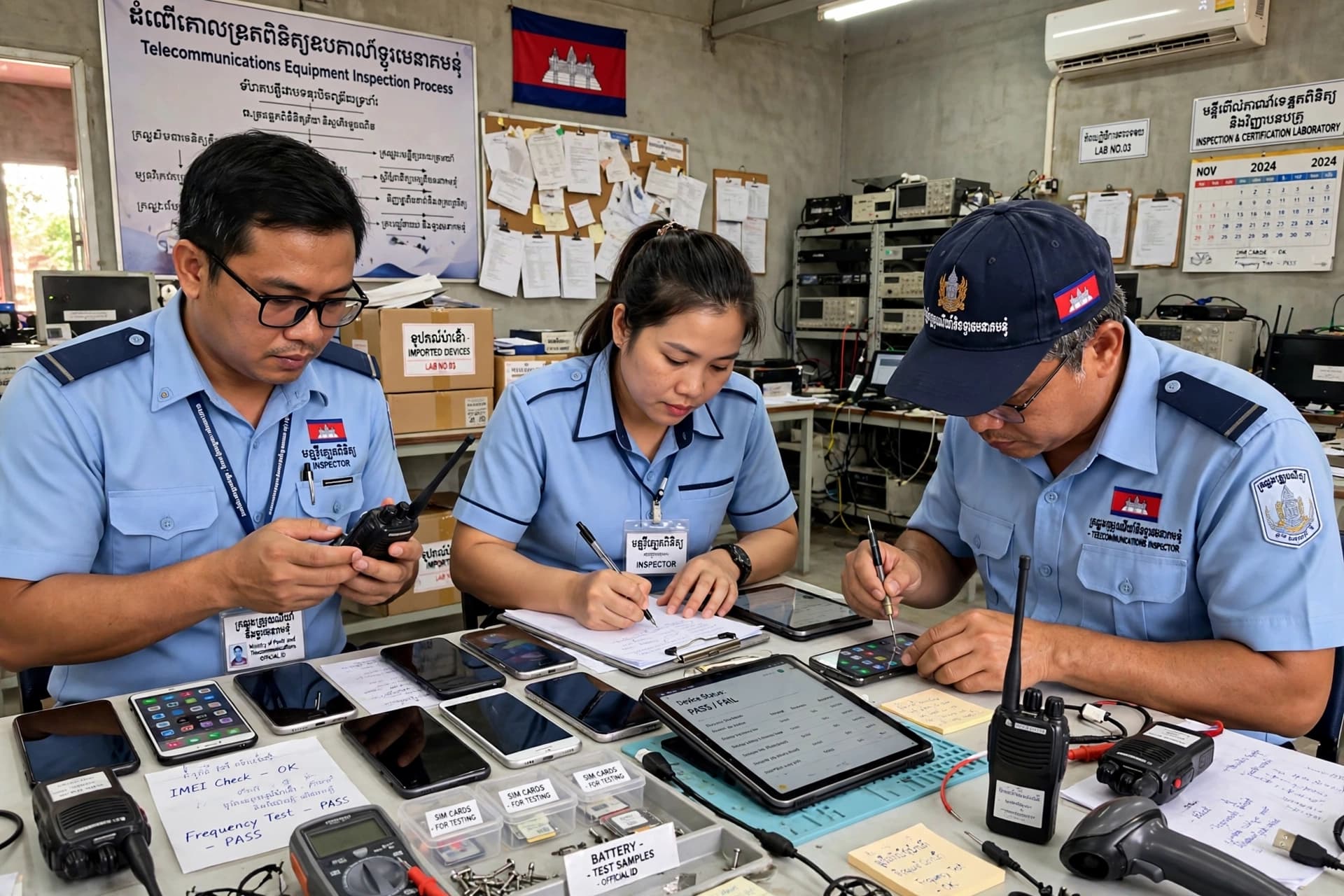
A used smartphone can appear to be an ordinary piece of technology, changing hands through a shop, a website, or a social media marketplace. Yet behind a device that looks familiar can be a different story involving certification, safety standards, network compatibility, and the origin of the equipment. Cambodia is now tightening the rules surrounding such devices.
The Telecommunications Regulator of Cambodia announced a ban covering the import, sale, and distribution of second-hand or counterfeit telecommunications equipment. The measure includes mobile phones, tablets, computers, walkie-talkies, and other communication equipment.
The regulator said the decision was linked to concerns involving public safety, health, critical national services, environmental risks, and the possible use of unregulated devices in online scam operations. Authorities also said they had observed such equipment being offered through websites and social media platforms.
One of the concerns involves certification. According to the regulator, many of the devices being offered did not have Qualified Agent certificates, Type Approval certificates for individual models, or the required import permits. These requirements are part of Cambodia’s telecommunications regulatory framework.
The issue extends beyond the device itself. Telecommunications equipment operates within networks that depend on technical standards and controlled frequencies. Certain equipment, when improperly manufactured or modified, can create interference that affects communications used for important services.
There are also everyday safety considerations. Used or counterfeit electronic products can have unknown histories, damaged batteries, modified components, or charging systems that no longer meet their original specifications. For consumers, identifying those differences is not always simple when purchasing a device through an informal marketplace.
The environmental dimension is another part of the discussion. Electronic devices eventually become waste, and equipment that enters a market without clear information about its quality or origin can complicate the process of repair, reuse, and eventual disposal.
The regulator has also linked the measure to online fraud. Unregulated devices can be difficult to trace or verify, while telecommunications equipment remains an important part of the infrastructure used by both legitimate digital services and criminal networks. The announcement therefore places consumer protection alongside broader telecommunications concerns.
Cambodian authorities have given businesses a period to comply with certification requirements. The regulator's notice also calls on companies and traders to ensure that telecommunications equipment they import, supply, distribute, advertise, or sell comes from legal and properly certified sources.
For Cambodia’s growing digital economy, the measure creates another layer between technology entering the country and technology reaching consumers. Phones, tablets, computers, and communication devices have become basic tools of modern life, but the systems supporting them increasingly depend on standards that are often invisible to the people using them.
The new restrictions therefore place greater attention on the journey of a device before it reaches a consumer’s hand. In a market increasingly connected through digital services, the question is no longer simply whether a device works, but also whether it has entered the network through a regulated and verifiable path.
Image Disclaimer:
The accompanying visuals are AI-generated conceptual illustrations and do not represent actual enforcement photographs or specific confiscated devices.
Sources:
The Star Telecommunications Regulator of Cambodia Cambodian Information Center
Published by Banx Network. This article is part of the Banx decentralized media programme, powered by the BXE token on the XRP Ledger.