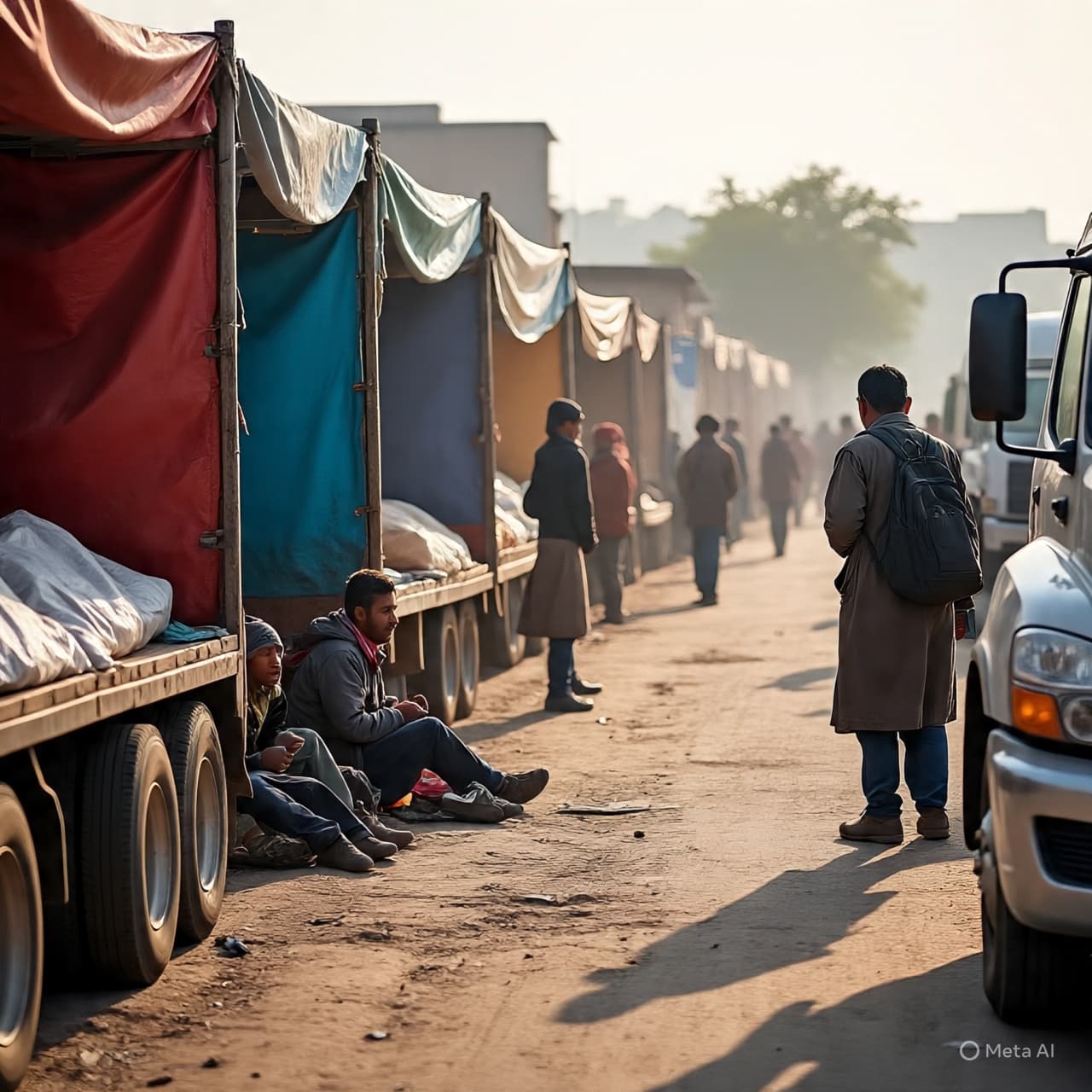
At dawn, borders are usually quiet places. They exist as thin lines on maps, but in life they breathe — with traders crossing, families visiting, trucks humming through gates that open and close like steady heartbeats. When those gates fall silent, it is rarely by accident. It is often the sound of something deeper shifting beneath the surface.
This week, that stillness returned sharply along parts of the Thailand–Cambodia frontier. Thailand announced a new military offensive near disputed border areas, while Cambodia responded by halting all border crossings. The moves, though framed in official language of security and sovereignty, have once again transformed a shared boundary into a pause point for thousands whose lives depend on its daily openness.
For Thailand, the operation was presented as a necessary step to restore order and deter threats near the frontier. Officials emphasized control, vigilance, and stability — words commonly used when states feel pressure to demonstrate resolve. Cambodia, meanwhile, moved swiftly to shut crossings, citing safety concerns and the need to protect civilians. The gates closed not only to military risk, but also to commerce, travel, and routine life.
Along the border, the consequences are immediate and personal. Markets thin out. Transport routes stall. Workers who cross daily for wages find themselves waiting, uncertain when movement will resume. Families separated by a few kilometers now face long detours, if not indefinite delays. In these moments, geopolitics becomes tangible — measured not in statements, but in missed pay, delayed medicine, and unanswered phone calls.
This is not the first time tensions have surfaced here, nor is it likely to be the last. The Thailand–Cambodia border has long carried layers of history, shaped by unresolved disputes and periodic flare-ups that fade, then return. Each episode follows a familiar rhythm: troop movements, diplomatic messages, tightened controls, and eventually, a cautious easing. Yet for those living nearby, each recurrence feels new, because daily life must be rebuilt each time.
Diplomatically, both governments have signaled restraint even as actions harden on the ground. Calls for dialogue remain part of the public narrative, suggesting that escalation is not the desired end. Still, the contrast between words of calm and measures of force leaves a space filled with uncertainty — a space civilians must occupy until clarity arrives.
As regional neighbors and international observers watch closely, the situation continues to evolve. What happens next may depend less on military momentum than on quiet negotiations behind closed doors, where borders can be discussed not as symbols, but as shared responsibilities.
For now, the crossings remain shut, and the offensive continues. Between Thailand and Cambodia, a line meant to connect has once again become a place of waiting — a reminder that when borders close, it is often ordinary lives that feel the weight first.
AI Image Disclaimer Visuals accompanying this article are AI-generated illustrations and are intended as conceptual representations, not real photographs.
Sources (Source Check) Reuters Associated Press (AP) Al Jazeera CBS News The Guardian
Published by Banx Network. This article is part of the Banx decentralized media programme, powered by the BXE token on the XRP Ledger.

.jpg&w=3840&q=75 "Zelensky Warns China Is Helping Russia Develop a Starlink Rival")