In the hush between dawn and the first stirrings of the market, there sometimes comes a signal that, while subtle at first, hints at a change in the wind. Just as morning light gradually reveals the contours of a quiet landscape, so too can a seemingly incremental shift in finance presage a broader turning of the tides. Today, within the stablecoin ecosystem that undergirds much of crypto’s plumbing, a new tone has emerged — spoken in the language of trust, regulation, and institutional capital.
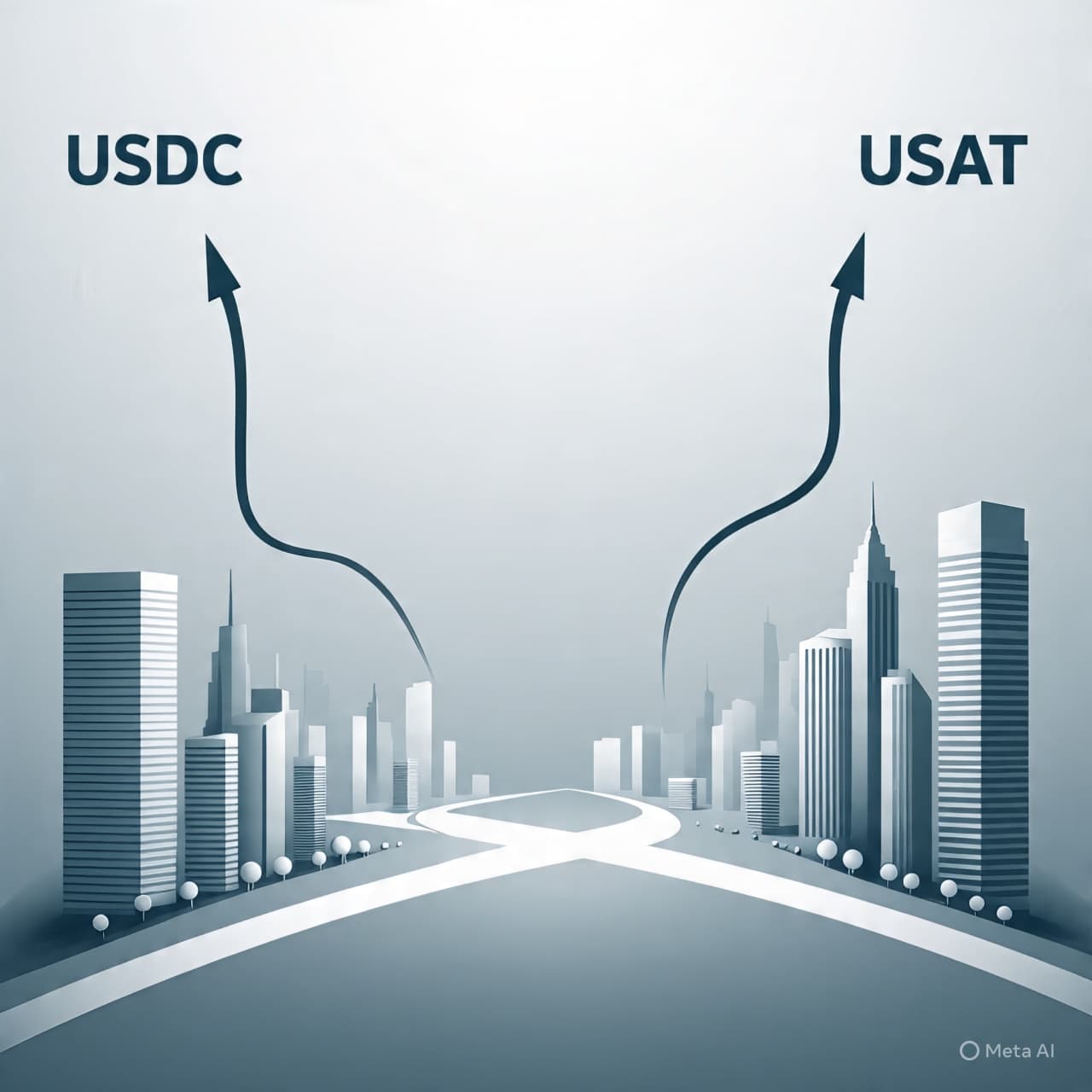
The heart of this story lies in the arrival of USAT, a U.S.‑regulated dollar‑pegged stablecoin introduced by Tether in partnership with Anchorage Digital Bank and Cantor Fitzgerald. Where Circle’s USDC has long stood as the default choice for institutional money seeking a digital dollar within U.S. regulatory boundaries, USAT’s entrance has drawn attention from analysts and market watchers alike. For years, USDC benefitted from a clear path in the regulated U.S. market, unchallenged by a domestic competitor matching its scale or compliance profile. Now, with the GENIUS Act’s framework and new institutional partnerships giving shape to USAT’s design, that landscape is subtly, but meaningfully, shifting.
To some observers, this development reads like the first signs of a wider dance between legacy and innovation, where each participant brings its own history and philosophy. Circle’s narrative is one of disciplined transparency and early alignment with regulatory expectations. Tether’s narrative, historically dominated by its global USDT token, has not always found favor with regulators; yet with USAT, it seeks a fresh chapter — one rooted explicitly in U.S. compliance and institutional accessibility.
Analysts suggest that this isn’t merely a matter of two tokens vying for market share. It reflects a deeper rhythm in institutional preferences: the quiet prioritization of regulatory clarity, operational trust, and alignment with federal standards. Where once USDC enjoyed the serenity of unchallenged primacy, USAT now stands on that same shore, inviting institutions to consider an alternative — one backed by Tether’s vast infrastructure and global liquidity. At the same time, voices of caution remind markets that risk is nuanced and multifaceted, and that the story of stablecoins continues to evolve with both competition and collaboration in view.
As these currents meet in the broader stream of digital finance, the characters in this unfolding narrative offer a reminder: markets are not static; they are mosaic compositions of confidence, clarity, and change. Whether USAT’s presence will redraw capital allocations or simply enrich institutional choice remains a question for time and data, not conjecture.
In this moment of transition, what stands out is not a clash, but the gentle realignment of expectations — a recalibration of how institutional actors approach stablecoins within the firmament of regulated finance.
AI Image Disclaimer
Visuals are created with AI tools and are not real photographs.
Here are credible sources affirming the topic:
1. CoinDesk 2. Yahoo Finance (republishing CoinDesk) 3. The Block (JPMorgan comment) 4. Benzinga 5. ChainCatcher market summary
Published by Banx Network. This article is part of the Banx decentralized media programme, powered by the BXE token on the XRP Ledger.