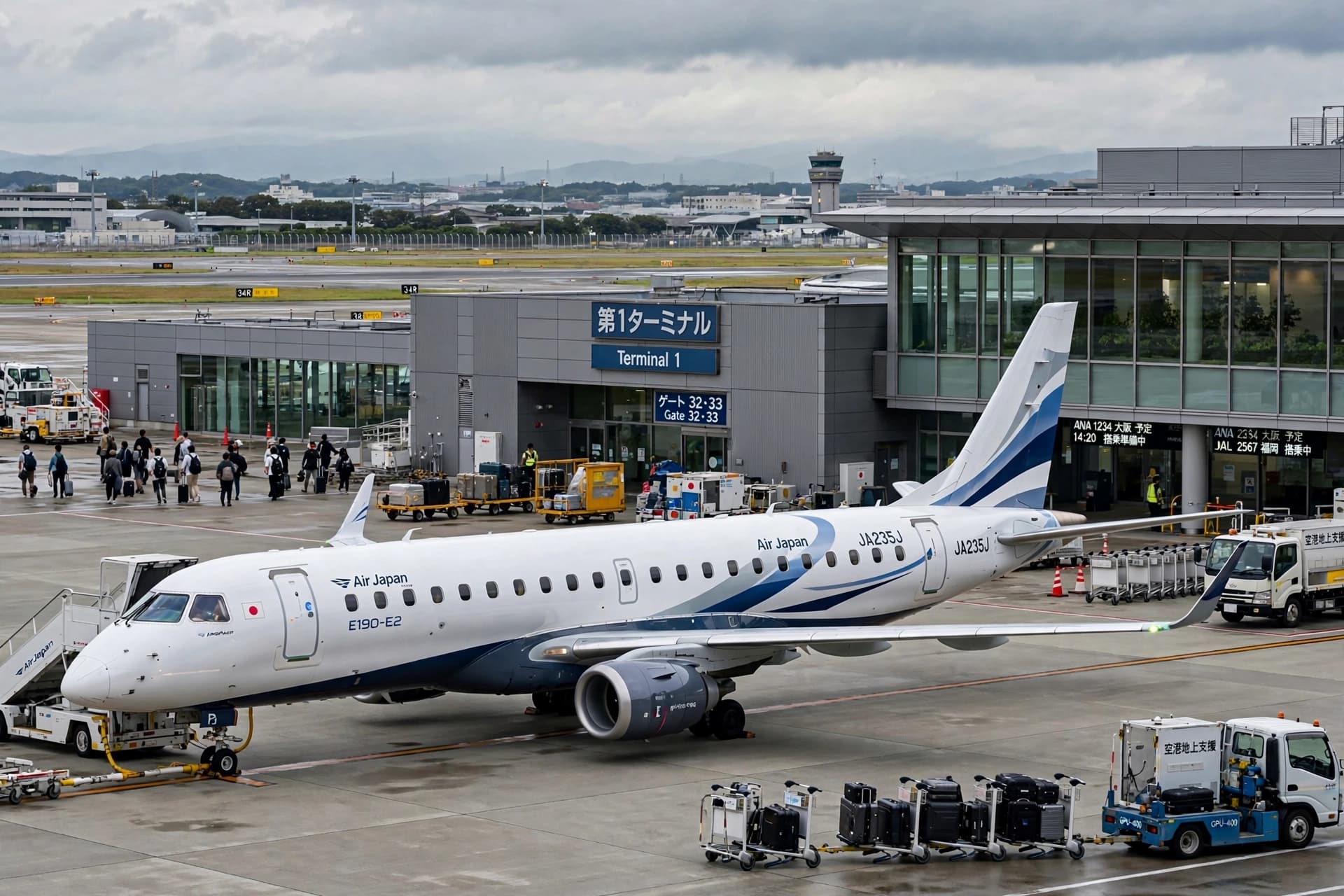
Japan Airlines is moving closer to a decision on the future of its regional aircraft fleet, with Brazil’s Embraer reportedly gaining ground in discussions for an order of about 20 jets. The carrier has been considering Embraer’s E2 family alongside Airbus’ A220, with a final decision potentially coming as early as October.
The reported preference has not yet become a confirmed order. People familiar with the discussions told Bloomberg that circumstances could still change, underscoring that the process remains open until Japan Airlines formally announces its choice. JAL, Embraer and Airbus did not provide comments to the report.
For Embraer, the potential deal would strengthen its relationship with one of Asia’s major airline groups. The Brazilian manufacturer has already secured regional-jet customers including ANA Holdings, Finnair and SAS Scandinavian Airlines, giving its E2 aircraft a growing presence among carriers looking for smaller-capacity jets.
Japan Airlines has been evaluating the aircraft question as part of its broader fleet planning. The carrier had previously been reported to be considering as many as 40 regional jets together with 30 turboprop aircraft, although the current discussion reported by Bloomberg centers on an order of around 20 regional jets.
The competition between the two aircraft families reflects different approaches to regional aviation. Embraer’s standard E190-E2 can carry up to 97 passengers in a two-class configuration, while Airbus’ A220-100 can accommodate up to 120 passengers. Both aircraft use Pratt & Whitney turbofan engines.
For an airline, the choice of aircraft is rarely determined by passenger capacity alone. Fleet commonality, operating costs, maintenance requirements, airport infrastructure and the characteristics of individual routes can all shape the long-term economics of a purchase. A regional aircraft must fit not only the timetable but also the geography of the network.
Japan’s domestic aviation market includes routes connecting large metropolitan centers with smaller cities and regional destinations. Aircraft in this size category can provide airlines with flexibility when demand does not consistently justify the larger capacity of narrow-body jets. The decision therefore carries practical implications for how airlines match aircraft size with route demand.
For Airbus, losing the reported JAL opportunity would mean missing a potential high-profile customer for the A220 program. The Japan Times described the situation as a setback for Airbus, while the reported E2 preference would give Embraer another important reference customer in Asia.
The aviation industry is also operating within a broader environment of changing fuel costs, supply-chain pressures and shifting passenger demand. These conditions make fleet decisions increasingly connected to questions about efficiency and long-term operating resilience, rather than simply the number of aircraft an airline wants to add.
For now, the runway remains open to both possibilities. Japan Airlines has not finalized its choice, and the reported October decision will determine whether the E2 becomes part of the carrier’s next regional fleet chapter. Until then, the competition remains a quiet contest between two aircraft families, watched closely from Tokyo to Brazil and across the global aviation industry.
Image Disclaimer: The illustrations are AI-generated representations of aircraft and aviation environments and do not depict an actual Japan Airlines order or specific operational scene.
Sources: The Japan Times Bloomberg Embraer Airbus
Published by Banx Network. This article is part of the Banx decentralized media programme, powered by the BXE token on the XRP Ledger.