The semiconductor industry rarely moves quietly. Behind every new factory proposal lies a network of machines, suppliers, engineers and billions of dollars moving across borders. Now, another potential facility is taking shape in discussions between Japan and the United States.
Japan and the United States are in talks to build a semiconductor factory as part of a broader $550 billion investment agreement, according to a report by Japan’s Nikkei business daily cited by Reuters on September 17.
The proposed project is expected to cost between 2 trillion and 3 trillion yen, equivalent to roughly $12.85 billion to $19.27 billion based on the exchange rate cited in the Reuters report.
GlobalFoundries is expected to operate the proposed facility, which would focus on logic semiconductors. The report did not identify its sources, so details such as the final location, construction schedule and structure of the investment remain subject to further developments.
The potential factory comes at a time when semiconductor production has become increasingly important to the global technology industry. Chips are essential to automobiles, industrial equipment, computers, data centers and a growing range of artificial-intelligence systems.
For Japan, semiconductor manufacturing also connects with a broader effort to strengthen its technology and industrial base. Japanese companies remain important suppliers of semiconductor materials, equipment and components even as much of the world’s chip production is concentrated elsewhere.
For the United States, additional semiconductor capacity can contribute to a larger effort to expand domestic manufacturing. The proposed facility would therefore sit within a wider industrial environment shaped by demand for advanced computing and the need for reliable chip supply.
The reported investment figure also illustrates the scale of capital required to build modern semiconductor facilities. A project costing up to 3 trillion yen would involve years of construction, specialized equipment and a complex network of suppliers before production could begin.
Still, the current information describes negotiations rather than a completed project. The Nikkei report, as cited by Reuters, did not disclose its sources, and the final details of the factory have not been publicly established.
For now, the proposal remains another sign of how semiconductor manufacturing is being reshaped around large-scale investment. Between Tokyo and Washington, the discussion is about more than one factory: it is also about where future chip production will take place and how the industry will build capacity for the technologies ahead.
IMAGE DISCLAIMER
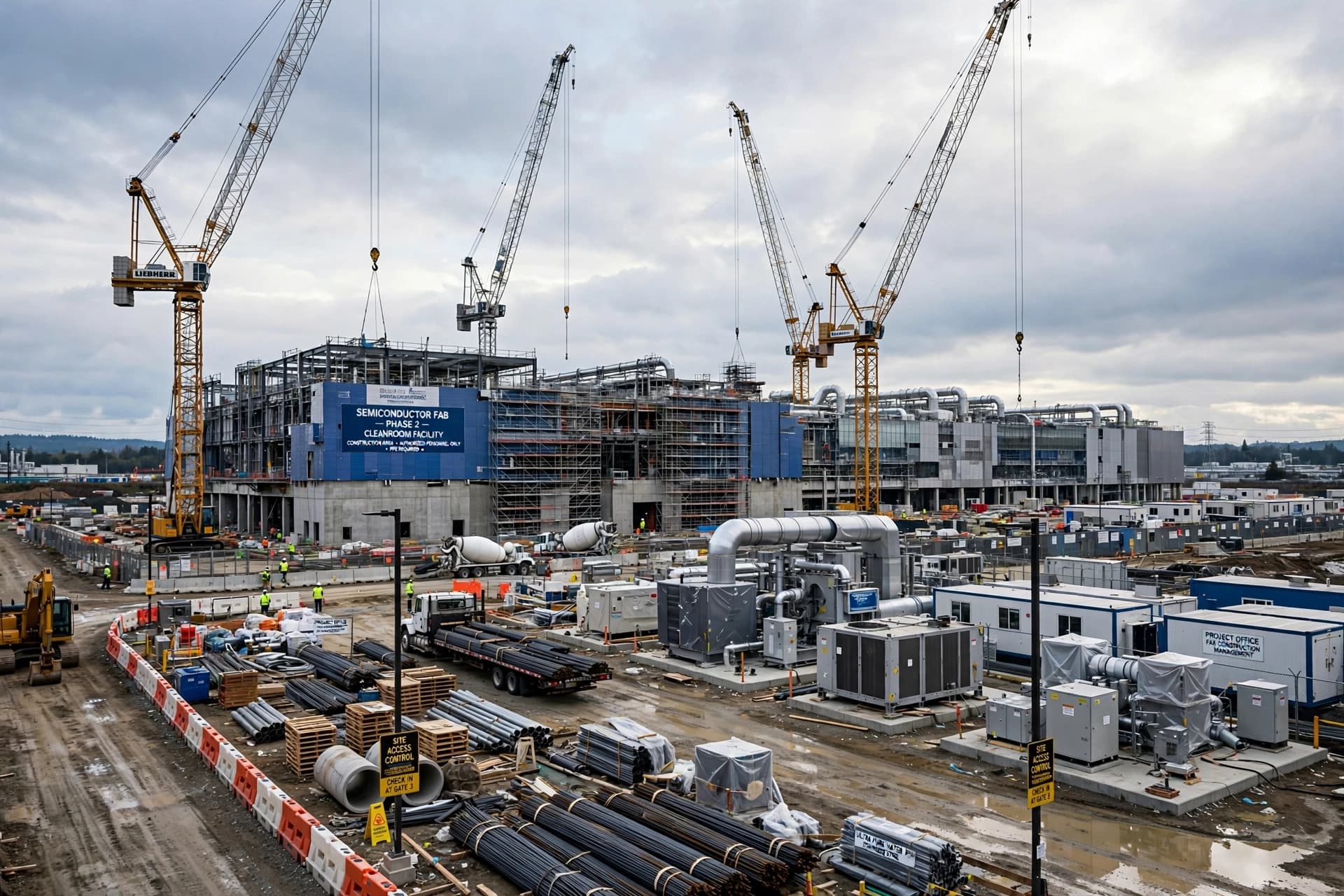
Visuals are AI-generated conceptual representations and do not depict an actual proposed factory.
SOURCES
Reuters Nikkei CNA Investing.com
Published by Banx Network. This article is part of the Banx decentralized media programme, powered by the BXE token on the XRP Ledger.