The rhythm of a shopping season can change quickly. In Saudi Arabia, the intense spending associated with the return to school has begun to fade, leaving the country’s consumer market settling into a more ordinary September pattern.
Point-of-sale transactions reached SR13.79 billion, or about $3.68 billion, during the week ending September 12, according to Saudi Central Bank data reported by Arab News. That represented a 12.9% decline from the previous week.
The number of transactions also decreased, falling 4.8% to 254.91 million. Education spending experienced the largest decline, dropping 58.2% to SR316.15 million as the back-to-school period moved further into the past.
Other categories also recorded weekly declines. Food and beverage spending fell 15.1% to SR2.28 billion, while restaurants and cafes declined 6.7% to SR1.69 billion. Clothing and accessories spending dropped 14.1% to SR1.10 billion.
Transportation spending declined 12.7% to SR1.01 billion, while purchases at gas stations decreased 4.3% to SR1.05 billion. Healthcare spending also slipped, reaching SR918.33 million for the week.
The movement was particularly visible in books and stationery, where spending declined 23.9% to SR138.93 million. That category had benefited directly from the earlier school-season increase.
Not every category moved lower. Furniture and home supplies recorded a modest 0.8% increase to SR452.37 million, making it one of the few areas to post week-on-week growth in the reported figures.
Geographically, Riyadh remained the largest market, recording SR4.87 billion in point-of-sale spending. Jeddah followed with SR1.89 billion, while Dammam recorded about SR689.96 million.
Economist Talat Hafiz told Arab News that the decline could be viewed as normalization following unusually strong back-to-school and post-vacation spending. He said spending patterns could stabilize as those seasonal effects disappear.
The figures therefore offer a snapshot of a consumer economy moving from one seasonal rhythm to another. The billions of riyals continue to circulate through shops, restaurants, transportation and essential services, even as the temporary intensity of the school season gradually disappears.
IMAGE DISCLAIMER
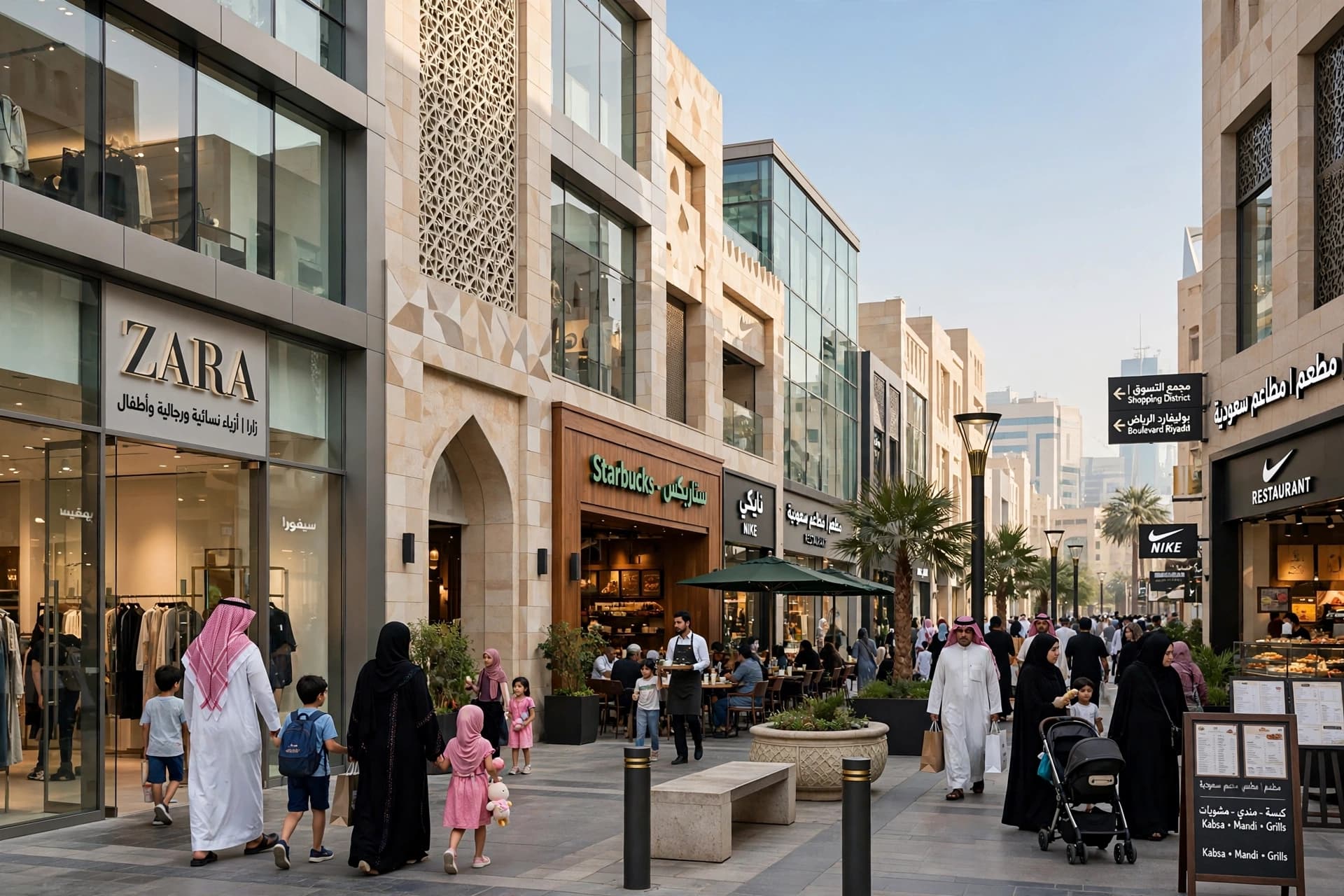
Illustrations were created using AI tools and are conceptual representations of Saudi Arabia’s consumer economy.
SOURCES
Arab News Saudi Central Bank Saudi Gazette
Published by Banx Network. This article is part of the Banx decentralized media programme, powered by the BXE token on the XRP Ledger.