In the vast hush between planets, where sunlight slants thinly through distant orbits, the skies of Uranus hold secrets seldom glimpsed by human eyes. There, above swirling clouds of methane and ice, invisible forces shape light and motion into patterns that, until now, have remained veiled from our view. It is a realm where magnetic fields twist askew, where charged particles carve sinuous bands of glow, and where the quiet interplay of energy and motion writes itself across the heavens.
For the first time, the James Webb Space Telescope has woven these faint, whispering signatures into a three‑dimensional portrait of Uranus’ upper atmosphere. Over nearly a full rotation of the ice giant, sensitive instruments aboard Webb captured the glowing bands of auroras and the subtle variations in temperature and ion density that extend thousands of kilometers above the cloud tops. What emerges from this data is not a simple image, but a layered map — a tapestry of how charged particles dance to the rhythm of a strangely tilted magnetic field, and how they hint at the unseen currents that shape this distant world’s skies.
Uranus is no ordinary wanderer. Unlike Earth’s relatively aligned magnetic heartbeat, this planet’s field tilts and shifts in a way unlike any other in the solar system. That geometry sends the auroras on sweeping paths, tracing lines through the thin air far above its serene blue visage. Webb’s observations revealed two bright auroral bands near the magnetic poles, as well as a region of diminished emission between them — a pattern linked to how magnetic lines twist and converge, guiding ionized particles with a silent yet uncanny precision.
The mapping extends beyond light alone. By measuring how temperature and ion density fluctuate with altitude, scientists now see how energy climbs through the ionosphere, reaching a peak several thousand kilometers above the clouds before fading into the quiet of space. These delicate measurements confirm that Uranus’ upper atmosphere continues a long‑term cooling trend, one that began decades ago with the first tentative glimpses from ground‑based telescopes and the historic Voyager 2 flyby of 1986.
It was the telescope’s Near‑Infrared Spectrograph — Webb’s finely tuned ear to the faint whispers of light — that made this vision possible. For some fifteen hours, nearly an entire rotation, Webb observed the shifting auroral glow and the subtle contours of the ionosphere, stitching together what had once been only partial glimpses into a cohesive three‑dimensional view. In this elegant map, the geometry of fields and the dance of particles become tangible, inviting us to reflect on the range of natural motion that writes itself into the atmosphere of a distant ice giant.
These auroras are not mere celestial ornaments, but manifestations of deep physical processes — where charged particles, guided by a lopsided magnetosphere, meet the sparse gases of Uranus’ upper realms and release their energy in glowing bands of light. The result is both a scientific triumph and a poetic resonance: a reminder that even the quietest worlds have stories to tell, writ large in the interplay of light, motion, and the invisible forces that bind them.
In clear terms, astronomers using the James Webb Space Telescope have produced the first three‑dimensional map of Uranus’ upper atmosphere and auroras, capturing how temperature and ion density vary with altitude and how the planet’s unusually tilted magnetic field shapes auroral structures. Observations made over nearly one full rotation revealed prominent auroral bands and confirmed an ongoing cooling trend in the planet’s thermosphere and ionosphere.
AI Image Disclaimer
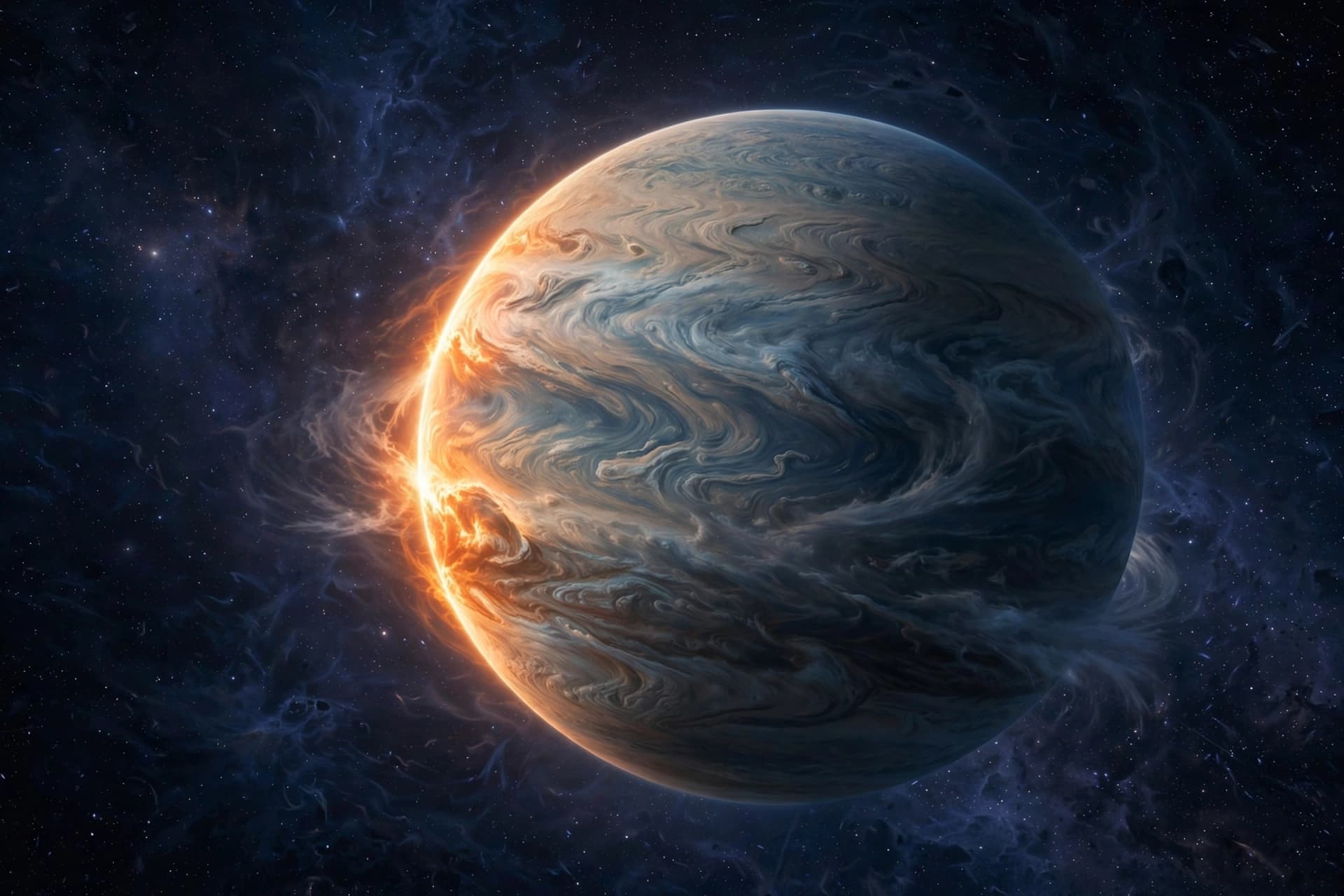
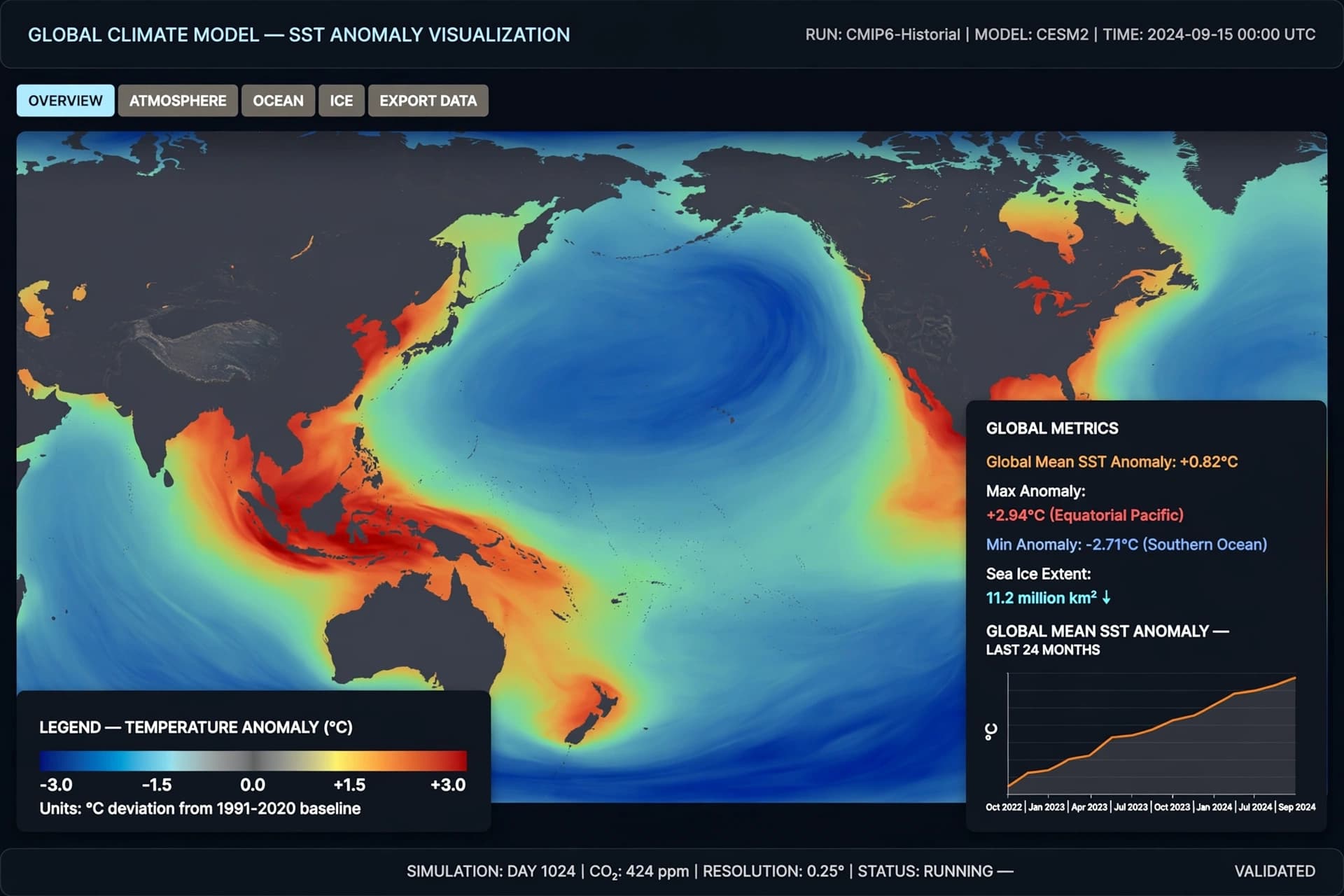
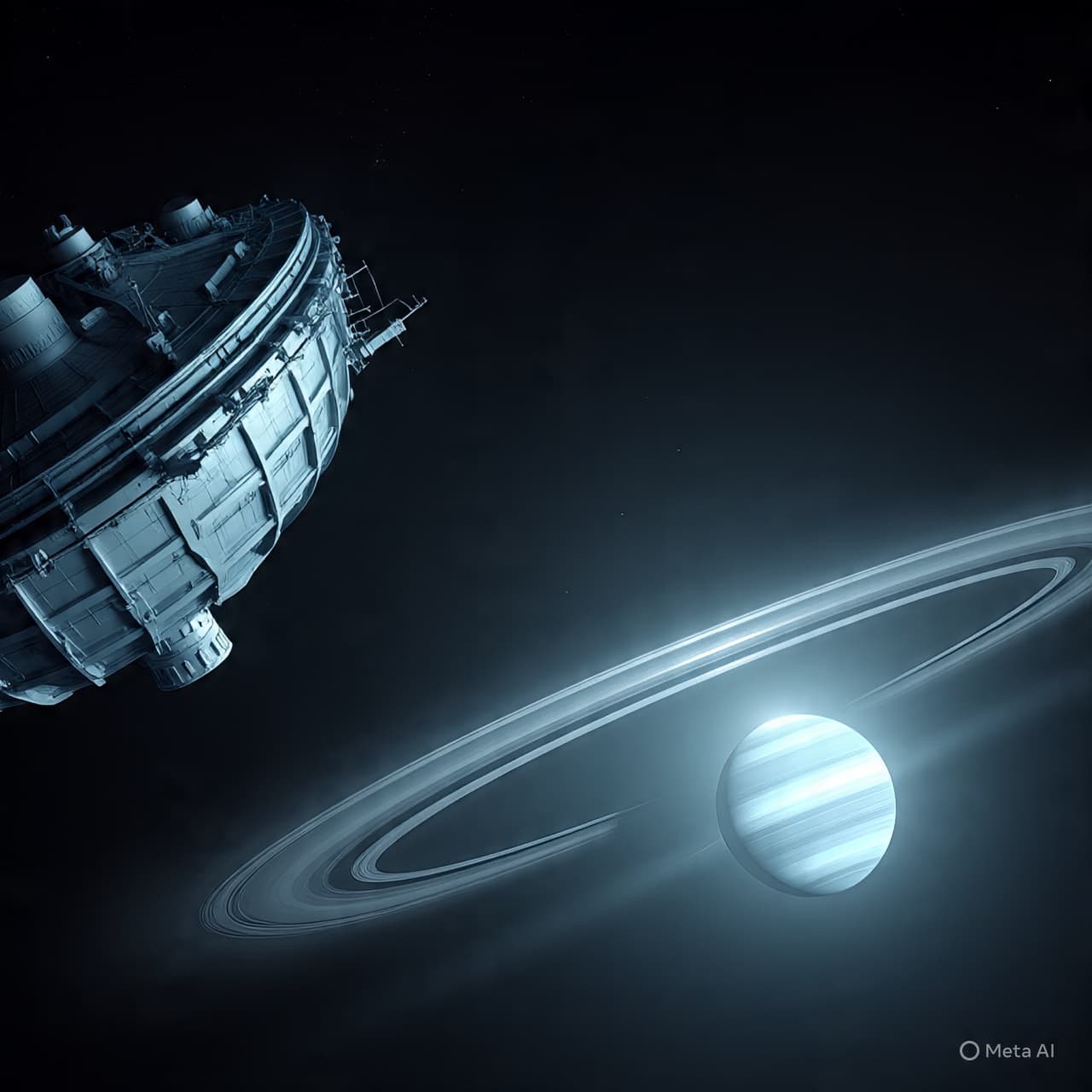
Illustrations were created using AI tools and serve as conceptual representations.
Sources (Media Names Only)
Space.com BBC Sky at Night Magazine Northumbria University press release ESA/Webb science releases Yahoo News science section
Published by Banx Network. This article is part of the Banx decentralized media programme, powered by the BXE token on the XRP Ledger.